
What are the benefits of using a cantilever racking system in a warehouse?
A cantilever racking system stores long, bulky or irregularly shaped goods efficiently by using unobstructed arms instead of front-facing uprights. It provides flexible storage, clear access for loading and unloading, better use of available warehouse space and improved visibility of stored materials.
A cantilever racking system is a warehouse storage solution designed for long, bulky or irregularly shaped goods. Instead of using front-facing beams that can obstruct access, it supports loads on horizontal arms fixed to vertical columns. This open-sided arrangement makes materials such as timber, steel sections, pipes, panels, worktops, carpets and other lengthy products easier to store, identify and retrieve.
The main benefits of cantilever racking in a warehouse include:
- more suitable storage for long and awkwardly shaped goods;
- clear, unobstructed access for loading and unloading;
- better use of vertical warehouse space;
- greater flexibility when product dimensions or stock levels change;
- improved visibility and stock control; and
- reduced risk of damage caused by unsuitable storage methods.
Efficient storage of long loads
Conventional pallet racking is generally designed around standard pallets and fixed beam levels. It is not always suitable for goods that extend beyond a pallet footprint or cannot be safely placed on a pallet. Cantilever racking provides open storage levels with no front uprights between the load and the handling equipment, making it better suited to long products and uneven bundles.
Arms can be configured to support the length, weight and shape of the goods being stored. Depending on the design, the system may be used for single-sided access against a wall or double-sided access within the warehouse. This allows storage areas to be planned around the product rather than forcing unsuitable goods into a standard layout.
Clearer loading and retrieval
The absence of front columns at each storage position gives operators a clearer approach to the load. Forklift trucks and other handling equipment can be positioned more accurately, provided the aisle width, lift height and operating method have been considered during the design.
Open access can also make manual handling more straightforward for lighter products. Operators can see the stored materials without working around obstructive frames, which helps them identify the correct item and reduces unnecessary movement during picking.
Improved use of available space
A properly designed cantilever system can use both the floor area and the available height of the warehouse more effectively. Several storage levels can be installed above one another, subject to the building height, handling equipment, load requirements and safe clearances.
Using vertical capacity can reduce the need to spread long products across the floor. This may create clearer travel routes and improve the overall organisation of the storage area. Space planning must still allow adequate room for loading, unloading, inspections, fire protection arrangements, lighting and safe pedestrian movement.
Flexibility for changing stock
Cantilever racking is adaptable where a warehouse stores products with varying lengths, weights or profiles. Arm positions and storage levels can often be adjusted as operational needs change, although alterations must follow the manufacturer’s instructions and should not compromise the system’s rated capacity.
Some systems can also accommodate different arm types, decking arrangements, restraints or protective features. The correct configuration depends on whether the goods are bundled, loose, cylindrical, fragile, easily damaged or likely to roll. A design review is important before changing the layout or using the system for a different product.
Better stock visibility and control
Open storage positions make it easier to see what is available and identify where particular materials are located. Clear visibility can support more accurate stock checks, reduce time spent searching and help operators identify damaged or incorrectly placed goods at an earlier stage.
Labelling, consistent product grouping and sensible allocation of storage levels will improve these benefits. Long or heavy items should be stored in positions that match the handling method and the system’s design limits, rather than being placed wherever space happens to be available.
Potentially lower product damage
Long goods stored on the floor, against walls or in unsuitable frames can be exposed to impact, bending, crushing and trip hazards. Cantilever racking provides defined support points and keeps products organised, which can help protect both the goods and the surrounding workplace.
Damage prevention depends on correct loading. Loads should be evenly supported, secured where necessary and kept within the stated arm and column capacities. Operators should also avoid placing loads on damaged components or allowing materials to project into aisles and access routes.
Safety and compliance considerations
The benefits of a cantilever system depend on correct specification, installation, use and maintenance. The system should be designed for the actual load characteristics, including weight distribution, length, centre of gravity and any tendency for goods to roll or shift.
Important safety measures include:
- confirming that the floor and anchorage arrangements are suitable for the imposed loads;
- displaying clear load notices where required;
- protecting columns and other vulnerable components from impact;
- keeping aisles and emergency routes clear;
- training operators in safe loading and unloading methods;
- reporting and isolating damaged components promptly; and
- carrying out regular visual checks and a formal inspection by a competent person at appropriate intervals.
In the UK, warehouse racking inspections and maintenance should reflect the manufacturer’s guidance, the operating environment and relevant workplace safety duties. A system should not be altered, relocated or repaired with unapproved components, as this can affect its structural performance and invalidate the original design assumptions.
When cantilever racking may be the right choice
Cantilever racking is particularly appropriate where the warehouse regularly handles long, bulky or non-standard products and needs direct access to individual bundles or lengths. It may be less suitable where all stock is palletised, where goods require enclosed storage or where the available floor and ceiling height cannot provide the necessary handling clearances.
The most effective solution is determined by the goods, handling equipment, available space, storage rate, access requirements and future operational plans. A competent assessment should consider the complete layout rather than selecting the system solely on its initial capacity or footprint.
Overall, a cantilever racking system can provide flexible, visible and space-efficient storage for products that do not fit conventional warehouse racking layouts. Its performance and safety depend on accurate design, professional installation, suitable operator training and ongoing inspections that identify damage or changing risks before they affect warehouse operations.
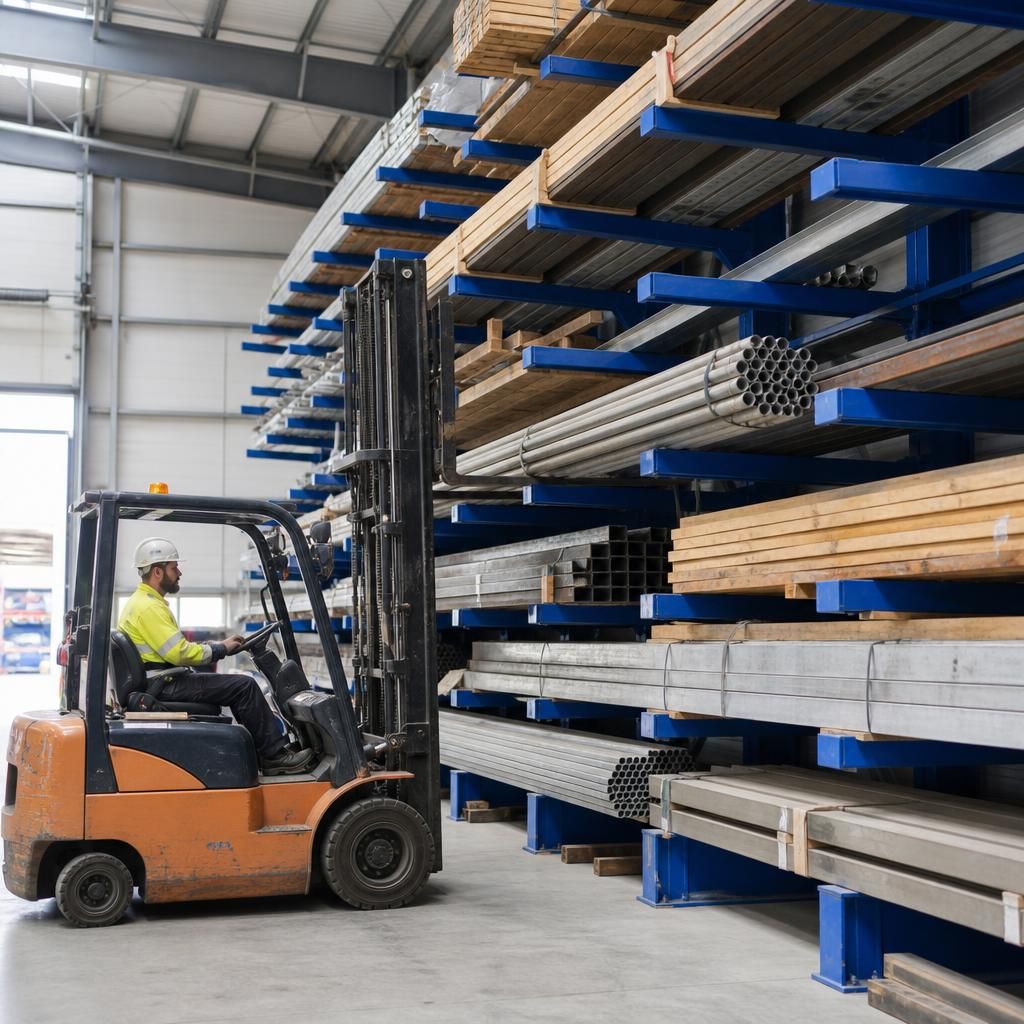
A cantilever racking system improves storage efficiency by supporting long, bulky or irregularly shaped goods on horizontal arms fixed to upright columns. Because there are no front uprights at each storage position, products such as timber, pipes, steel sections and panels can be stored without extending across several conventional pallet positions or being left on the warehouse floor.
Multiple arm levels make better use of available height while keeping individual loads visible and accessible. The layout must still allow safe handling clearances, suitable aisle widths and adequate support for the load length and weight. Correct design and loading help prevent products from rolling, bending or projecting into access routes.
Discuss Your Cantilever Racking Requirements
Discuss your cantilever racking requirements with our experienced team to confirm the right layout, load capacity and safety measures for your warehouse. We can help assess your storage needs and recommend a suitable solution.