
What are the key benefits of using second-hand warehouse racking systems?
Second-hand warehouse racking systems can reduce capital costs, support faster warehouse setup and provide practical storage capacity when suitable components are sourced and assessed correctly. Their condition, compatibility, load capacity and compliance should be checked by experienced professionals before installation to ensure safe, efficient use.
Second-hand warehouse racking systems can provide a cost-effective way to increase storage capacity, support a faster installation and make use of proven components. The main benefits are lower capital expenditure, potentially shorter lead times and greater flexibility when suitable equipment is available. However, used systems must be assessed for condition, compatibility, load capacity and compliance before they are installed or put into service.
Lower purchase costs
The most immediate benefit is usually a lower purchase price than an equivalent new warehouse racking system. This can help businesses manage capital expenditure when expanding storage, replacing damaged equipment or fitting out a new facility. The saving may be particularly useful where the required layout uses standard components that are readily available in the used market.
The purchase price should not be considered in isolation. Transport, unloading, design checks, alterations, replacement components, installation and inspection may all affect the overall cost. A professional assessment can help establish whether a second-hand system offers a genuine saving while still meeting the operational requirement.
Faster access to storage equipment
New warehouse racking systems may require components to be manufactured or ordered before installation can begin. Suitable second-hand equipment may already be available, allowing a project to progress sooner. This can be valuable when additional storage is needed quickly, when a damaged section has to be replaced or when a warehouse layout is being changed to meet operational demands.
Availability is not guaranteed, however. A system may contain mixed components from different manufacturers or incomplete sections. Checking what is available before making a commitment helps prevent delays caused by missing frames, beams, connectors, bracing or safety components.
Practical and adaptable storage capacity
Used warehouse racking can be suitable for many established storage applications, provided the design is appropriate for the goods, handling equipment and building. It can support changes such as adding storage bays, reorganising stock locations or creating a more consistent layout.
Adaptability depends on having compatible components and a clear understanding of the system’s original design. Beams and frames should not be mixed casually, even if they appear similar. Differences in dimensions, connection details, steel specification and load ratings can affect the stability and capacity of the completed installation.
Reduced use of new materials
Reusing serviceable warehouse racking components can extend their working life and reduce the demand for newly manufactured equipment. This may support a more resource-efficient approach to warehouse development, particularly where existing components remain structurally sound and can be installed without unnecessary modification.
Reuse is only appropriate when safety remains the priority. Equipment with significant corrosion, impact damage, distortion, missing parts or an uncertain history may not be suitable, even if it appears inexpensive. Components should be assessed on their actual condition rather than their age or appearance alone.
What must be checked before purchase and installation?
- Condition: Inspect frames, beams, bracing, baseplates, anchors, connectors and protective components for corrosion, bends, cracks, distortion and other damage.
- Compatibility: Confirm that all components belong to a compatible system and can be assembled correctly using the appropriate connections and accessories.
- Load capacity: Establish the safe working loads for the proposed configuration. Do not rely on a label or rating from a different layout.
- Configuration: Check that the height, bay width, beam levels, aisle arrangement and clearances suit the building, stock and handling equipment.
- History: Ask whether the equipment has been involved in an impact, alteration, overload or previous repair, and request any available design or inspection information.
- Compliance: Ensure the completed installation can be designed, installed and maintained in line with applicable workplace safety requirements and recognised warehouse storage guidance.
- Ancillary protection: Consider whether guards, signage, safety locks, mesh panels and other protective measures are required for the operating environment.
Professional inspection is essential
A visual check by an untrained buyer cannot reliably confirm whether used warehouse racking is safe or suitable. An experienced warehouse storage specialist can assess the proposed components, identify damage and determine whether the intended layout is viable. Where the equipment is already installed, a formal inspection can identify risks such as bent uprights, displaced beams, missing locking devices, overloading and inadequate protection.
Any defects should be categorised and dealt with appropriately. Minor issues may require monitoring or prompt repair, while damaged structural components may need to be unloaded and replaced. Straightening or welding damaged structural parts without suitable technical approval can create further risk and should not be treated as a routine repair.
Installation and documentation
Second-hand warehouse racking should be installed by competent operatives who understand the specific system and its design requirements. The installation should follow an agreed layout, use the correct components and include suitable floor anchoring, bracing and protection. Once completed, the system should be checked before it is loaded and clear load notices should be provided where required.
Keep records of the layout, load information, inspection findings, repairs and any changes made after installation. These records help warehouse teams use the system correctly and provide useful evidence during future safety audits or routine inspections.
When is second-hand warehouse racking a suitable choice?
It is often suitable where the required storage arrangement is straightforward, compatible components are available and the equipment can be verified by a competent professional. It may be less suitable where the application involves unusual loads, demanding operating conditions, substantial alterations or equipment with an uncertain condition and history. In those circumstances, new components or a purpose-designed system may provide a more reliable solution.
The best decision is based on whole-life value rather than the initial price alone. Consider the cost of preparation, installation, inspections, repairs, future alterations and replacement parts alongside the expected service life and operational requirements. Able Racking can help assess the condition and suitability of warehouse storage equipment, identify necessary remedial work and plan a safe installation or maintenance programme based on the way the system will be used.
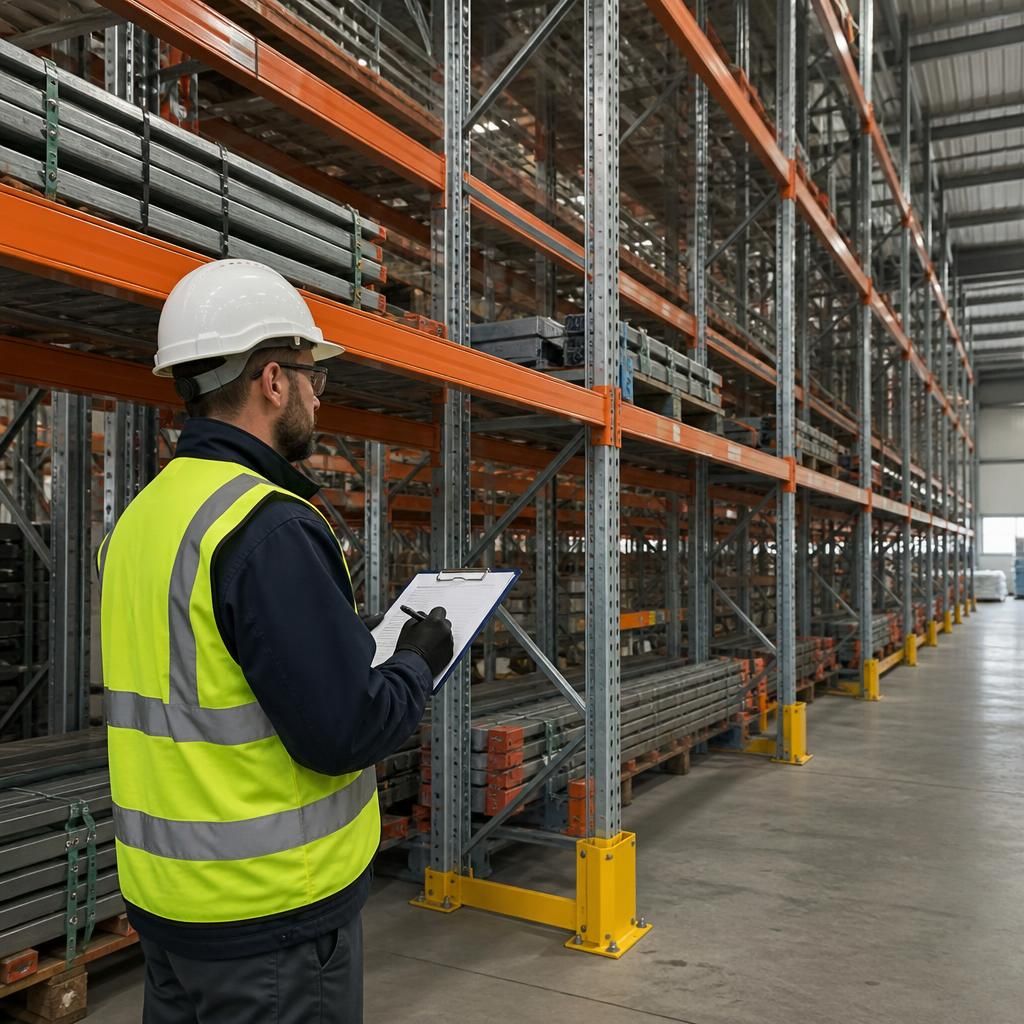
The main financial benefit of second-hand warehouse racking is the lower initial purchase cost compared with equivalent new equipment. However, the genuine saving depends on the condition and completeness of the system. Transport, replacement components, installation, alterations and safety checks should all be included when comparing options.
Before purchase, have the frames, beams, bracing, connectors and protective equipment assessed for damage, compatibility and load capacity. This confirms whether the system can provide safe, suitable storage without unexpected remedial costs. A professional inspection helps ensure that the lower price does not compromise the performance or compliance of the completed installation.
Assess your second-hand warehouse racking
Ask Able Racking to assess your second-hand warehouse racking before purchase or installation, including its condition, compatibility and load capacity. We can identify any required repairs or replacement components and help plan a safe, suitable installation.