
What benefits do pallet racking systems offer for warehouse efficiency?
Pallet racking systems improve warehouse efficiency by using vertical space effectively, organising stock for quicker access and supporting clearer, safer material flow. When correctly designed, installed and maintained, they can increase storage capacity, reduce handling time and help warehouse teams manage inventory more consistently.
Pallet racking systems improve warehouse efficiency by making better use of available floor and vertical space, organising stock for faster access and creating clearer, safer movement routes. When the system is correctly designed for the building, load requirements and handling equipment, it can increase usable storage capacity, reduce unnecessary handling and support more consistent inventory control.
Better use of warehouse space
Pallet racking allows goods to be stored vertically rather than relying only on floor-level storage. This can help a warehouse accommodate more palletised stock within its existing footprint, while preserving defined aisles for access and handling equipment. The available height, floor capacity, sprinkler arrangements, lighting, building structure and operational clearances must all be considered before increasing storage levels.
Using vertical space effectively can also reduce the need to extend storage into working areas, loading zones or circulation routes. A properly planned layout separates storage from other activities and makes the available space easier to manage.
Quicker stock access and handling
Clearly positioned pallets can be located, retrieved and replenished more efficiently than stock stored in unmarked floor areas or poorly organised stacks. Defined bays and aisles help warehouse operatives identify where goods belong and select the correct handling route.
The system should reflect the way stock moves through the operation. Frequently accessed products may need to be positioned closer to despatch or at more convenient picking levels, while slower-moving or reserve stock can be stored in less accessible locations. This reduces travel time and unnecessary movement without compromising safe working practices.
Improved stock organisation and inventory control
Consistent bay numbering, location labelling and planned product allocation make it easier to find stock and identify available capacity. Pallet racking can support first-in, first-out arrangements where appropriate, particularly when used with suitable stock rotation procedures and a layout that gives operatives access to the required pallets.
Good organisation also makes discrepancies easier to investigate. When every pallet has a defined location and stock records reflect the physical layout, warehouse teams can carry out checks more efficiently and reduce the risk of misplaced or overlooked goods.
Clearer warehouse traffic flow
A well-designed pallet racking layout creates predictable routes for forklifts, pallet trucks and pedestrians. This can reduce congestion at aisle entrances, turning points and loading areas. It also helps managers identify where protective barriers, end-of-aisle protection, pedestrian segregation and suitable signage may be required.
Efficiency should not be judged by storage capacity alone. A layout that holds more pallets but restricts access, creates blind corners or causes handling equipment to queue may reduce overall productivity. The most effective design balances storage density with safe and practical movement.
Greater consistency in daily operations
Standardised storage locations make routine activities more repeatable. Receiving teams can put goods away according to an established plan, picking teams can follow known routes and despatch teams can prepare orders with fewer interruptions. This consistency is particularly useful where several shifts or teams use the same warehouse.
Defined storage positions can also make training easier. New operatives can be shown the site layout, location system and handling procedures more clearly than they could in an unstructured storage area. Clear processes still need to be supported by appropriate supervision and equipment training.
Adaptability as requirements change
Many pallet racking systems can be adjusted or extended when stock profiles, pallet dimensions or operational priorities change. Beam levels may be altered within the limits of the design, and additional components may be considered where the structure, floor and handling arrangements permit it.
Any alteration must be assessed before work takes place. Changing beam positions, adding levels, replacing components or increasing loads can affect the system’s capacity and stability. Modifications should be completed by competent personnel and recorded as part of the warehouse’s safety documentation.
Support for safer operations
Good storage design reduces avoidable risks by keeping loads stable, aisles accessible and working areas defined. Suitable protection can help limit damage from handling equipment, while load notices and visible system information remind operatives of the intended use of each bay.
Safety depends on more than the equipment itself. Pallets must be suitable and in good condition, loads must be placed securely, operating procedures must be followed and damage must be reported promptly. Routine visual checks and formal inspections help identify issues such as bent frames, damaged beams, displaced components, overloaded locations or unsafe loading practices before they become more serious.
Lower disruption from preventable damage
Damage to storage equipment can interrupt access to affected bays, require stock to be relocated and create delays while repairs are arranged. A layout with suitable aisle widths, protection and traffic controls can reduce the likelihood of impact. Prompt reporting and repair of damage helps prevent a localised issue from affecting wider warehouse operations.
Regular inspection is an important part of preventative care. It should sit alongside daily or routine checks by warehouse personnel, clear reporting arrangements and a process for isolating unsafe areas where necessary. Repairs should use appropriate components and should not rely on improvised fixes.
More efficient use of handling equipment
Pallet racking can be configured to suit the reach, turning requirements and operating characteristics of the warehouse’s handling equipment. When aisle widths, bay dimensions and storage heights are compatible with the equipment, operatives can work more consistently and with fewer awkward manoeuvres.
These decisions should be made during the design stage rather than after installation. The warehouse should consider the equipment in use, pallet sizes, load weights, operator visibility, floor condition and any changes planned for future operations. A storage layout that is unsuitable for the available equipment may create delays as well as additional safety risks.
How to maximise the efficiency benefits
- Assess stock volumes, pallet dimensions, load weights and movement patterns before selecting the layout.
- Use vertical space only within the limits of the building, floor and system design.
- Keep locations clearly labelled and align physical stock positions with inventory records.
- Separate pedestrian and vehicle routes wherever the risk assessment requires it.
- Maintain suitable clearances around aisles, doors, fire protection equipment and operational areas.
- Train operatives in safe loading, unloading, reporting and handling procedures.
- Carry out routine checks and arrange competent inspections at appropriate intervals.
- Remove damaged components from service or protect the affected area until it has been assessed and made safe.
- Review the layout when stock profiles, handling equipment or warehouse processes change.
The efficiency gained from pallet racking is therefore the result of the complete storage arrangement, not simply the presence of the steel structure. Correct specification, professional installation, disciplined stock control, suitable operator training and ongoing inspection all contribute to reliable performance. Reviewing these elements together helps ensure the warehouse uses its space productively while keeping access, handling and safety requirements under control.
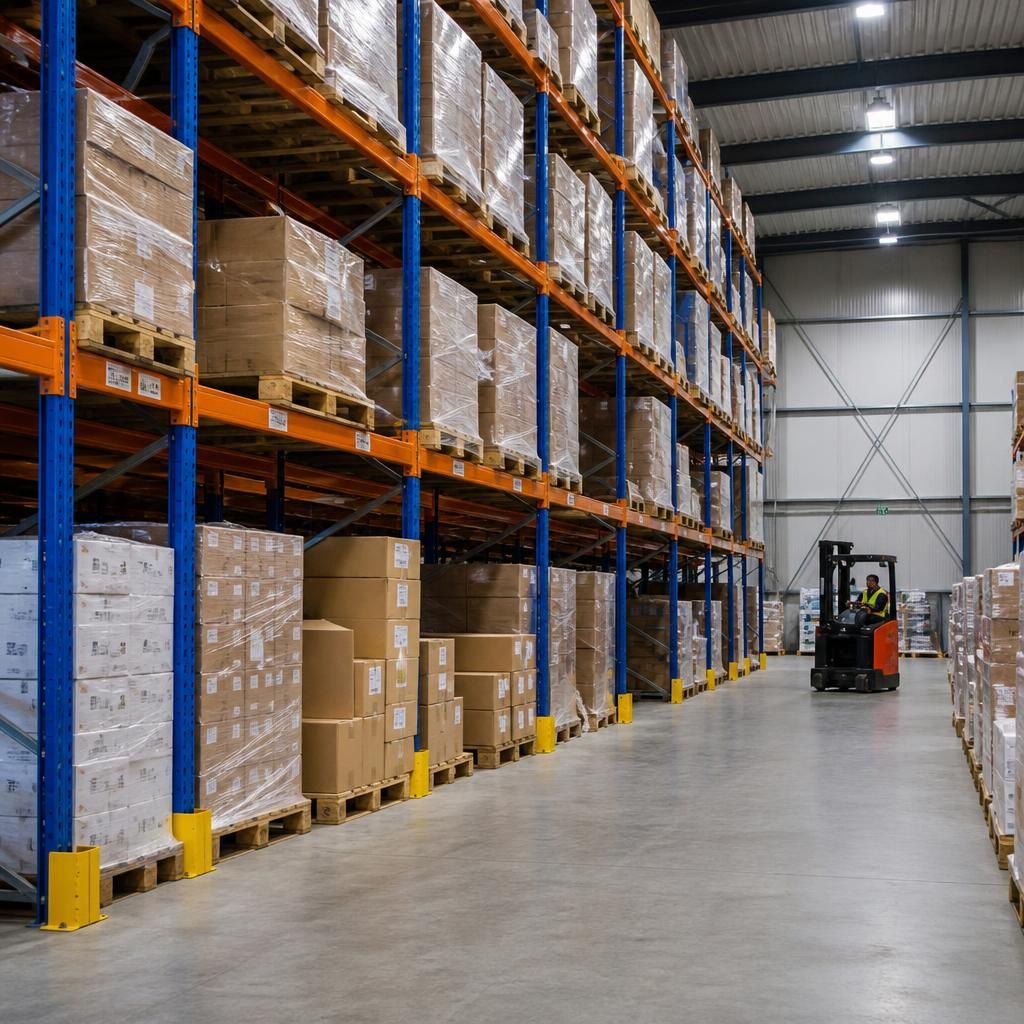
Pallet racking systems improve warehouse efficiency by using vertical storage space while keeping pallets organised and accessible. This allows more stock to be held within the existing warehouse footprint without placing goods in aisles, loading areas or other working spaces.
A well-planned layout assigns each pallet a defined location and provides suitable aisles for forklifts and pallet trucks. Operatives can therefore find, retrieve and replenish stock more consistently, reducing unnecessary travel and handling. Location labels and accurate inventory records further support quicker stock checks and help identify misplaced goods.
Efficiency depends on more than storage capacity. Beam levels, bay dimensions, aisle widths and load capacities must suit the building, pallets and handling equipment. Professional installation, clear load notices, routine checks and prompt repairs help the system remain safe, reliable and productive as warehouse requirements change.
Speak to our experts about improving pallet racking efficiency
Speak to our experts about reviewing your pallet racking layout, storage capacity and safety requirements. We can advise on inspections, repairs, maintenance and practical improvements to support efficient warehouse operations.