
What maintenance practices are essential for prolonging the life of a pallet racking system? Regular inspections, prompt repairs, correct loading, protection from impact and accurate records help identify damage early, maintain structural integrity and extend the safe service life of the system.
Essential pallet racking system maintenance practices include scheduled inspections, prompt repair of damage, correct loading, protection from vehicle impacts, and accurate maintenance records. These measures help preserve structural integrity, maintain safe operation and extend the system’s service life.
Essential pallet racking system maintenance practices include regular inspections, immediate control of damage, correct loading, protection against impact, planned repairs and accurate records. Together, these measures help preserve the structural integrity of the warehouse racking, identify developing faults before they become serious and prolong the system’s safe service life.
Carry out routine visual checks
Warehouse operatives should make frequent visual checks for signs of damage or deterioration. These checks should cover upright frames, beams, bracing, safety pins, baseplates, floor fixings, guards and load-supporting components. Look for bent or twisted steel, cracked welds, loose connections, missing components, displaced beams, damaged anchors and signs that a frame is no longer vertical.
Checks should also identify operational issues such as pallets overhanging the beams, loads resting incorrectly or goods being stored outside their designated locations. Any concern should be reported through the site’s established process rather than being left for the next planned inspection.
Arrange competent warehouse racking inspections
Routine operator checks do not replace a formal inspection by a suitably competent person. A planned inspection provides a more detailed assessment of the system, including damage that may not be obvious during normal warehouse activity. The inspection frequency should reflect the working environment, traffic levels, equipment used, previous damage and the recommendations of the system designer or supplier.
Following an inspection, findings should be recorded and prioritised. Where damage presents an immediate risk, the affected area should be isolated and unloaded until it has been assessed and made safe. Lower-risk defects should still be given an owner and a target completion date so that they do not become recurring maintenance issues.
Repair damage promptly and correctly
Impact damage is one of the most common causes of deterioration in pallet racking systems. Forklift trucks, pallet trucks and other handling equipment can damage uprights, bracing and beam connections, even when the initial impact appears minor. Damaged components should not be straightened, welded or altered on site unless a competent specialist has approved the method.
Repairs should use suitable components and follow the original design requirements. A temporary measure, such as unloading or isolating a bay, is a risk-control action rather than a permanent repair. After work has been completed, the affected section should be checked before it is returned to service.
Load the system within its design limits
Correct loading is essential to maintaining warehouse racking performance. Loads should remain within the stated capacity for the relevant beam levels, bays and frames. Capacity information must be clear, current and visible to the people who use the system.
Operators should position pallets centrally and evenly, keep loads stable and avoid placing damaged pallets into storage locations. Loads should not be dropped onto beams, pushed against uprights or stored in a way that causes uneven loading. Changes to pallet dimensions, goods, beam levels or handling methods can affect the original design assumptions and should be reviewed before implementation.
Prevent vehicle and handling-equipment impacts
Preventative measures are usually more effective than repeated repairs. Suitable end-of-aisle and upright protection can reduce the consequences of contact, but protection should not be treated as permission for vehicles to strike the system. Clearly defined traffic routes, appropriate speed controls, operator training, good visibility and adequate aisle space all help reduce impact risk.
Where impacts occur repeatedly in a particular location, investigate the underlying cause. The issue may relate to poor layout, restricted visibility, damaged flooring, unsuitable equipment or insufficient separation between vehicle routes and storage areas. Correcting the cause helps prevent further damage and reduces disruption.
Keep components, floors and work areas in good condition
Good housekeeping supports effective maintenance. Keep aisles, access routes and areas around the warehouse racking clear of obstructions, waste and spillages. Uneven or damaged flooring can affect vehicle control and may place additional stress on frames and fixings. Report floor defects and drainage or water-ingress problems that could contribute to corrosion or instability.
Cleaning should use methods and products that are compatible with the materials and finishes of the system. Pay particular attention to areas where moisture, chemicals or dust may accumulate. Signs of corrosion should be assessed rather than covered up, as surface deterioration can indicate a wider environmental or structural issue.
Do not make unauthorised alterations
Removing bracing, relocating beams, changing the number of storage levels or attaching equipment to frames can affect the design and load capacity of a pallet racking system. Any proposed alteration should be reviewed by a competent person and completed in accordance with the approved design and manufacturer’s requirements.
Changes to the building, floor, fire protection arrangements, material-handling equipment or storage profile may also require the installation to be reassessed. Keeping the system in its approved configuration is an important part of maintaining both safety and compliance.
Maintain protection and safety components
Check that beam safety pins, locking devices, backstops, guards, pallet supports and other protective components remain present, secure and suitable for their intended use. Replace missing or damaged items with compatible parts. Safety components should not be bypassed, removed or improvised during day-to-day operations.
Where pallets or goods could fall into working areas, review whether the existing protection remains appropriate for the stored loads and site activities. This is particularly important after changes to stock, pallet types or access arrangements.
Keep clear maintenance and inspection records
Records should show when checks and formal inspections took place, who completed them, what defects were identified and what action was taken. Keep repair details, photographs, isolation notices, replacement components and completion checks with the relevant inspection information.
Accurate records make it easier to identify repeated impact locations, overdue repairs and patterns of deterioration. They also provide useful evidence that the warehouse racking is being actively managed and that reported defects are not being overlooked.
Train staff and review working practices
Everyone who loads, unloads, inspects or works around the system should understand the site’s reporting procedure and the basic signs of damage. Training should cover safe loading, capacity information, pallet condition, vehicle movements, impact reporting and the action required when a defect is found.
Maintenance arrangements should be reviewed when there are changes to staffing, equipment, stock, layout or working hours. A system that was suitable for its original use may require additional controls when operating conditions change.
For existing installations, the most effective approach is a planned maintenance programme combining operator checks, competent formal inspections, prompt defect control, correctly specified repairs and periodic review of how the warehouse racking is being used. This preventative approach reduces avoidable damage, supports compliance with workplace safety duties and helps the system remain safe and serviceable for longer.
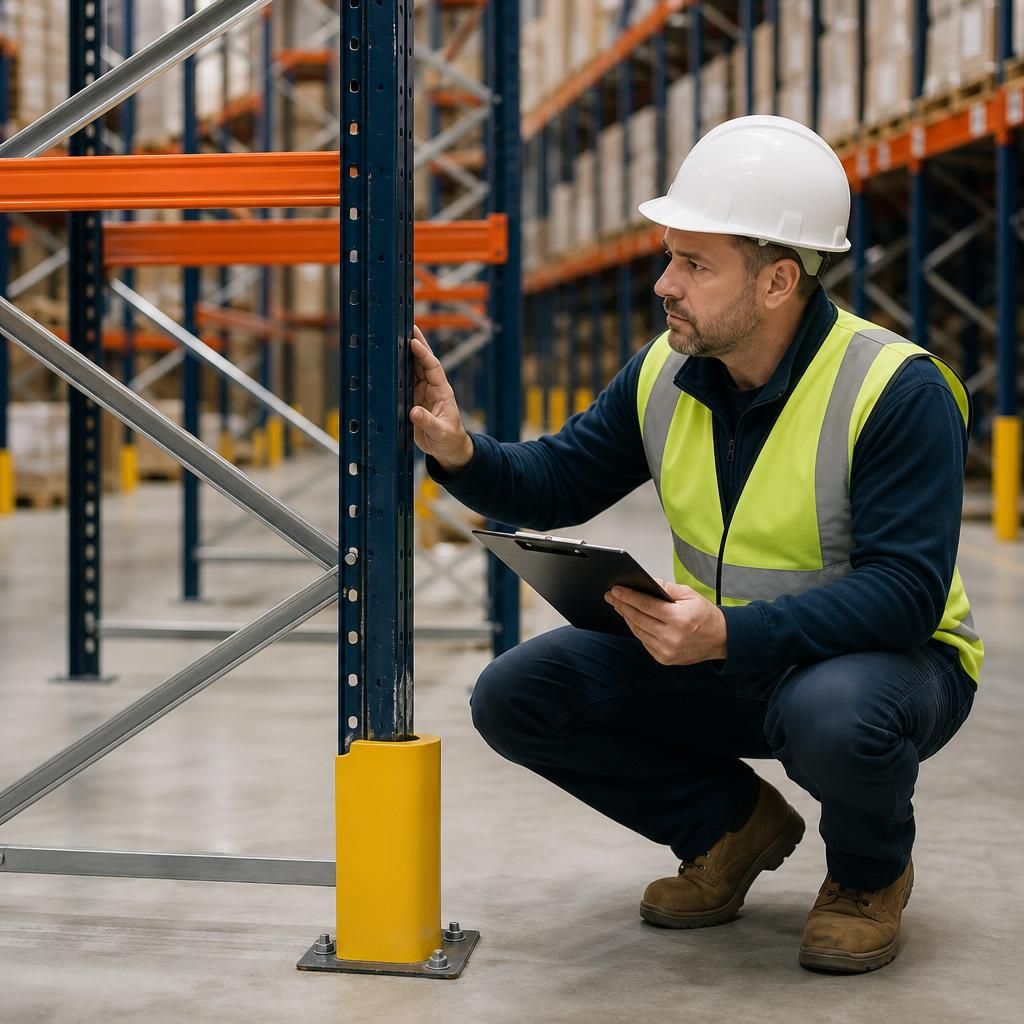
Promptly controlling and repairing damage is one of the most important maintenance practices for prolonging the safe service life of a pallet racking system. Even minor impact to an upright, beam or connection can reduce structural performance if it is left unreported.
Isolate and unload any affected area where damage could present an immediate risk, then arrange assessment by a competent specialist. Do not straighten, weld or alter damaged warehouse racking components without approval. Repairs should use compatible parts and follow the original design requirements, with the repaired section checked before it is returned to service.
Arrange a pallet racking maintenance inspection
Arrange a competent pallet racking maintenance inspection with Able Racking to identify damage, prioritise repairs and help keep your system safe and serviceable.