
Why is warehouse racking inspection training important for employers?
Warehouse racking inspection training helps employers develop competent staff who can identify damage, overloading, instability and other hazards before they lead to injury or operational disruption. It supports the employer’s UK health and safety duties, strengthens inspection records and enables timely repairs that reduce avoidable damage, accidents and downtime.
Warehouse racking inspection training is important because it helps employers develop competent people who can recognise damage, overloading, instability and other hazards before they cause injury, stock loss or operational disruption. Properly trained inspectors can assess warehouse racking consistently, record defects accurately and escalate issues so that corrective action is taken without unnecessary delay.
Employers remain responsible for providing and maintaining safe work equipment and safe systems of work. In the UK, warehouse racking should be managed within the employer’s wider health and safety arrangements, taking account of the relevant requirements of the Provision and Use of Work Equipment Regulations and the guidance in HSE publication HSG76, Warehousing and storage. Training supports these duties, but it does not remove the need for suitable warehouse racking design, competent installation, planned maintenance, user awareness and periodic examination by an appropriately competent person.
It improves the quality of inspections. An untrained observer may notice that a frame or beam looks damaged without understanding the significance of the defect. Inspection training explains what to look for, how to classify damage and when a problem requires immediate action. This can include:
- bent or dented uprights, bracing members and beams;
- loose, missing or incorrectly fitted components;
- displaced beams, damaged connections or inadequate locking devices;
- impact damage caused by handling equipment;
- overloaded or unevenly loaded locations;
- pallets that are damaged, unsuitable or incorrectly positioned;
- signs of instability, movement or unauthorised alteration; and
- missing, unclear or inaccurate load notices.
Training also helps inspectors distinguish between minor damage that requires monitoring and serious damage that should result in the affected area being isolated, unloaded or taken out of service. This is particularly important where warehouse racking is exposed to repeated vehicle movements, changing stock profiles or frequent operational alterations.
It supports prompt action and reduces avoidable disruption. An inspection is only effective if its findings lead to a suitable response. Trained employees are more likely to provide clear descriptions, identify the location of a defect, take appropriate temporary precautions and notify the responsible manager. Accurate information allows repairs to be planned properly and helps prevent small defects from developing into more extensive damage. It can also reduce the likelihood of unplanned closures, product damage, falling goods and interruptions to picking or dispatch operations.
It strengthens the employer’s inspection system. A useful inspection process should define who carries out routine checks, what is examined, how findings are recorded and who is responsible for corrective action. Training helps employees apply the same approach across different warehouse areas and shifts. It should cover practical inspection methods, defect reporting, escalation arrangements and the limitations of an internal inspection.
Records should normally identify the date, location, equipment examined, findings, risk level, action required, person responsible and completion status. Keeping this information allows employers to demonstrate that concerns are being managed rather than simply noted. It also helps reveal recurring problems, such as repeated vehicle impacts, unsuitable loading practices or damage concentrated in a particular aisle.
It helps employers meet competence expectations. The person carrying out an inspection must have sufficient knowledge, training and experience for the equipment and task involved. A short briefing may be suitable for basic user checks, but it is not a substitute for more detailed warehouse racking inspection training where the employee is expected to identify and assess damage. Training should be appropriate to the type of warehouse racking, the working environment and the person’s responsibilities.
Employers should also understand the difference between routine user checks, regular visual inspections and a formal expert examination. Employees may be trained to report obvious damage during normal work, while a suitably experienced inspector or external specialist may be required for a more comprehensive assessment. HSG76 advises that warehouse racking should be systematically inspected at appropriate intervals, including an expert inspection at least every twelve months, with more frequent checks where the risk assessment indicates they are necessary. The employer should follow the applicable guidance and obtain competent advice for its particular installation and operating conditions.
It reinforces safe behaviour throughout the workforce. Inspection training gives employees a clearer understanding of how loading, handling equipment, poor housekeeping and unauthorised changes can affect warehouse racking safety. Trained inspectors can provide useful feedback to supervisors and identify patterns that may require changes to traffic management, pallet handling, load distribution or operator training. This makes inspection part of preventative safety management rather than an isolated administrative task.
It can help control maintenance costs. Early identification does not guarantee that damage will be minor, but it gives the employer a better opportunity to address problems before they spread or create secondary damage. Inspection findings can support planned repair budgets, prioritise urgent work and prevent unsuitable makeshift repairs. Repairs and alterations should be completed by competent specialists using compatible components; damaged warehouse racking should not be modified or returned to service simply because it appears stable.
Effective training should be followed by a documented procedure, clear reporting routes, suitable inspection forms and refresher instruction when equipment, layouts or working practices change. Employers should review whether reported defects are closed out, whether inspections are being completed as planned and whether repeated findings indicate a wider control problem.
In practical terms, warehouse racking inspection training gives employers better-informed staff, more reliable records and earlier warning of safety issues. Used alongside competent formal inspections, appropriate repairs and effective warehouse controls, it helps employers protect people, meet their health and safety responsibilities and maintain efficient storage operations.
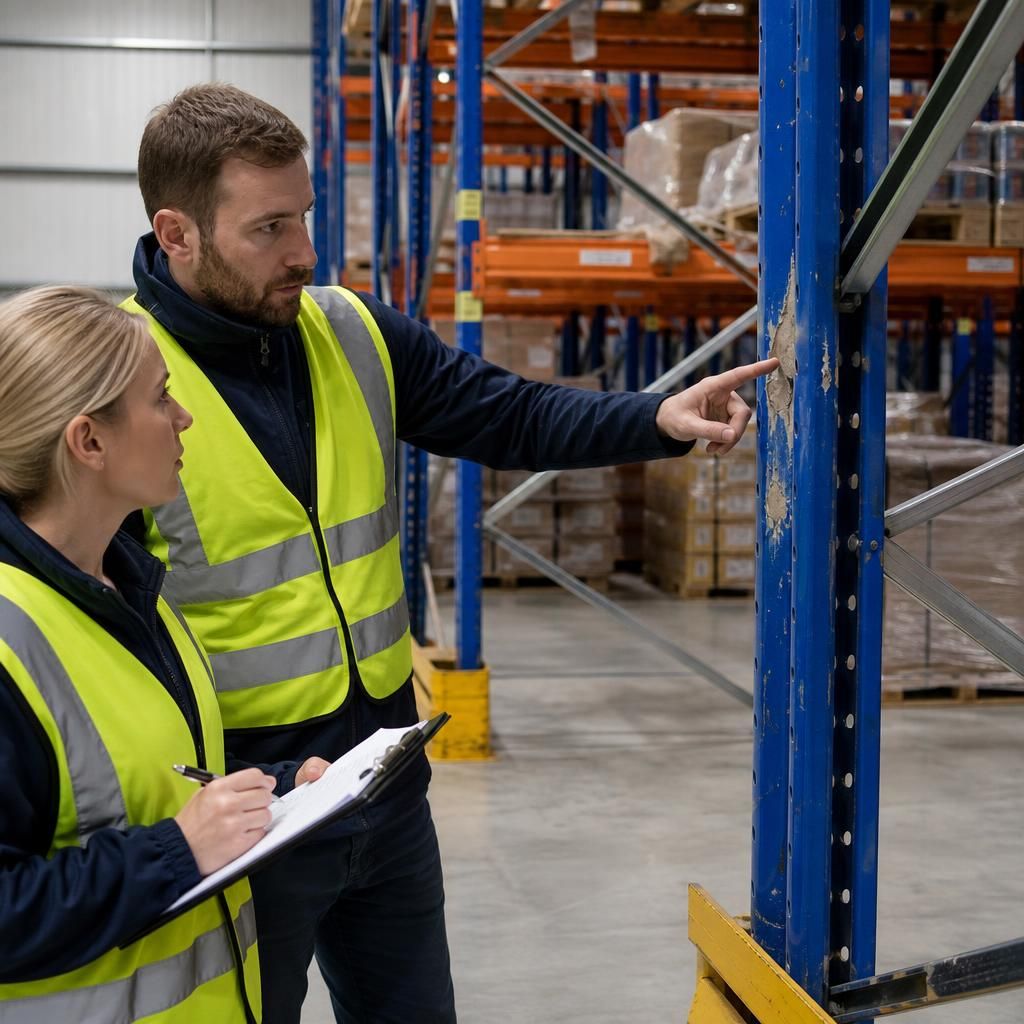
Warehouse racking inspection training teaches employees how to recognise defects, assess their significance and report them through the correct safety procedure. This helps employers identify problems such as impact damage, loose components, displaced beams, overloading and unsafe pallet positioning before they cause injury or operational disruption.
Training also clarifies when an area should be isolated, unloaded or taken out of service, rather than relying on guesswork. Clear inspection records give managers the information needed to arrange competent repairs, monitor recurring issues and demonstrate that reported defects are being managed responsibly.
Discuss warehouse racking inspection training for your team
Discuss warehouse racking inspection training with Able Racking to ensure your team has the knowledge and practical skills needed to identify defects, report risks and support a safer inspection process.