
What qualifications are required to participate in warehouse racking inspection training? No formal qualification is generally required to attend warehouse racking inspection training, but participants should have relevant warehouse experience, understand workplace safety and be able to identify hazards; formal competence is gained through suitable training, practical instruction and employer authorisation.
No formal qualification is generally required to participate in warehouse racking inspection training, although relevant warehouse experience, workplace safety awareness and the ability to identify hazards are beneficial. Competence is developed through suitable instruction, practical assessment and employer authorisation to carry out inspections.
No formal qualification is usually required to enrol on warehouse racking inspection training. However, participants should have suitable workplace experience, a basic understanding of warehouse safety and the ability to recognise hazards. The training develops the practical knowledge needed to carry out inspections, while the employer remains responsible for confirming that an individual is competent and authorised to perform the role.
In the UK, legislation does not generally prescribe a specific certificate or academic qualification for a warehouse racking inspector. The important requirement is competence. This means having the knowledge, practical skills, training and experience necessary to identify defects, assess their significance, record findings accurately and take appropriate action. Competence should relate to the type and condition of the storage equipment being inspected.
Useful background experience may include:
- Working in a warehouse, distribution centre, manufacturing site or other industrial environment
- Understanding workplace hazards, safe systems of work and accident prevention
- Familiarity with storage equipment, loading practices and material-handling operations
- Experience reporting defects, completing checklists or following inspection procedures
- The ability to read manufacturer information, site procedures and inspection records
- Clear written and verbal communication, so risks can be explained to managers and warehouse teams
A forklift qualification is not normally required to participate in warehouse racking inspection training. It may be relevant to a person’s wider warehouse duties, but it does not by itself demonstrate competence to inspect storage systems. Equally, an engineering or structural qualification is not generally an entry requirement for routine inspection training, although specialist structural knowledge may be needed where damage is complex, the cause is uncertain or a repair requires technical design.
Participants should be able to understand training materials and complete inspection records in English, unless suitable support has been arranged with the training provider. They should also be physically able to conduct a safe visual inspection within the site’s procedures. This does not mean climbing storage equipment or entering unsafe areas. Inspections should be planned so that the inspector can work from a safe position and follow the site’s risk assessment.
Suitable training normally covers the inspection process, common damage patterns, unsafe loading, missing or displaced components, protection systems, signs of instability and the action required when a defect is found. It should include practical examples or assessment, rather than relying solely on attendance. A course certificate can show that the participant completed the training, but the certificate alone is not a substitute for practical competence or employer authorisation.
After training, the employer should consider the individual’s previous experience, the complexity of the warehouse environment and the level of responsibility assigned. A newly trained inspector may initially need supervision, support from an experienced competent person or a review of completed inspection reports. Refresher training should also be considered when procedures change, new types of storage equipment are introduced or inspection performance identifies a knowledge gap.
Warehouse racking inspection training is therefore suitable for a range of people, including warehouse supervisors, facilities staff, health and safety personnel and experienced operatives. The key qualification is not a particular academic award; it is demonstrable competence gained through relevant experience, suitable instruction, practical understanding and ongoing employer assessment.
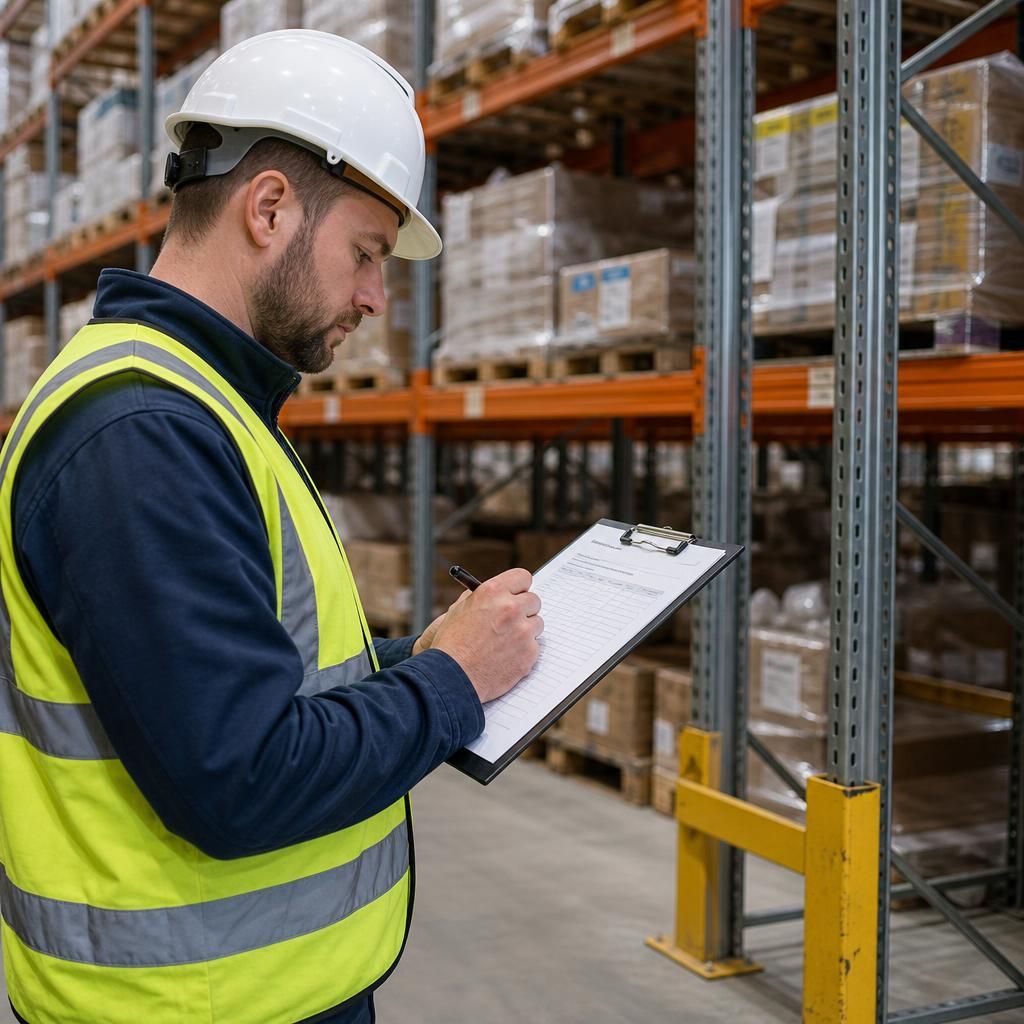
Warehouse racking inspection training usually does not require a formal academic qualification. The essential requirement is the ability to develop demonstrable competence through suitable instruction, practical understanding and relevant workplace experience.
Participants should understand basic warehouse safety, recognise common hazards and follow site procedures. Experience in warehouse operations, facilities management, health and safety or material handling can help them relate training to real inspection conditions.
Completion of a course provides evidence that the participant has received instruction, but it does not automatically authorise them to inspect independently. The employer should assess their practical ability, provide support where necessary and confirm that they are competent to inspect the warehouse racking systems in their workplace.
Arrange Warehouse Racking Inspection Training
Arrange warehouse racking inspection training with Able Racking to develop practical inspection competence within your team. Contact us to discuss your site requirements and suitable training options.