
How frequently should warehouse racking inspections be conducted?
Warehouse racking should receive a documented visual inspection at regular, risk-based intervals—typically weekly or after events that could cause damage—and a more detailed inspection by a technically competent person at least every 12 months. Increase the frequency where there is heavy traffic, frequent changes, a history of damage or other site-specific risks, and carry out immediate checks whenever damage or instability is suspected.
Warehouse racking should be checked at intervals determined by the risks in the workplace. As a practical baseline, HSE guidance recommends regular visual inspections, normally carried out weekly or at another risk-based interval, together with a more detailed inspection by a technically competent person at least every 12 months. Additional checks are required after any event that could have damaged the warehouse racking or affected its stability.
There is no single inspection frequency that is suitable for every warehouse. The responsible person should establish an inspection programme through a documented risk assessment, considering the type and condition of the warehouse racking, the way it is used, vehicle movements, loading practices, working conditions and the competence of employees carrying out routine checks.
A suitable inspection programme normally includes:
- Routine visual checks: carried out by trained warehouse staff or other nominated personnel at regular intervals. These checks should look for obvious damage, displacement, overloading, missing components and unsafe storage practices.
- Regular documented inspections: completed at least weekly in many warehouses, or more frequently where the risk assessment identifies a need. The findings should be recorded, including any remedial action.
- Expert inspections: completed at least every 12 months by a technically competent person who can assess the condition, stability and safe use of the warehouse racking system in detail.
- Event-driven inspections: carried out immediately after an impact, suspected overload, alteration, relocation, fire, flooding, significant building movement or any other event that could affect safety.
The weekly interval is a widely used starting point rather than an automatic rule for every site. A warehouse with frequent forklift movements, narrow aisles, high traffic levels, fast stock turnover or a history of impacts may require checks more often. Inspection frequency may also need to increase where loads are difficult to handle, employees regularly change the arrangement of stored goods, or the warehouse operates in conditions that accelerate corrosion or deterioration.
Routine checks should be practical and consistent. The person carrying them out should follow a defined procedure and know which issues require immediate escalation. Typical points to examine include upright frames, beams, connectors, bracing, guards, baseplates, floor fixings, safety pins and load signs. They should also check for bent or deformed components, corrosion, loose or missing parts, damaged protection, unauthorised modifications and loads that project into access routes or exceed the stated capacity.
Any damage that could make the warehouse racking unsafe should be reported promptly. The affected area may need to be isolated or unloaded until it has been assessed by a competent person. Damaged components should not be straightened, welded, altered or replaced with unsuitable parts as a temporary solution. Repairs or replacement work should be completed using appropriate components and in accordance with the system design and the manufacturer’s requirements.
It is important to distinguish between a routine visual check and an expert inspection. A visual check helps identify obvious defects at an early stage, but it does not replace a detailed assessment by someone with the necessary technical knowledge and experience. The expert inspection should consider the condition of the system, the severity and location of defects, the likely causes of damage and whether the warehouse racking remains suitable for its intended loads and operating conditions.
Inspection records should be clear enough to demonstrate what was checked, when it was checked, who completed the inspection and what action was taken. A useful record can include photographs, the location of each defect, the classification or priority assigned to it, the person responsible for corrective work and the date of closure. Keeping records also helps identify repeated impacts, recurring unsafe practices and areas where training or changes to the working method may be necessary.
The inspection schedule should be reviewed whenever the warehouse operation changes. This includes changes to load weights, pallet types, handling equipment, aisle arrangements, storage levels, shift patterns or traffic routes. New or altered warehouse racking should be checked before it is brought into use, and any change that affects the original design assumptions should be assessed by an appropriately competent person.
For most businesses, the safest approach is to combine frequent checks by trained site personnel with a documented weekly inspection programme and an independent, technically competent inspection at least annually. The exact interval should then be adjusted to reflect the risks identified on site. If damage or instability is suspected, do not wait for the next scheduled inspection: stop using the affected section, make the area safe and arrange an immediate assessment.
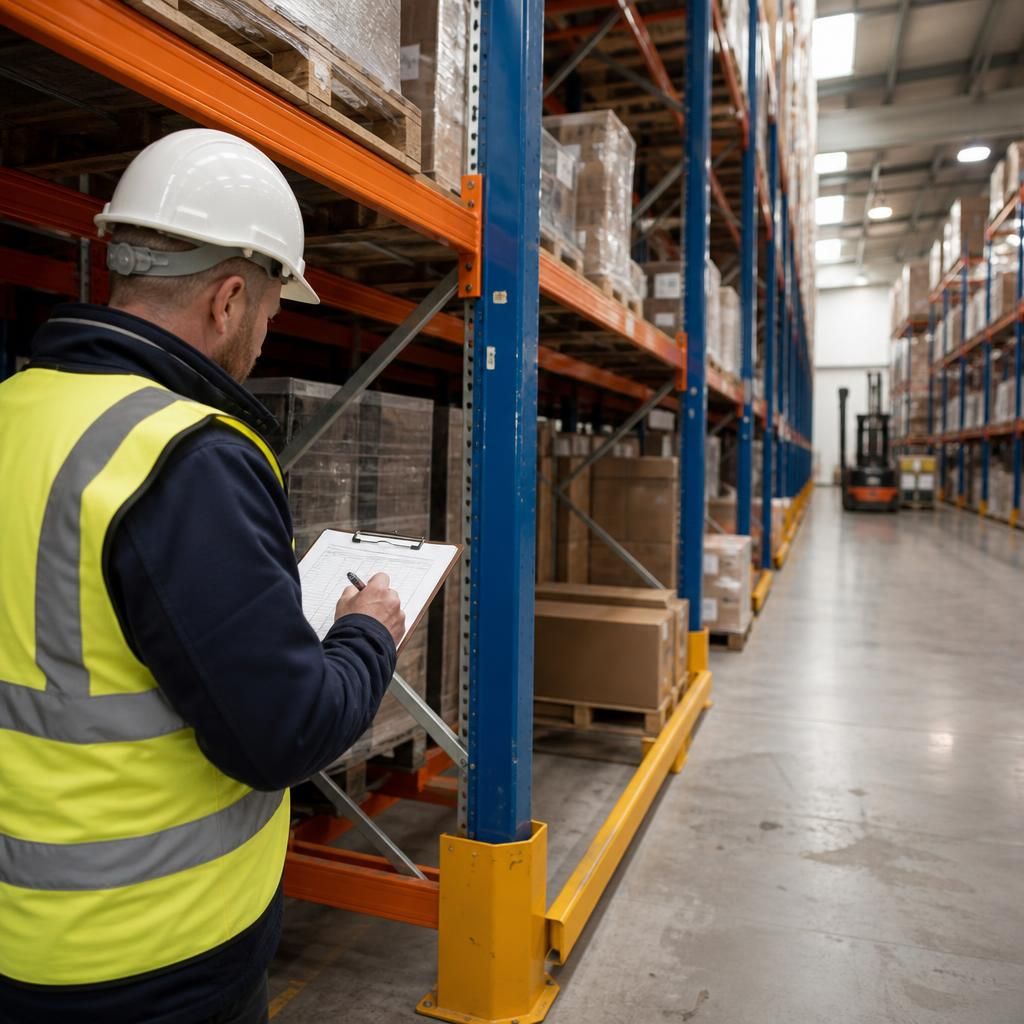
Warehouse racking inspections should follow a documented, risk-based schedule rather than a fixed interval applied to every site. As a practical baseline, carry out regular visual checks, normally weekly, alongside a more detailed inspection by a technically competent person at least every 12 months.
The schedule must also include immediate checks after forklift impact, suspected overloading, alterations, relocation, fire, flooding or any other event that could affect stability. Where traffic levels, operating conditions or a history of damage create greater risk, inspections may need to be more frequent. Record each inspection, the defects identified and the corrective action taken so that recurring problems can be addressed promptly.
Arrange Your Warehouse Racking Inspection Training
Arrange your warehouse racking inspection training with Able Racking to ensure nominated personnel understand inspection procedures, defect reporting and safe escalation.