
How often should warehouse racking be inspected for safety and compliance?
Warehouse racking should receive a formal safety inspection by a competent person at intervals of no more than 12 months, with the frequency increased where risk, usage or site conditions require it. Routine visual checks should also be carried out regularly, with damage reported and assessed promptly.
Warehouse racking should undergo a documented safety inspection by a competent person at intervals of no more than 12 months. This formal inspection is the maximum recommended interval, not an indication that every site only needs an annual check. Routine visual checks should take place more frequently, and the inspection frequency should increase where warehouse racking is heavily used, exposed to damage or operated in higher-risk conditions.
UK guidance, including the HSE’s recommendations for the safe use of warehouse racking, expects employers to maintain storage equipment in a safe condition and to arrange systematic inspections. The inspection programme should be based on a suitable risk assessment, taking account of the type of warehouse racking, traffic movements, loading arrangements, working practices and the consequences of a failure.
How often should each type of check take place?
- Routine visual checks: Inspectors, supervisors or trained warehouse staff should look for obvious damage, instability, missing components, displaced loads and other defects as part of normal operations. The exact frequency should reflect the level of risk and use on site. In busy areas, checks may be required daily or at the start of each shift.
- Formal expert inspection: A technically competent person should complete a detailed inspection at least every 12 months, or more often where the risk assessment, equipment condition or operating environment requires it.
- Immediate checks after an incident: Any impact, collision, overload, unexpected movement, structural concern or other event that could have affected the warehouse racking should trigger an immediate assessment before the affected area is returned to normal use.
- Checks after changes: An inspection should follow installation, alteration, relocation, changes to load capacities or beam levels, and the introduction of different handling equipment or operating methods.
When should the inspection frequency be increased?
A shorter interval may be appropriate where warehouse racking is subject to frequent forklift movements, repeated loading and unloading, high traffic levels or limited visibility. The same applies where there is a history of impact damage, poor housekeeping, uneven floors, difficult environmental conditions or frequent changes to storage layouts and loads.
Risk is also affected by the type and condition of the system. Older or damaged warehouse racking may need closer monitoring, particularly if components are corroded, modified without suitable design information or difficult to inspect. Where a site handles heavy, awkward or unstable loads, the inspection regime should reflect the potential consequences of displacement or collapse.
What does a formal inspection check?
A competent inspector will assess the condition and suitability of the warehouse racking rather than simply look for visible damage. The inspection may include:
- uprights, frames, bracing, beams, connectors, baseplates and fixings;
- signs of impact, bending, distortion, corrosion, cracking or missing components;
- rack protection and the condition of guards;
- the stability, alignment and anchorage of the system;
- load notices, stated capacities and whether the stored loads match the design;
- clearances, aisle arrangements and the interaction between handling equipment and the warehouse racking;
- evidence of unauthorised alterations or unsuitable repairs; and
- housekeeping, access and other conditions that could increase the risk of damage or instability.
The inspector should record the location and nature of each defect, assess its significance and identify the required action. A clear report should distinguish matters requiring immediate attention from defects that can be monitored and repaired within a defined timescale.
What should happen when damage is found?
Damage should be reported immediately, not left until the next scheduled inspection. The affected area may need to be unloaded, isolated or protected until a competent person has assessed it. Damaged components should not be straightened, welded or altered without appropriate technical advice, as an apparently minor repair can affect the design strength and stability of the system.
Following the inspection, repairs should be completed by a suitably qualified person using compatible components and an appropriate method. The warehouse racking should then be reassessed, and the repair, inspection outcome and return-to-service decision should be recorded.
Why an annual inspection alone is not enough
A formal annual inspection provides an important independent review, but it cannot identify damage that occurs afterwards. Forklift contact, overloading, poor load placement and unauthorised changes can create a risk at any time. Effective control therefore combines frequent visual checks, prompt reporting, competent technical inspections, staff training and suitable maintenance arrangements.
Inspection records should include the date, areas examined, name and competence of the inspector, findings, photographs where useful, risk classification, remedial actions, completion dates and any restrictions placed on use. These records help demonstrate that the warehouse racking is being managed systematically and provide an audit trail for recurring damage or changes in risk.
For most workplaces, the appropriate starting point is a documented risk assessment, routine site checks and a formal competent-person inspection at least annually. The interval should then be reviewed whenever the warehouse racking, working methods, loads, traffic levels or site conditions change. This approach supports UK health and safety duties while helping identify defects before they become a more serious operational or structural problem.
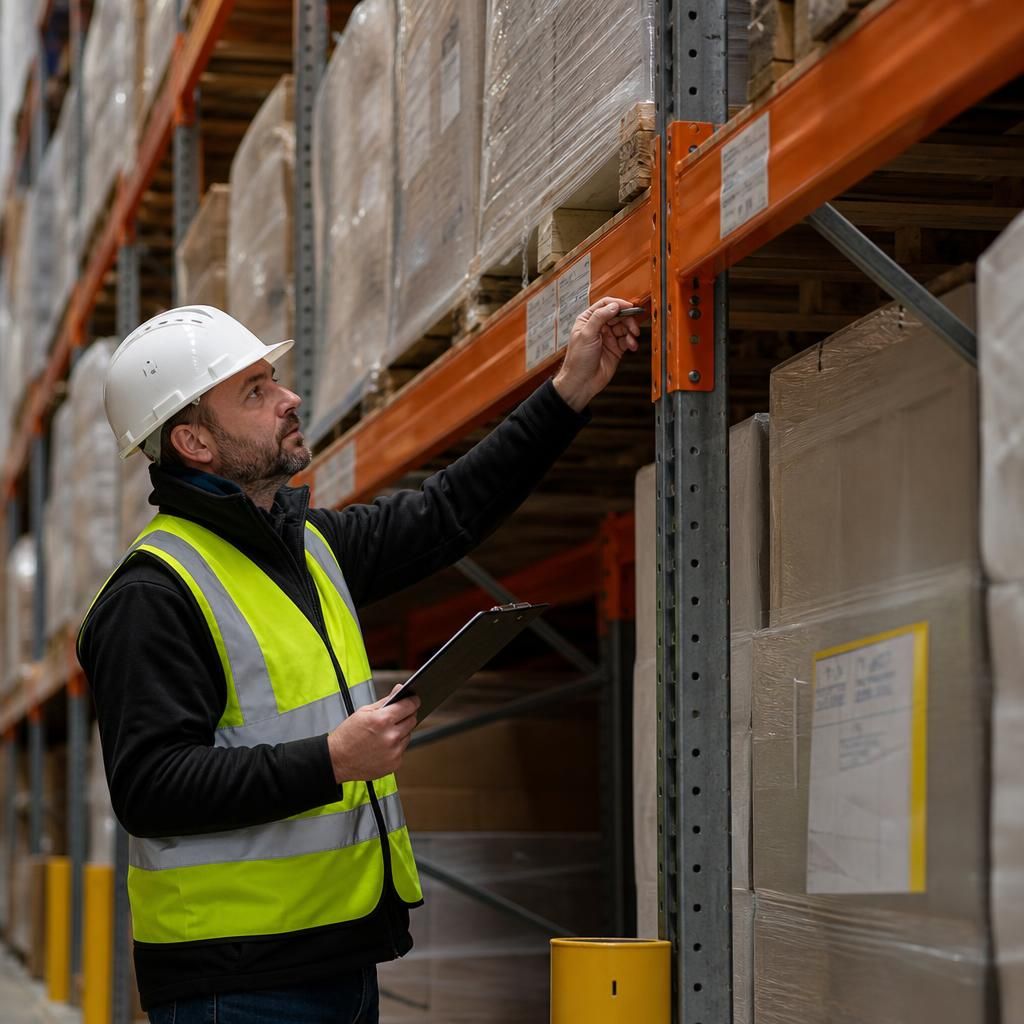
A formal warehouse racking inspection should take place immediately after any collision, overload, structural concern or other incident that could have affected the system. The affected area should not return to normal use until a competent person has assessed its condition and confirmed that it is safe.
Do not wait for the next scheduled inspection if damage is found. Depending on the severity, the area may need to be unloaded, isolated or clearly marked. Damaged components should not be straightened, welded or altered without suitable technical advice, as an improvised repair can compromise the warehouse racking’s strength and stability.
The assessment should record the defect, its location, the action required and the decision to repair, restrict or return the area to service. This incident-led approach complements routine visual checks and formal inspections, helping prevent minor impact damage from developing into a more serious safety risk.
Book your warehouse racking inspection
Book your warehouse racking inspection with Able Racking to check your system remains safe, compliant and suitable for current operations.