
How often should warehouse racking inspections be conducted?
Warehouse racking should receive a formal expert inspection at intervals of no more than 12 months, or more frequently where the risk assessment, operating conditions or previous findings indicate this is necessary. Routine visual checks should also be completed regularly by trained employees, with damage or other concerns reported and addressed without delay.
Warehouse racking should receive a formal, systematic inspection by a competent person at least every 12 months. This is the recognised maximum interval recommended by HSE guidance for storage equipment, but a shorter interval may be appropriate where the risk assessment, working environment, traffic levels, loading arrangements or previous inspection findings indicate increased risk. Regular visual checks by trained employees should take place between formal inspections.
There is no single inspection frequency that is suitable for every warehouse. The responsible person should set the inspection schedule through a documented risk assessment, considering how the warehouse racking is used and the likelihood of damage or overloading. A formal inspection should not be delayed simply because the annual date has not been reached if a concern has been identified.
A suitable warehouse racking inspection programme normally includes:
- Routine visual checks: trained employees should look for visible damage, displaced components, missing safety items, unstable loads and other obvious hazards during normal operations. The frequency should reflect the level of activity and risk in the storage area.
- Regular recorded inspections: a more structured check should be completed at an interval determined by the risk assessment. Findings should be recorded, reviewed and followed through to completion.
- A formal expert inspection: a competent inspector should assess the condition, stability and safe use of the warehouse racking at least every 12 months, or sooner where circumstances require.
The person carrying out a formal inspection should have suitable knowledge, training and practical experience of warehouse racking systems and the risks associated with their use. The inspection should be independent and sufficiently detailed to identify damage, deterioration, installation defects, unsafe modifications, overloading, unsuitable loading practices and failures to follow the system design.
Additional inspections are needed after events that could affect safety. These include an impact from a forklift truck or other vehicle, significant damage, relocation, alteration, changes to beam or load capacity, changes in the stored goods, installation of new components, unusual movement or instability, or a change in the way the storage area is operated. An inspection may also be appropriate after a nearby structural or operational incident that could have affected the system.
Damage or a serious safety concern should be reported immediately rather than left for the next scheduled inspection. The affected area should be made safe, which may involve unloading or isolating the relevant section, preventing further use and arranging an assessment by a competent person. Repairs or replacement components should be approved and installed correctly; damaged parts should not be straightened, improvised or put back into service without proper assessment.
Inspection records should show the date, areas examined, inspector’s details, findings, risk classification, actions required and the person responsible for completing those actions. They should also confirm when remedial work was completed and whether the warehouse racking was checked again afterwards. Keeping these records supports effective maintenance and helps demonstrate that the inspection arrangements are being managed properly.
In practice, the annual formal inspection is the minimum planning point, not a substitute for day-to-day control. Busy sites with frequent vehicle movements, high loads, poor visibility, harsh conditions or a history of damage may need more frequent checks. The inspection programme should therefore be reviewed whenever the operation, equipment, load profile or risk level changes.
Able Racking can help establish an appropriate inspection schedule, complete formal warehouse racking inspections and advise on the action required for identified defects. The most reliable approach is to combine competent periodic inspections with routine checks, prompt reporting and properly controlled repairs.
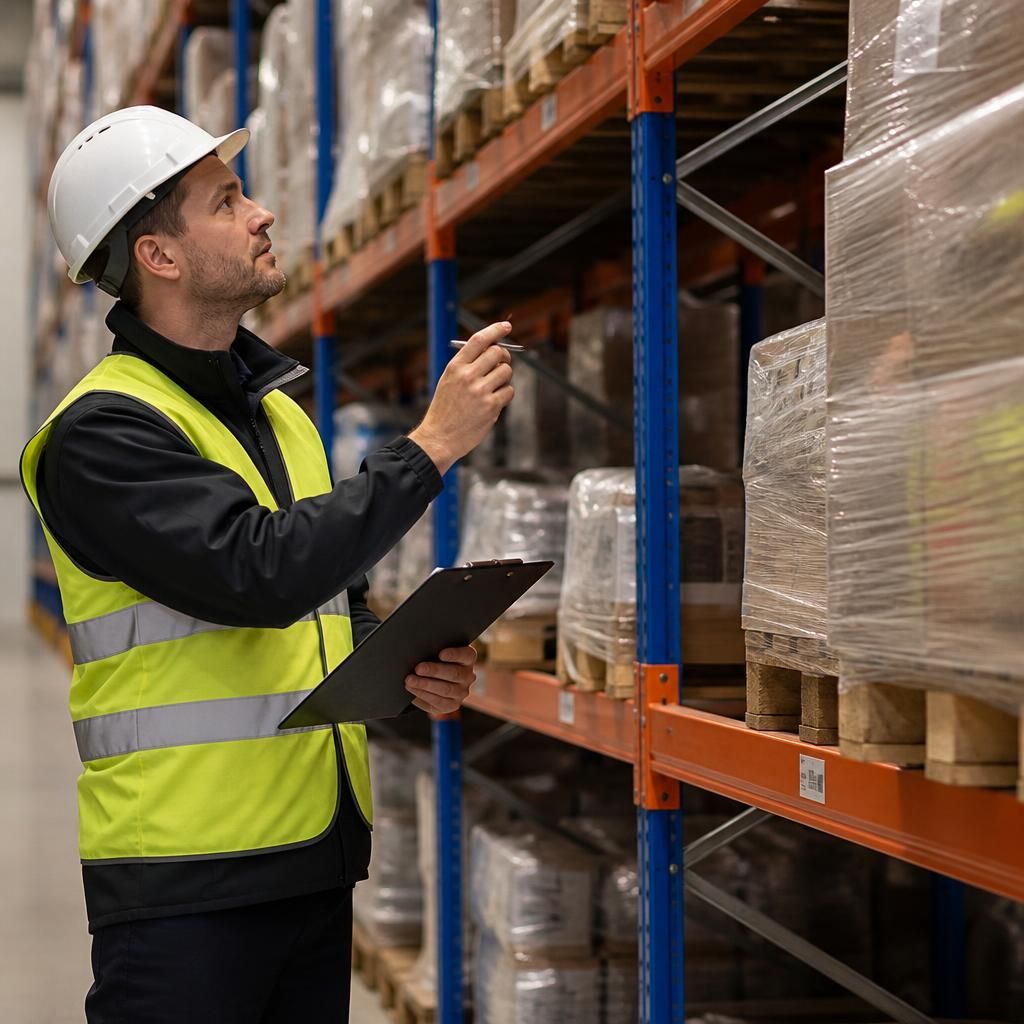
A formal warehouse racking inspection should also be arranged whenever an event may have affected safety, rather than waiting for the next planned date. This includes a forklift impact, significant damage, relocation, alteration, changes to load capacity or stored goods, unusual movement, or a change in how the storage area is operated.
Until the affected area has been assessed by a competent person, it may need to be isolated or unloaded. Any defects should be recorded, reported promptly and repaired using suitable, approved components before the warehouse racking is returned to service.
Arrange Your Warehouse Racking Inspection
Arrange your formal warehouse racking inspection with Able Racking to confirm that your storage system remains safe, compliant and fit for use. Contact our experienced inspection team to discuss your site requirements and inspection schedule.