
What long-term benefits can investing in quality warehouse racking bring?
Investing in quality warehouse racking can improve workplace safety, storage efficiency and operational reliability while reducing the risk of premature repairs or replacement. Well-designed, correctly installed systems also support better space utilisation, easier stock handling and long-term compliance when maintained through regular inspections and preventative care.
Investing in quality warehouse racking provides long-term value by improving safety, making better use of available space, supporting efficient stock handling and reducing avoidable repair or replacement costs. A suitable system that is correctly specified, installed and maintained is more likely to remain stable, compliant and adaptable as storage requirements change.
Improved workplace safety
Quality warehouse racking is designed to withstand the loads and working conditions for which it is specified. Appropriate components, sound connections, suitable protection and clear load information help reduce the likelihood of structural failure, falling goods and damage caused by handling equipment.
Safety depends on more than the quality of the original materials. The system must be correctly assembled, used within its stated capacity and kept in good condition. Regular inspections can identify impact damage, bent components, missing parts, overloading, unauthorised alterations and other defects before they become more serious. Prompt repairs help maintain the intended level of protection throughout the working life of the installation.
Lower whole-life costs
The initial purchase price is only one part of warehouse racking costs. Lower-quality or poorly specified systems may require more frequent repairs, replacement components or premature renewal. They can also create indirect costs through damaged stock, restricted access, disruption to operations and avoidable safety measures.
A quality installation can reduce these risks when it is supported by a planned inspection and maintenance programme. Preventative care allows defects to be dealt with at an earlier stage, when repairs are generally more straightforward and less disruptive than extensive remedial work or complete replacement.
More effective use of warehouse space
A well-designed warehouse racking layout makes better use of available floor area and clear height while preserving safe access for people and handling equipment. Storage locations can be planned around product dimensions, load weights, stock rotation and picking methods rather than relying on inefficient or improvised arrangements.
Better space utilisation may allow a business to accommodate additional stock within its existing premises. This can delay the need for additional storage space, provided that the structure, floor, fire arrangements, access routes and operating procedures remain suitable for the proposed layout.
Greater operational efficiency
Consistent bay dimensions, clearly organised locations and suitable access routes make it easier to put goods away, find stock and complete picking tasks. A practical layout can reduce unnecessary movement and help handling equipment operate safely and efficiently.
Quality warehouse racking also supports clearer stock control. Locations can be labelled and arranged to suit stock rotation requirements, product frequency and load characteristics. This can reduce misplaced goods and make routine warehouse processes easier to manage.
Improved protection for stock and equipment
Stable, correctly configured warehouse racking helps keep stored goods secure and reduces the risk of loads encroaching into aisles or being placed on unsuitable levels. Rack protection and appropriate operating procedures can also limit the consequences of contact from forklifts and other handling equipment.
Protecting the structure and its contents helps control avoidable losses. Damage should still be reported and assessed promptly, even where it appears minor. A component that has been struck may no longer provide its intended capacity, and continued use without an inspection can increase the risk of further damage.
Support for compliance and responsible management
Warehouse operators have a responsibility to provide and maintain safe work equipment. For warehouse racking, this includes selecting a suitable system, following the manufacturer’s instructions, controlling loads, training relevant employees and arranging competent inspections at appropriate intervals.
Good-quality equipment makes these responsibilities easier to manage, but it does not remove them. Inspection records, load notices, repair documentation and evidence of staff training help demonstrate that the system is being actively managed. Where an inspection identifies a risk, the affected area should be controlled and remedial action should be prioritised according to the severity of the defect.
Greater adaptability as requirements change
Businesses often change their product ranges, packaging, order profiles or handling methods. A properly planned warehouse racking system can offer useful flexibility through compatible beams, frames, accessories and layout options. This may allow storage levels or bays to be adjusted without replacing the entire installation.
Any alteration must be assessed before work begins. Moving beams, adding components or changing load requirements can affect the design assumptions and safe working capacity. Changes should therefore be approved by a suitably competent person and clearly reflected in load information and warehouse procedures.
More predictable maintenance
Quality components, accurate installation and good operating discipline provide a sound basis for planned maintenance. Rather than responding only when a failure or serious defect occurs, warehouse teams can use inspection findings to identify recurring impact points, unsuitable practices and areas that need additional protection or training.
Routine visual checks by warehouse staff should complement formal inspections. Employees should know how to report damage, isolate unsafe areas and prevent damaged warehouse racking from being loaded until it has been assessed. This practical approach helps turn safety management into an ongoing process rather than a one-off task.
Better working conditions and productivity
Clearly arranged storage, unobstructed aisles and stable loads create a more controlled working environment. Employees can handle goods with less confusion and are less likely to improvise when storage locations and access routes are suitable for the work being carried out.
Training is an important part of achieving this benefit. People who understand load limits, safe loading practices, damage reporting and the correct use of handling equipment are better placed to protect both the warehouse racking and themselves.
How to make the investment deliver long-term value
- Specify the system around actual load weights, pallet dimensions, product characteristics, handling equipment and available space.
- Use competent installers and verify that the finished installation matches the agreed design.
- Display accurate load notices and prevent loads from exceeding the stated capacity.
- Protect vulnerable frames, corners and traffic routes where handling equipment operates.
- Carry out regular internal checks and arrange formal inspections by a competent person.
- Record defects, repairs, alterations and training so that the condition of the system can be monitored over time.
- Review the layout whenever stock, equipment, processes or building conditions change.
In practice, the long-term benefit comes from combining quality warehouse racking with competent installation, disciplined use and preventative maintenance. The result is a safer and more efficient storage operation with fewer avoidable interruptions, better control of whole-life costs and a system that can continue to support the business as its requirements develop.
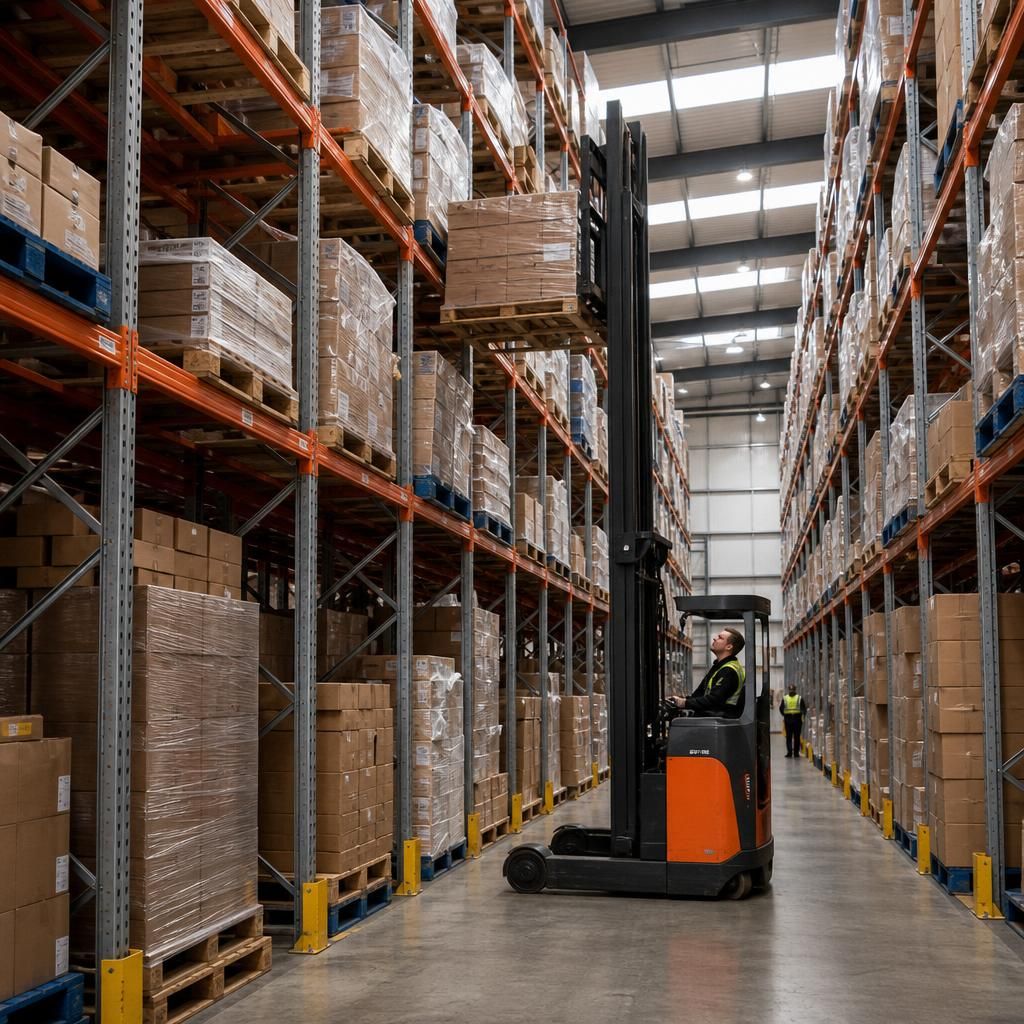
Quality warehouse racking delivers long-term value by maintaining safe, reliable storage capacity when it is correctly specified, installed and maintained. Strong components, accurate load information and suitable protection help reduce damage to the structure, stored goods and handling equipment.
The investment is most effective when supported by regular inspections and prompt repairs. Identifying impact damage, overloading or missing components early can prevent more disruptive remedial work, operational delays and premature replacement. This also provides a clearer record of how the system is being managed as storage requirements change.
Arrange Your Warehouse Racking Inspection
Arrange your warehouse racking inspection with Able Racking to identify damage, overloading and other issues before they lead to disruption or costly repairs. Our competent inspectors provide clear findings and practical recommendations to help maintain safe, compliant storage.