
What are the cost differences between various types of warehouse racking systems?
The cost of warehouse racking systems varies according to their design, load capacity, materials, accessibility and installation requirements. Standard adjustable pallet racking is often more economical initially, while specialised systems such as cantilever, drive-in or mobile racking can cost more but may provide greater storage density or suit specific handling needs.
The cost of warehouse racking systems depends mainly on their structure, load capacity, storage density, access method and installation requirements. Adjustable pallet racking is generally the most straightforward and economical option for standard pallet storage, while drive-in, mobile, cantilever, push-back and live systems usually require greater investment because they use more specialised components or provide higher space utilisation.
Purchase price is only one part of the comparison. A suitable warehouse racking system should also be assessed against installation, handling equipment, inspection, maintenance, future adaptation and the value of the floor space it releases. The lowest initial quotation is not necessarily the lowest-cost solution over its working life.
Adjustable pallet racking
Adjustable pallet racking is widely used because it provides direct access to individual pallet locations and can be configured around different load sizes. Its standardised frames, beams and accessories usually make it comparatively cost-effective to purchase, install and alter. It is particularly suitable where stock changes regularly or where operators need clear access to every pallet.
The trade-off is that conventional layouts can require wider aisles than denser systems. If floor space is limited, the apparent saving on the initial installation may be offset by the need for a larger building or reduced storage capacity.
Drive-in racking
Drive-in racking can store more pallets within a smaller footprint by reducing the number of access aisles. It is often more expensive than standard adjustable pallet racking because it requires stronger internal rails, entry guides and a layout designed around forklift access.
This system is most effective for relatively uniform products stored in larger quantities, particularly where first-in, first-out rotation is not essential. Although it can improve storage density, access to individual pallets is more restricted, so the operational cost of slower stock selection should be considered alongside the installation price.
Double-deep racking
Double-deep racking places pallet positions behind one another, increasing storage density without creating a fully compact system. It generally costs more than a basic adjustable arrangement because it may require specialised handling equipment and careful planning of beam levels and aisle clearances.
It can be a practical middle ground where additional capacity is needed but direct access to every pallet is not required. The cost assessment should include forklift suitability, stock rotation and whether operators can safely retrieve rear pallet positions.
Narrow-aisle racking
Narrow-aisle layouts can increase the number of pallet positions available within a building by reducing aisle widths. The racking itself may be similar to adjustable pallet racking, but the complete project can cost more because it may require specialised trucks, guidance systems, floor tolerances and more detailed installation planning.
The benefit comes from using existing floor space more efficiently. This option should be compared on a whole-system basis, including handling equipment and operator training, rather than by comparing the racking components alone.
Push-back racking
Push-back racking uses inclined rails and nested carriers to store pallets at greater depth while allowing loading and retrieval from the same aisle. Its mechanical components make it more expensive than standard adjustable pallet racking, but it can provide a useful balance between density and accessibility.
It is generally suited to products stored in batches or multiple pallets of the same product. The appropriate design depends on pallet weight, pallet condition, product rotation and the number of stock-keeping units involved.
Live pallet racking
Live pallet racking uses rollers or wheels to move pallets through the storage lanes. This supports controlled stock rotation and can reduce travel distances for loading and picking. Its additional rollers, brakes, separators and lane equipment usually make it a higher-cost solution than static pallet storage.
The extra investment may be justified where stock rotation, order flow or picking efficiency is more important than the lowest purchase price. A detailed assessment should consider product movement, pallet quality and the maintenance requirements of the moving parts.
Cantilever racking
Cantilever racking is designed for long, bulky or irregularly shaped goods such as timber, piping, sheet materials and profiles. It uses vertical columns with projecting arms rather than standard pallet beams. Cost varies according to column height, arm length, load capacity, bracing and whether the system is single-sided or double-sided.
Comparing cantilever racking directly with pallet racking can be misleading because each serves a different storage purpose. The correct cost comparison is between a purpose-built cantilever layout and alternative methods of storing long loads safely and accessibly.
Mobile racking
Mobile racking is mounted on powered or mechanically operated bases that move along floor tracks, allowing aisles to be opened only where required. It can provide high storage density, but the installation is usually more complex and costly because it involves moving bases, control systems, safety equipment, floor preparation and commissioning.
Mobile racking tends to be considered where floor space is expensive or limited and high capacity is needed. Its long-term value depends on usage levels, access frequency, maintenance arrangements and the consequences of a system fault.
Small-parts and carton racking
Small-parts racking, shelving and carton-flow systems are normally less costly per unit than heavy-duty pallet systems, although the total project price depends on the number of bays, shelves, dividers, bins, rollers and picking accessories required. Carton-flow systems cost more than basic shelving because they include inclined lanes and flow components.
These systems can improve picking efficiency and stock visibility for smaller items. The best-value design is based on product dimensions, picking frequency, replenishment method and the need for future changes.
Costs that apply to every warehouse racking system
- Surveying the building, checking dimensions and confirming floor conditions.
- Designing the layout around loads, access routes, fire precautions and handling equipment.
- Supplying frames, beams, supports, guards, panels, decking and other accessories.
- Transport, unloading, installation and any required dismantling or relocation.
- Anchoring, protection measures, signage and compliance-related safety equipment.
- Inspection, maintenance and repairs throughout the system’s working life.
Installation complexity can have a significant effect on the final price. A simple layout on a clear, level floor is generally quicker to install than a dense or specialised system with restricted access, unusual loading requirements, existing structures or limited working space. Installation should be completed by competent operatives, with the finished system checked before it is put into service.
Load notices and configuration records are also important. Changing beam levels, pallet weights or handling equipment without confirming the revised capacity can create a safety risk and may invalidate the original design assumptions. Regular warehouse racking inspections help identify impact damage, missing components, overloading and other defects before they affect safe operation.
When comparing quotations, request a like-for-like breakdown covering the racking type, dimensions, load capacities, accessories, delivery, installation, protection and any remedial work required to the building or floor. Ask whether future alterations, relocation or additional bays can be accommodated without replacing the main structure.
In practical terms, standard adjustable pallet racking is often the best choice where flexibility and direct access are priorities. Denser systems may offer better value where space is constrained and stock characteristics support their operating method. Specialised systems can command a higher initial cost, but the investment may be justified when it reduces travel, improves stock rotation, increases usable capacity or provides safe storage for loads that standard racking cannot accommodate.
A professional site survey and clear specification provide the most reliable basis for choosing between systems. Able Racking can assess the storage requirement, review the proposed configuration and help ensure that cost decisions do not compromise load capacity, safe access or ongoing compliance.
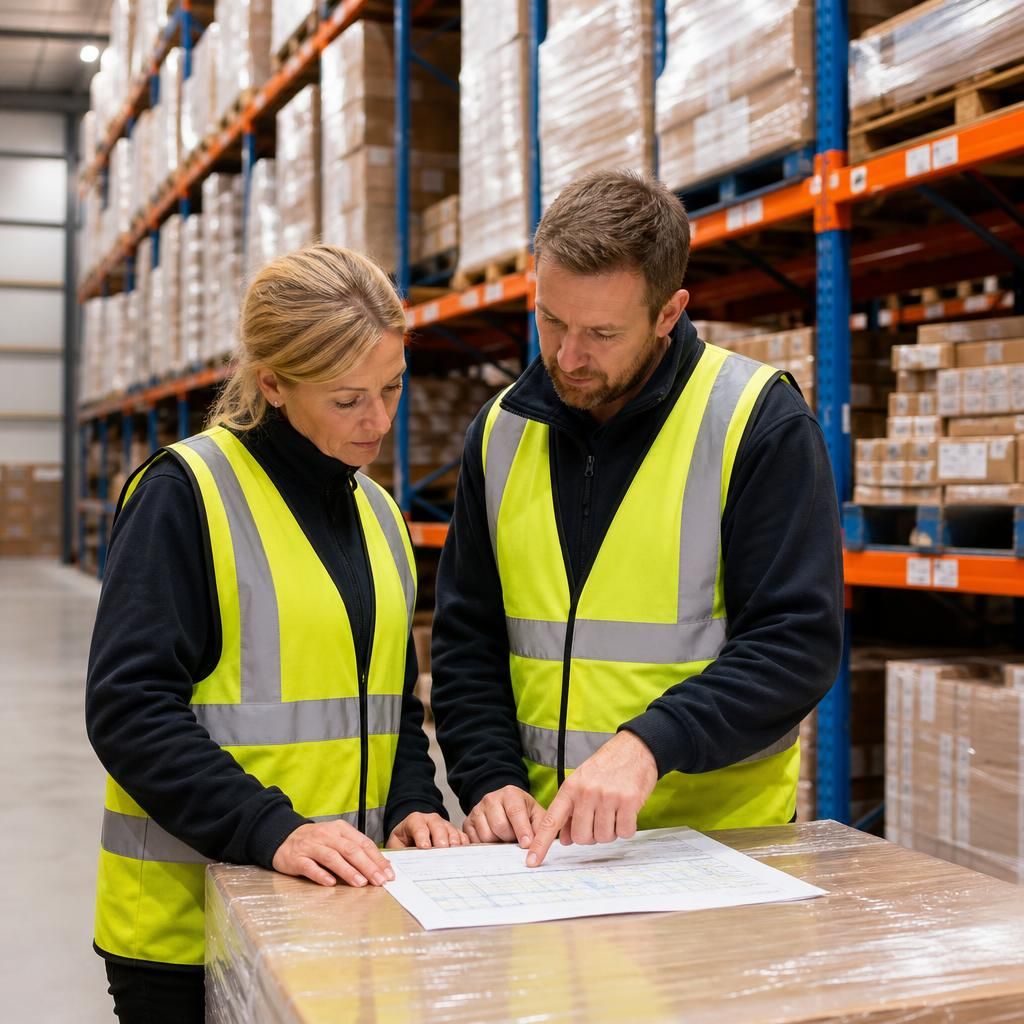
The cost of a warehouse racking system should be compared across its full working life, not by purchase price alone. Installation, specialist handling equipment, floor preparation, protection, inspections, maintenance and future alterations can all affect the eventual cost of ownership.
For example, adjustable pallet racking may offer a lower initial cost and straightforward access, while a denser system may require a greater investment but release valuable floor space. Request a like-for-like quotation that confirms load capacities, accessories, delivery, installation and safety requirements. This makes it easier to identify the option that provides the best practical value for your warehouse.
Get Expert Advice on Warehouse Racking System Costs
Contact Able Racking for expert advice on comparing warehouse racking system costs, including layout, load capacity, installation and whole-life value. We can help you assess the most suitable option for your warehouse requirements.