
What are the environmental and sustainability considerations when choosing between new and used warehouse racking options?
Used warehouse racking usually has the lower environmental impact because reusing sound components avoids the materials and energy required to manufacture new systems. However, new warehouse racking may provide a longer service life or better space efficiency, so the most sustainable choice depends on condition, suitability, transport, repair requirements and safe, compliant installation.
Used warehouse racking will usually have the lower environmental impact because reusing suitable components avoids much of the raw material extraction, manufacturing energy and packaging associated with new warehouse racking. However, this is not automatic. The more sustainable option depends on the condition, specification, remaining service life, transport requirements, repair work and operational suitability of the system. New warehouse racking can be the better long-term choice where it provides substantially greater capacity, improved space efficiency or a longer usable life.
Why used warehouse racking can be the greener option
Reusing warehouse racking keeps steel components in service and reduces demand for new production. It can also avoid the environmental effects associated with processing raw materials, factory manufacture, finishing, packaging and disposal of an existing system. Where used components are carefully assessed and remain structurally suitable, reuse supports a more circular approach to warehouse storage.
The environmental benefit is strongest when the used warehouse racking is sourced locally, matches the required layout and can be installed without extensive alteration. Reusing compatible beams, frames, bracing and accessories can reduce waste compared with purchasing a complete new system and discarding serviceable components.
When new warehouse racking may be more sustainable
New warehouse racking is manufactured using energy and materials, but its environmental impact should be assessed across its whole working life rather than only at the point of purchase. A new system may be more sustainable where it:
- Uses the available building height and floor area more effectively;
- Provides the required load capacity without unnecessary components;
- Reduces future alterations, replacements or premature disposal;
- Is designed around the precise pallet dimensions and handling equipment in use;
- Offers a longer predictable service life; or
- Improves warehouse flow and reduces unnecessary movement of goods and equipment.
A poorly matched used system may require additional steelwork, replacement components or repeated modifications. If it cannot safely meet the required loads or layout, choosing it simply because it is pre-owned may create more waste and cost over time than installing a suitable new system.
Condition, inspection and remaining service life
The condition of used warehouse racking is central to any sustainability assessment. Components should be checked for impact damage, corrosion, distortion, missing parts, incompatible connections and signs of previous overloading. A system that needs extensive repair or contains uncertain components may have limited practical value, even if its purchase price is attractive.
Professional inspection helps distinguish genuine reuse from transferring a disposal problem to another site. Any warehouse racking selected for reuse should be suitable for its intended configuration and loading conditions, with damaged or unsuitable components removed from service. Replacing a small number of defective parts may be sensible; rebuilding an entire system around unreliable components may not be.
Transport and supply chain impacts
Transport can affect the comparison between new and used warehouse racking. Used components may need to travel from another warehouse, pass through a storage or refurbishment facility, and then travel to the installation site. New warehouse racking may be delivered directly from the manufacturer, although the distance and delivery arrangements vary.
Ask where the components are coming from, whether deliveries can be consolidated and whether the system can be collected with other planned movements. Local sourcing, efficient loading and accurate ordering can reduce unnecessary vehicle movements for either option. Transport should be considered alongside the condition and expected service life rather than used as the only basis for the decision.
Repair, refurbishment and replacement parts
Refurbishing used warehouse racking can extend the life of serviceable steel. This may include cleaning, replacing damaged protectors or fixings, correcting the layout and fitting compatible components. Repairs should not conceal structural damage or be used to return unsuitable warehouse racking to service. Components must remain compatible and capable of meeting the required loads once installed.
Availability of replacement parts also matters. If proprietary or obsolete components are difficult to source, future repairs may involve additional transport, fabrication or replacement of larger sections than originally expected. Confirming the availability of suitable parts and technical information can prevent avoidable waste later.
Energy and space efficiency
The warehouse racking itself does not normally consume operational energy, but its design can influence the energy used by the wider warehouse. A layout that makes better use of vertical space may reduce the need for additional storage accommodation. Clear aisle planning and efficient product placement can also reduce unnecessary travel by handling equipment.
These benefits must be balanced against practical constraints. A taller or denser warehouse racking layout may require suitable handling equipment, lighting, access arrangements and fire safety measures. A design that looks efficient on paper is not sustainable if it is difficult to operate safely or needs frequent alteration.
Materials, coatings and end-of-life recovery
Most warehouse racking is made principally from steel, which can be recovered and recycled at the end of its useful life. The best environmental outcome is usually to keep suitable components in service for as long as they remain safe and fit for purpose, then separate and recycle them responsibly when they can no longer be reused.
Consider the type and condition of protective finishes, as corrosion can shorten service life and lead to earlier replacement. Preventative maintenance, prompt reporting of damage and protection from vehicle impacts can preserve the system and reduce material consumption over time. Components that cannot be reused should be directed through appropriate metal recovery and waste-handling routes wherever possible.
Safety is part of sustainability
An unsafe warehouse racking system is not a sustainable choice, regardless of whether it is new or used. Collapse, product damage, emergency repairs and premature replacement can create far greater material and operational impacts than selecting the right system at the outset. Load notices, suitable protection, correct installation and regular inspections are therefore environmental considerations as well as safety requirements.
Used warehouse racking should not be installed solely on the basis that it appears undamaged. Its history, configuration and loading capacity need to be established as far as reasonably possible. New warehouse racking also requires correct assembly, inspection and ongoing maintenance; being new does not remove the need for safe management.
Practical questions to ask before choosing
- Can the warehouse racking safely support the intended loads and dimensions?
- How much of the used system is genuinely reusable without extensive repair?
- Where will the components be sourced from, and how far must they travel?
- Are compatible replacement parts and technical details available?
- Will the proposed layout remain suitable if stock profiles or handling equipment change?
- Can the system be maintained, altered and eventually recovered or recycled responsibly?
- Does the installation meet the required safety, operational and workplace conditions?
The most reliable decision compares both options over their expected working life. Consider purchase, transport, installation, repairs, inspections, alterations, eventual removal and recycling, not just the initial price. A sound used warehouse racking system that fits the operation and is professionally assessed will often provide the strongest environmental result. New warehouse racking may be preferable where its specification, durability and space efficiency avoid repeated replacement or make better use of the existing warehouse.
A condition assessment and layout review can establish whether reuse is genuinely practical before components are purchased or moved. Able Racking can help evaluate the suitability of warehouse racking, identify repair or replacement requirements and support safe installation and ongoing inspection, allowing environmental considerations to be balanced with compliance and operational performance.
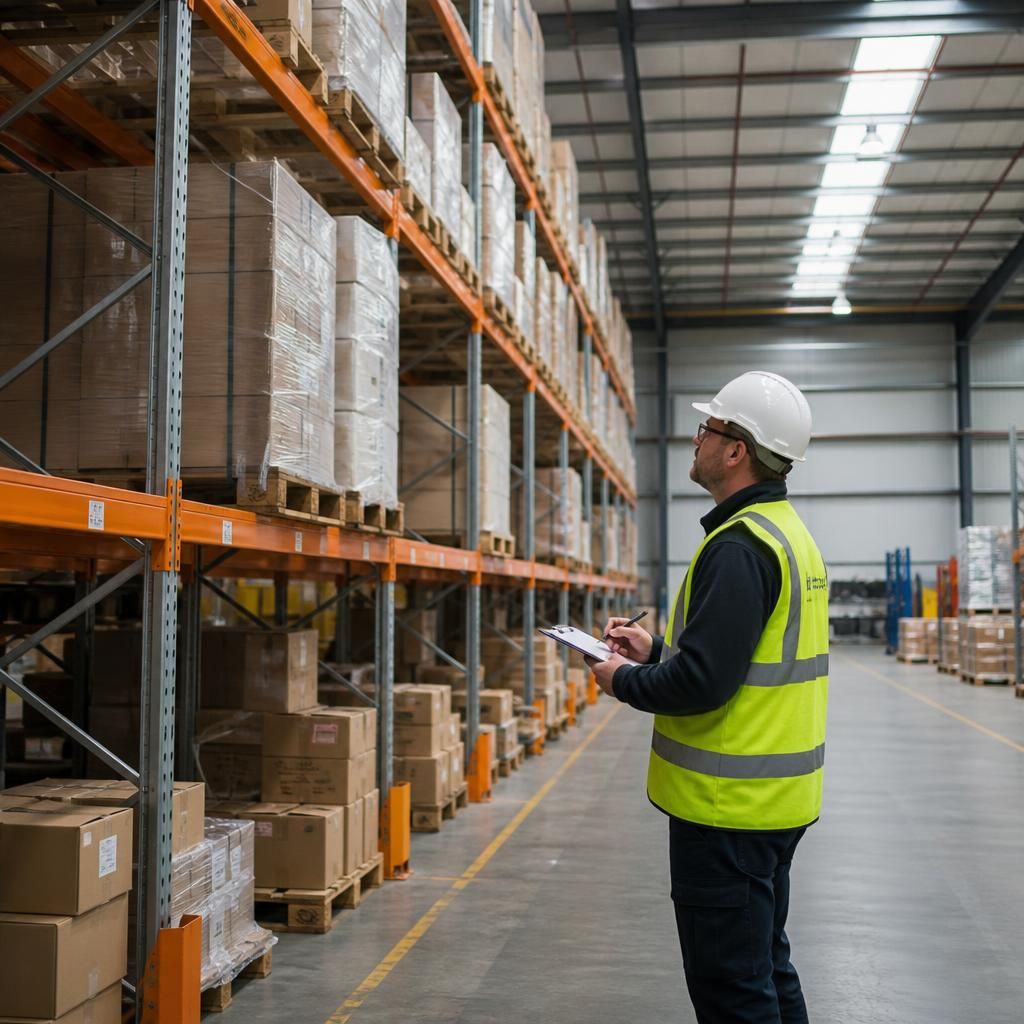
The most sustainable choice between new and used warehouse racking depends on its whole working life, not simply whether it is new or pre-owned. Suitable used warehouse racking can reduce demand for new steel and manufacturing energy, while new warehouse racking may create less waste over time if it offers a better fit, longer service life or improved use of the available space.
Before deciding, assess the system’s condition, load capacity, compatibility, transport distance, repair requirements and future adaptability. Reusing sound components that need little modification is usually preferable to moving or extensively repairing unsuitable warehouse racking. In either case, correct installation, regular inspections and prompt maintenance help extend service life and prevent avoidable replacement.
Assess Your Warehouse Racking Sustainability Options
Contact Able Racking to assess whether new or used warehouse racking offers the most sustainable option for your operation. We can review its condition, suitability, repair requirements and future performance before installation.