
How does material choice affect warehouse racking costs?
Material choice affects warehouse racking costs through the steel grade, component strength, durability and protective finish selected. Heavier-duty or corrosion-resistant materials usually cost more initially, but may provide greater load capacity, longer service life and lower maintenance costs when matched correctly to the warehouse environment and intended use.
Material choice affects warehouse racking costs through the steel grade, component thickness, load capacity, protective finish and condition of each part. Heavier-duty or more corrosion-resistant materials generally have a higher purchase price, but they can offer greater durability, longer service life and lower maintenance costs when properly matched to the warehouse environment and the loads being stored.
The most suitable choice is not necessarily the cheapest material or the heaviest available option. Warehouse racking should be specified according to the pallet weights, bay configuration, handling equipment, building conditions and expected usage. Selecting material without considering these factors can create avoidable costs, either through over-specification or through repairs, replacement and operational disruption later.
Steel grade and component thickness
Most industrial warehouse racking is manufactured from formed or rolled steel. The grade of steel and the thickness of the sections influence the strength, stiffness and weight of the finished system. Uprights, beams, bracing and supports must work together to carry the intended loads safely.
Higher-strength or heavier-gauge steel can increase the initial cost because it requires more material and may involve more demanding manufacturing processes. It can, however, be appropriate where stored goods are heavy, bays are tall, spans are wide or the system will experience frequent loading and unloading. Using a lighter component may reduce the purchase price, but it is only suitable where the design calculations confirm that the required loads can be carried safely.
Conversely, specifying substantially more steel than the application requires can add cost without delivering a useful improvement. A professional design should therefore calculate the required capacities rather than relying on appearance or a general assumption that heavier components are always better value.
Component design and load capacity
Material cost is closely linked to the design of individual components. A warehouse racking system may require stronger uprights, deeper frames, reinforced beams, additional bracing or dedicated pallet supports depending on the goods and layout. These additions increase the overall price, but they may be necessary to maintain stability and protect the system during normal use.
The stated load capacity must relate to the complete arrangement, not just one beam or upright. Bay width, beam levels, frame height, floor conditions, connection details and the way loads are distributed all affect performance. A material that appears economical in isolation may require extra reinforcement once the full design is assessed.
Painted, galvanised and specialist finishes
The protective finish also affects warehouse racking pricing. Painted steel is widely used in dry internal storage areas and usually provides a cost-effective balance between protection and appearance. The finish can help protect the steel from general wear, but damaged areas may need attention to prevent corrosion from developing.
Galvanised components generally cost more than standard painted components because the steel receives a zinc coating that provides additional corrosion protection. This can be beneficial in areas exposed to moisture, condensation, temperature changes or more demanding cleaning conditions. Galvanised finishes may also be considered for loading areas or environments where the risk of surface damage is higher.
Specialist finishes, including stainless steel or other corrosion-resistant materials, can carry a significantly higher initial cost. They may be justified in particularly demanding environments, but they should not be selected automatically. The expected exposure, hygiene requirements, cleaning process and service conditions should be reviewed first.
Decking and accessory materials
The material used for shelf or pallet support can change both the purchase price and the ongoing maintenance requirement. Options may include timber-based decking, steel panels, wire mesh or dedicated pallet supports. Each has different characteristics in terms of load distribution, visibility, cleaning, fire considerations and resistance to impact.
For example, a support material may be inexpensive to install but more vulnerable to moisture or damage in a busy loading area. A more robust option may cost more at the outset while reducing the frequency of replacement. The correct choice depends on the stored goods, pallet condition, handling methods and the required inspection regime.
Accessories such as upright guards, end-of-aisle protection, row spacers, back protection and additional bracing also contribute to the total material cost. These are not simply optional extras where the site risk assessment or design requires them. Including suitable protection from the beginning is usually more efficient than adapting the system after repeated impact damage.
Environmental conditions
The warehouse environment is a major factor in deciding whether a standard material is suitable. Dry, enclosed storage may need only conventional painted steel, whereas unheated buildings, open loading areas or locations with high humidity may require additional corrosion protection.
Other considerations include exposure to cleaning chemicals, salt, dust, condensation and temperature fluctuations. Corrosion can reduce section thickness and affect connections over time, so the initial material specification should reflect the conditions in which the warehouse racking will operate. A cheaper finish may prove more expensive if it leads to frequent coating repairs or early component replacement.
New and previously used components
Previously used warehouse racking can reduce the initial material cost, but price alone should not determine whether it is suitable. Its condition, age, history, original design capacity and compatibility with the proposed layout must be checked. Uprights, beams, locking devices and bracing may have suffered damage, alteration or corrosion that is not obvious from a quick visual inspection.
Used components should be assessed individually and installed only when their condition and capacity are appropriate for the intended application. Mixing components from different systems can also create design and compatibility issues. Any changes to the layout or loading arrangement should be reviewed by a competent warehouse racking specialist before the system is put into service.
Initial price compared with whole-life cost
The most useful comparison is between the initial purchase price and the expected whole-life cost. A material with a higher starting price may provide better value if it lasts longer, needs fewer repairs, tolerates the operating environment more effectively or reduces the likelihood of premature replacement.
- Initial cost: the price of steel, finishes, decking, protection and associated components.
- Installation cost: the time and equipment required to assemble and secure the selected system.
- Maintenance cost: inspections, damage repairs, replacement parts and protective coating work.
- Operational cost: disruption caused by damaged bays, restricted storage capacity or temporary access arrangements.
- Replacement cost: the expense of removing unsuitable components and installing new ones earlier than planned.
Good material selection should support safe use as well as financial efficiency. The system should be inspected regularly, damage should be reported promptly and any affected components should be assessed before continued use. Material quality cannot compensate for overloading, poor handling practices or inadequate maintenance.
For an accurate warehouse racking cost assessment, provide the intended load weights, pallet dimensions, bay sizes, available height, handling equipment and environmental conditions. These details allow the specification to be matched to the application instead of being based on a generic price. The result is a safer and more transparent investment, with the material cost considered alongside capacity, durability, protection and long-term performance.
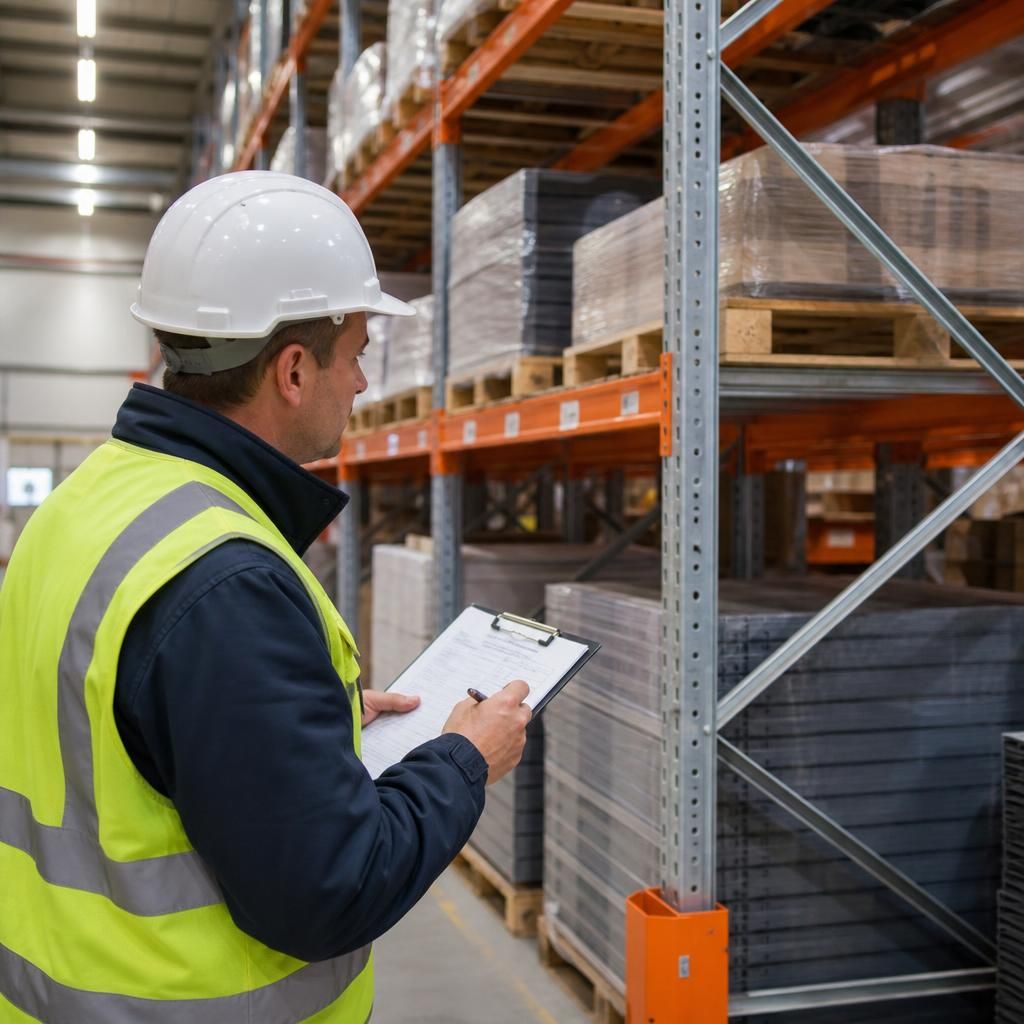
Protective finish is one of the material choices that can change warehouse racking costs. Standard painted steel is often suitable for dry indoor storage, while galvanised or specialist corrosion-resistant materials may be more appropriate where the system is exposed to moisture, condensation, chemicals or frequent cleaning.
A higher-cost finish can provide better protection and reduce the need for coating repairs or early component replacement. However, it should be selected according to the warehouse environment rather than applied automatically. Assessing humidity, temperature changes, cleaning methods and the likelihood of impact helps establish whether the additional material cost is justified.
Discuss your warehouse racking material requirements
Discuss your warehouse racking material requirements with Able Racking to identify suitable steel grades, protective finishes and components for your loads and operating environment. Contact our experienced team for practical guidance on balancing initial cost, safety and whole-life value.