
What role does employee training play in warehouse layout optimisation?
Employee training supports warehouse layout optimisation by ensuring staff understand designated storage locations, traffic routes, handling procedures and safe working practices. Well-trained employees follow the intended layout consistently, identify hazards or workflow inefficiencies and provide practical feedback that helps improve safety, productivity and space utilisation.
Employee training is a central part of warehouse layout optimisation because it ensures that people understand how the layout is intended to work and apply it consistently. Training covers storage locations, pedestrian and vehicle routes, picking sequences, loading areas, emergency access, equipment use and housekeeping standards. When employees follow these arrangements correctly, the warehouse can operate more safely, efficiently and predictably.
A layout can be well designed on paper but perform poorly if employees are unclear about its purpose or use areas incorrectly. Training connects the physical arrangement of the warehouse with the procedures that support it. It helps employees understand why stock is placed in particular zones, why access routes must remain clear and how their individual actions affect movement, capacity and productivity across the operation.
Training supports layout optimisation in several important ways:
- Consistent use of designated areas: Employees learn where different products, materials, equipment and waste should be stored. This reduces misplaced stock, avoids unnecessary searching and helps maintain available capacity.
- Safer movement through the warehouse: Staff are trained to use marked pedestrian routes, vehicle aisles, crossing points and restricted areas correctly. This helps reduce obstructions and supports safer interaction between people, vehicles and handling equipment.
- More efficient workflows: Training explains the intended sequence for receiving, storing, picking, packing and dispatching goods. Employees can then follow routes and processes that reduce avoidable travel, congestion and repeated handling.
- Protection of storage systems and stock: Correct handling methods help prevent impacts, overloading, unstable loads and poor placement. Employees should understand the relevant operating limits, loading practices and reporting procedures for damaged components or unsafe conditions.
- Improved housekeeping: Clear training standards help employees keep fire exits, access routes, working areas and inspection points free from goods, packaging and other obstructions.
Training also gives employees the knowledge to identify when a layout is not working as intended. People working on the warehouse floor often notice recurring congestion, awkward picking movements, unclear locations, blocked routes or frequently damaged areas before these issues are visible in performance records. A useful training programme encourages employees to report these observations through an agreed process rather than adapting the layout informally.
Employee feedback should be considered alongside operational information such as stock movement, order profiles, handling requirements, incident records and inspection findings. This helps management distinguish between a training issue and a layout issue. For example, repeated placement of goods in the wrong location may indicate that employees need clearer instruction, but it could also show that signs are poorly positioned or that the allocated storage area is unsuitable.
Training should normally reflect the different responsibilities within the warehouse. A general induction may cover the overall layout, site rules, emergency arrangements, traffic management and reporting procedures. More specific instruction may be needed for:
- Employees receiving and putting away goods
- Pickers and packers working in high-activity areas
- Drivers and operators using handling equipment
- Supervisors responsible for monitoring compliance
- Employees carrying out stock checks, inspections or housekeeping tasks
- Maintenance personnel and contractors working within operational areas
Role-specific training is important because different activities create different risks and place different demands on the layout. A person moving goods may need detailed instruction on aisle discipline, load positioning and equipment separation, while a picker may need guidance on one-way routes, pedestrian crossings and the correct response to damaged stock or obstructed access.
Training should be provided before an employee works independently and refreshed whenever the warehouse layout, equipment, processes, stock profile or traffic arrangements change. It should also be reviewed after an incident, near miss, significant operational change or recurring breach of the agreed layout rules. Refresher training is particularly useful where employees have developed informal shortcuts that increase travel, congestion or risk.
Effective training is not limited to a one-off explanation. It should combine clear instruction with practical demonstration, supervised application and confirmation that the employee can follow the required procedure. Visual signs, floor markings, location labels and simple written instructions can reinforce the training at the point of work. Supervisors should then observe working practices and address deviations promptly and consistently.
Training records should identify the subject covered, the employee or group attending, the date, the trainer and any follow-up action required. Competence checks can be proportionate to the task. For higher-risk activities, practical observation may be more meaningful than asking employees to recall information from a classroom session. Records also help demonstrate that relevant instruction has been provided and support the planning of future refresher sessions.
Management should monitor whether training is producing the intended result. Useful checks include observing route compliance, reviewing reports of blocked access or misplaced goods, checking housekeeping standards and discussing recurring problems with supervisors and employees. These checks should not be used only to identify individual failings; they can reveal unclear procedures, unsuitable storage locations or design features that need improvement.
Training therefore forms part of a continuous layout optimisation process. The layout establishes the physical arrangement, procedures define how work should be carried out, and training enables employees to apply those procedures safely. Feedback, inspections and operational reviews then show whether further changes are needed. Keeping these elements aligned helps maintain safe access, reliable workflows and effective use of warehouse space as business requirements change.
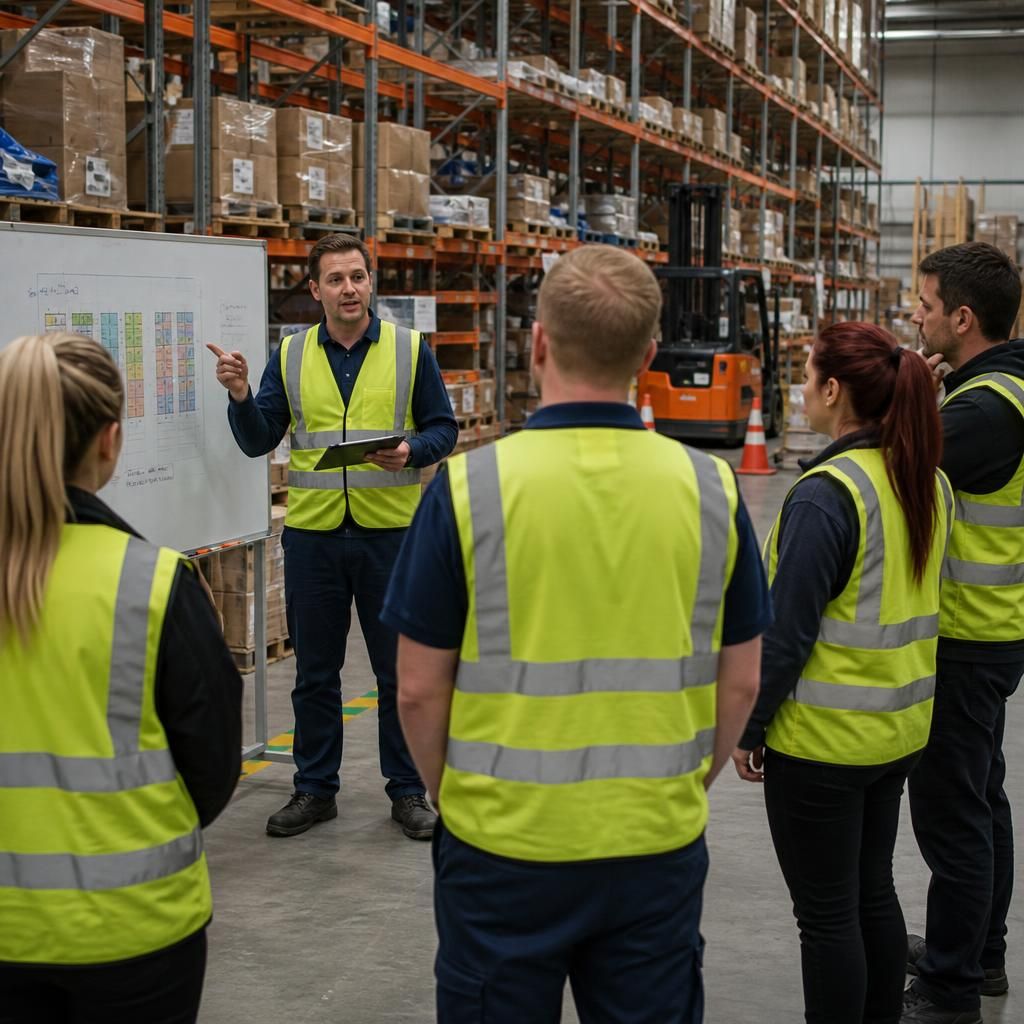
Employee training helps optimise a warehouse layout by teaching each person how to use designated areas, routes and work zones correctly. When staff understand the purpose of the layout, they are less likely to create obstructions, take inefficient shortcuts or place goods in unsuitable locations.
Training should reflect individual duties. Operators need instruction on traffic routes, load positioning and equipment separation, while pickers and warehouse staff may need guidance on pedestrian crossings, storage locations, housekeeping and reporting damaged or obstructed areas. Practical demonstrations and supervised application help confirm that procedures can be followed safely in real working conditions.
Training also creates a useful feedback route. Employees who regularly work in the warehouse can identify recurring congestion, awkward movements or unclear locations. Management can review this feedback alongside inspection findings and operational records to decide whether the issue requires further instruction, clearer signs or a change to the layout.
Review Your Warehouse Training Requirements
Review your warehouse training requirements with Able Racking to ensure employees understand your layout, procedures and safety responsibilities. Our experienced team can help identify suitable training and refresher needs for your operation.