
What happens if warehouse racking repairs are delayed?
Delaying warehouse racking repairs can allow damage to worsen, increasing the risk of collapse, falling loads, injuries and disruption to warehouse operations. It may also lead to higher repair costs and compliance concerns, so damaged components should be assessed promptly and repaired or isolated by a competent specialist.
Delayed warehouse racking repairs allow damage to develop, increasing the risk of component failure, falling loads, injuries, operational disruption and higher repair costs. A damaged upright, beam, brace, connector or protection device should be reported, assessed by a competent person and repaired, replaced or safely isolated without unnecessary delay.
Damage can worsen through continued use. Warehouse racking is repeatedly exposed to forklift impacts, loading errors, vibration and changes in stored goods. A component that appears slightly bent or displaced may have reduced its ability to carry the intended load. Continued loading can increase the distortion, transfer stress to connected components and affect the stability of an entire bay or run.
Small defects can therefore become more extensive repairs. For example, an impact-damaged upright may affect beam connections, bracing, baseplates and fixings. A damaged beam may sag further under load or allow pallets to sit incorrectly. Missing or loose components can also reduce the designed strength and stability of the system.
The immediate safety risks include:
- loads falling from damaged or unstable storage positions;
- partial or complete collapse of a warehouse racking bay or connected structure;
- pallets becoming unstable because beams, supports or decking are distorted;
- forklift operators, warehouse staff and visitors being exposed to falling materials or failed components; and
- access routes, work areas and emergency arrangements being obstructed by damaged equipment or stored goods.
A damaged area should be made safe while it is awaiting repair. This may involve unloading affected levels, preventing access, installing suitable temporary controls and clearly identifying the restriction. Staff should not continue using a damaged bay simply because it remains upright or because the defect appears minor. Only a competent inspection can establish whether the warehouse racking remains suitable for use.
Operational disruption can increase as repairs are postponed. Delayed action may require more storage positions to be taken out of service, particularly where damage has spread to adjacent components. This can reduce available capacity, require stock to be relocated and interrupt picking, replenishment and dispatch activities. If a failure occurs unexpectedly, the resulting closure is likely to be more disruptive than a planned repair or controlled isolation.
Delays can also make it more difficult to identify the original cause. Forklift impact marks, displaced stock and repeated loading may obscure the extent of the damage. Prompt reporting, photographs and an inspection record help establish what happened and which components need attention. They also support preventative measures, such as reviewing traffic routes, improving protection or reminding operators of safe loading practices.
Repair costs may rise when defects are ignored. A straightforward component replacement can become a wider repair if adjacent parts have been overloaded or damaged. Additional unloading, access equipment, out-of-hours work, stock movements and temporary storage may then be required. The most appropriate solution is not always to straighten or weld a damaged component. Depending on the system and the extent of the defect, safe work may require replacement parts, approved repair methods or removal and reinstatement by experienced operatives.
Warehouse operators also need to consider their duties under workplace health and safety requirements. Storage equipment must be maintained so it remains safe for use, and inspections should be arranged at suitable intervals by a competent person. A known defect that is left in service without an appropriate assessment or control may raise questions about whether the equipment has been managed adequately. Inspection reports, repair records, isolation notices and evidence that corrective actions were completed should be retained as part of the site’s safety documentation.
When damage is identified, the practical response is to:
- report the defect to the responsible manager or nominated safety contact;
- identify the affected bay, level and component, using photographs where safe to do so;
- prevent further loading or access if the damage could affect stability or load support;
- arrange an assessment by a competent warehouse racking specialist;
- follow the specialist’s recommendation to repair, replace, unload or isolate the affected area; and
- confirm that the completed work has been checked and that any restrictions have been formally removed before normal use resumes.
Do not attempt an improvised repair, straighten a damaged member or alter the system without suitable technical approval. Unauthorised changes can affect the original design assumptions and may create additional hazards. Repairs should use compatible components and an appropriate method, with the completed work recorded for future inspections.
Prompt reporting does not always mean that warehouse operations must stop. A competent assessment can distinguish between damage that requires immediate isolation and a defect that can be managed with controlled restrictions while parts and labour are arranged. The important point is that the decision is based on the condition of the warehouse racking, its loading and the surrounding risks, rather than on appearance alone.
Regular visual checks by trained staff, formal inspections and effective impact-reporting procedures help prevent delays. Staff should know how to recognise bent or missing components, displaced beams, damaged protection, loose fixings, overloaded positions and other changes from the intended configuration. Any concern should be recorded and escalated promptly, even if no failure has occurred.
Taking action early protects people, limits the extent of damage and helps keep storage capacity available. If a defect has been identified, the affected warehouse racking should be assessed before it is loaded again, with repairs completed or suitable controls maintained until the system has been confirmed safe for use.
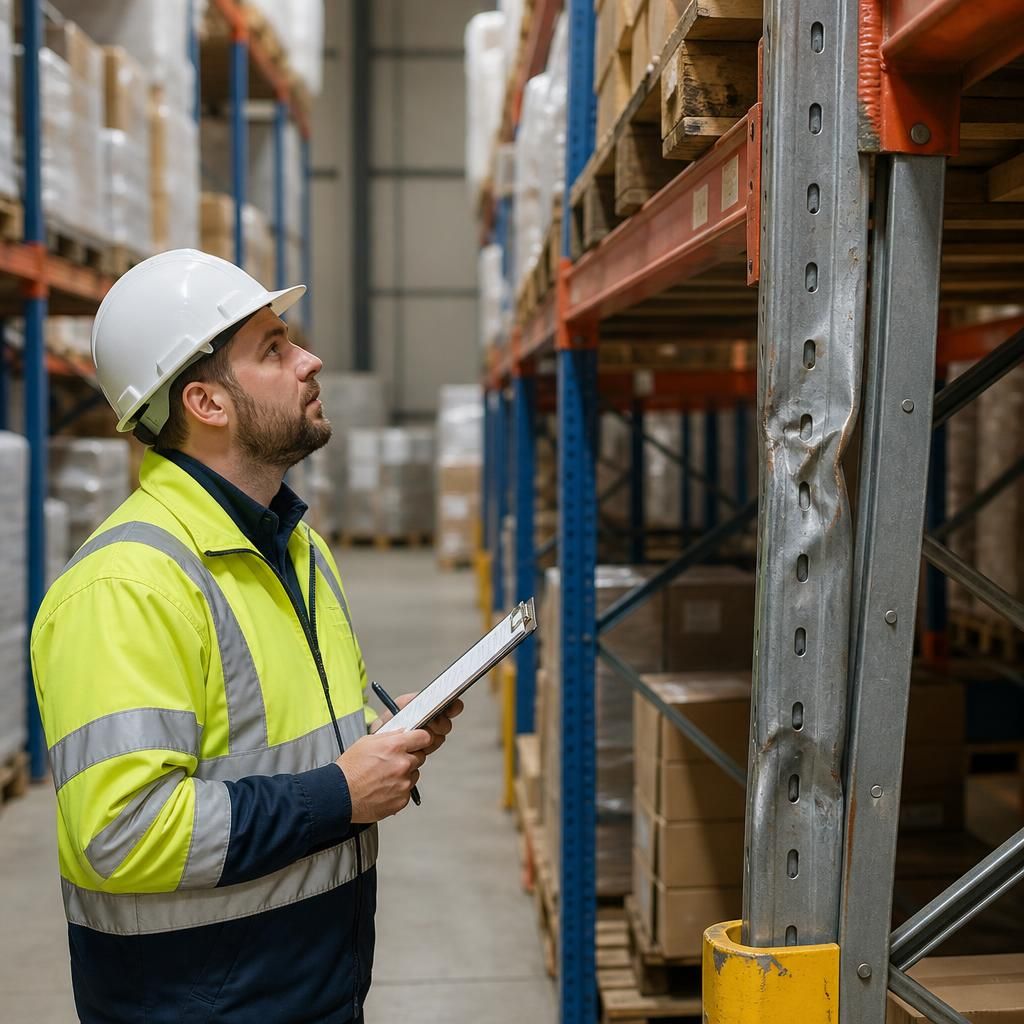
Delayed warehouse racking repairs can allow a local defect to worsen through continued forklift impacts, loading and vibration. A bent upright, displaced beam or damaged connection may place additional stress on nearby components, increasing the area that needs repair and reducing available storage capacity.
When damage is reported, the affected bay should be assessed promptly by a competent specialist and unloaded or isolated where necessary. Early action helps determine whether a component requires repair or replacement, limits operational disruption and provides a clear record that the warehouse racking has been managed safely.
Arrange your warehouse racking repair assessment
If you have identified damage, arrange a warehouse racking repair assessment with Able Racking so the affected area can be checked and the appropriate repair or isolation plan confirmed.