
What factors can affect the cost of warehouse racking repairs?
The cost of warehouse racking repairs depends on the extent and type of damage, the replacement parts required, and whether the work can be completed during normal operations. Access requirements, labour, urgency, system design and any follow-up inspection or compliance work can also affect the final price.
The cost of warehouse racking repairs is mainly affected by the extent of the damage, the components that need replacing, access to the affected area and the labour required to complete the work safely. The final price can also change according to the urgency of the repair, the availability of compatible parts, operational restrictions and whether additional inspection or compliance work is needed.
A reliable repair quotation should be based on an inspection of the damaged area and the surrounding structure. Visible damage does not always show the full extent of the problem, so a competent assessor will consider the condition of connected frames, beams, bracing, guards, fixings and the floor around the installation. This helps distinguish between a straightforward component replacement and a wider repair requirement.
Extent and severity of the damage
Minor damage may require a relatively simple repair, such as replacing a damaged beam, brace, connector or protection component. More extensive impact can affect several connected parts or reduce the stability and load-bearing capacity of a bay. In these circumstances, the work may involve unloading the affected section, dismantling multiple components, replacing damaged sections and checking that the structure has been correctly reinstated.
Damage that has distorted a frame, pulled fixings from the floor or affected the alignment of adjacent bays is generally more involved than isolated damage. If the original component cannot be safely repaired, replacement is usually the appropriate option. Attempting to straighten or modify structural components without an approved method can compromise the system and may increase future costs.
Components and replacement parts required
The type, size and quantity of parts will influence the material element of the price. Common replacement items include:
- uprights, frames and frame bracing;
- beams, connectors and locking components;
- floor fixings, shims and baseplates;
- column guards, end-of-aisle protection and other safety barriers;
- mesh decks, support bars and pallet supports; and
- load notices or other items needed to restore safe operation.
Compatible parts are important. Components that look similar may have different dimensions, connection details, steel grades or load characteristics. If the original manufacturer, model or specification is unclear, additional identification work may be required before suitable parts can be sourced. Bespoke or less readily available components can take longer to obtain and may cost more than standard stock items.
Access and working conditions
The physical arrangement of the warehouse can affect how efficiently repairs are completed. Restricted aisles, high-level damage, limited working space, stored goods and nearby equipment may require additional access equipment or a different work method. The repair team may need to use suitable lifting equipment, podiums, mobile access platforms or other controls for safe work at height.
Access is also affected by the location of the damaged bay. A repair in an open, easily reached area is normally less complex than one surrounded by active picking routes, conveyor equipment or tightly positioned loads. Where goods must be removed before work starts, the time and labour involved in making the area safe and available may form part of the overall cost.
Labour and the repair method
Labour costs reflect the number of operatives required, the skills involved and the time needed to complete the work. A repair may require one team to isolate and unload the bay, another person to supervise lifting operations or additional support to control access around the work area.
The repair method also matters. Replacing a single accessible component is different from dismantling a section, temporarily supporting the structure, removing several damaged parts and rebuilding the bay. The method should be selected according to the system design, the damage identified and the manufacturer’s or engineer’s requirements, rather than solely on the lowest initial price.
Urgency and the effect on warehouse operations
Where damage presents an immediate safety risk, the affected area should be isolated and taken out of use until it has been assessed. An urgent call-out, work outside normal hours or a requirement to minimise disruption may affect the cost because it can involve accelerated planning, additional coordination or out-of-hours labour.
Planned repairs can often be arranged during a suitable operational window, which may make access and labour more efficient. However, delaying a necessary repair is not a sensible way to reduce cost. Continued use can worsen the damage, expose stored goods and increase the eventual scope of work. The priority should be to control the risk first and then plan the repair around the warehouse’s operating requirements where it is safe to do so.
Unloading, isolation and reinstatement
The quotation may depend on who is responsible for unloading the affected bays and making the work area available. If the repair contractor must remove or reposition stock, this can add time and may require warehouse staff, lifting equipment or a separate handling plan. Goods should never remain in a damaged area simply to avoid this part of the process.
After the repair, the bay may need to be reloaded in accordance with its safe working load and layout. This may include refitting protection, checking floor fixings, confirming beam positions and replacing damaged load information. These reinstatement tasks should be included when assessing the complete repair requirement.
Inspection and compliance requirements
Some repairs require more than replacing a visibly damaged part. A post-repair inspection may be needed to confirm that the structure is correctly assembled, secure, aligned and suitable for continued use. If the original damage has raised questions about loading, installation or repeated vehicle impact, the inspection may need to cover nearby bays and operating practices as well.
Additional work can include recording the damage, updating inspection documentation, reviewing load information, identifying repeated causes of impact and advising on preventative measures. These steps may increase the immediate project cost but help provide evidence that the repair has been properly assessed and completed.
Travel, scheduling and site requirements
Location, site access, parking, induction procedures and delivery restrictions can influence how a repair is scheduled and priced. Work at a site with restricted delivery times or lengthy induction requirements may take longer to organise. National repair work may also require travel and transport arrangements, particularly where specialist equipment or larger replacement components are needed.
Providing accurate information in advance can help produce a more reliable quotation. Useful details include photographs of the damage, the affected bay location, system manufacturer or model, approximate dimensions, current load information, access restrictions and whether the area has already been isolated. Photographs support initial planning, but they do not replace a competent site assessment where structural damage is suspected.
How to compare repair quotations
The lowest quote is not necessarily the lowest overall cost. Check whether the quotation clearly states:
- which components will be repaired or replaced;
- whether unloading, access equipment and disposal are included;
- how the affected area will be isolated and made safe;
- whether labour, transport and any out-of-hours work are included;
- whether a post-repair inspection or report is provided; and
- what assumptions or exclusions could change the final price.
A professional assessment should explain the reason for the recommended work, identify any immediate restrictions on use and separate essential repairs from optional improvements. This gives you a clearer basis for planning expenditure without compromising warehouse safety or compliance.
For Able Racking customers, the practical approach is to report damage promptly, isolate any unsafe area, provide the available system information and arrange an inspection. Our experienced operatives can assess the condition, identify the likely repair scope and advise whether further parts, access planning or follow-up checks are required before the warehouse racking is returned to service.
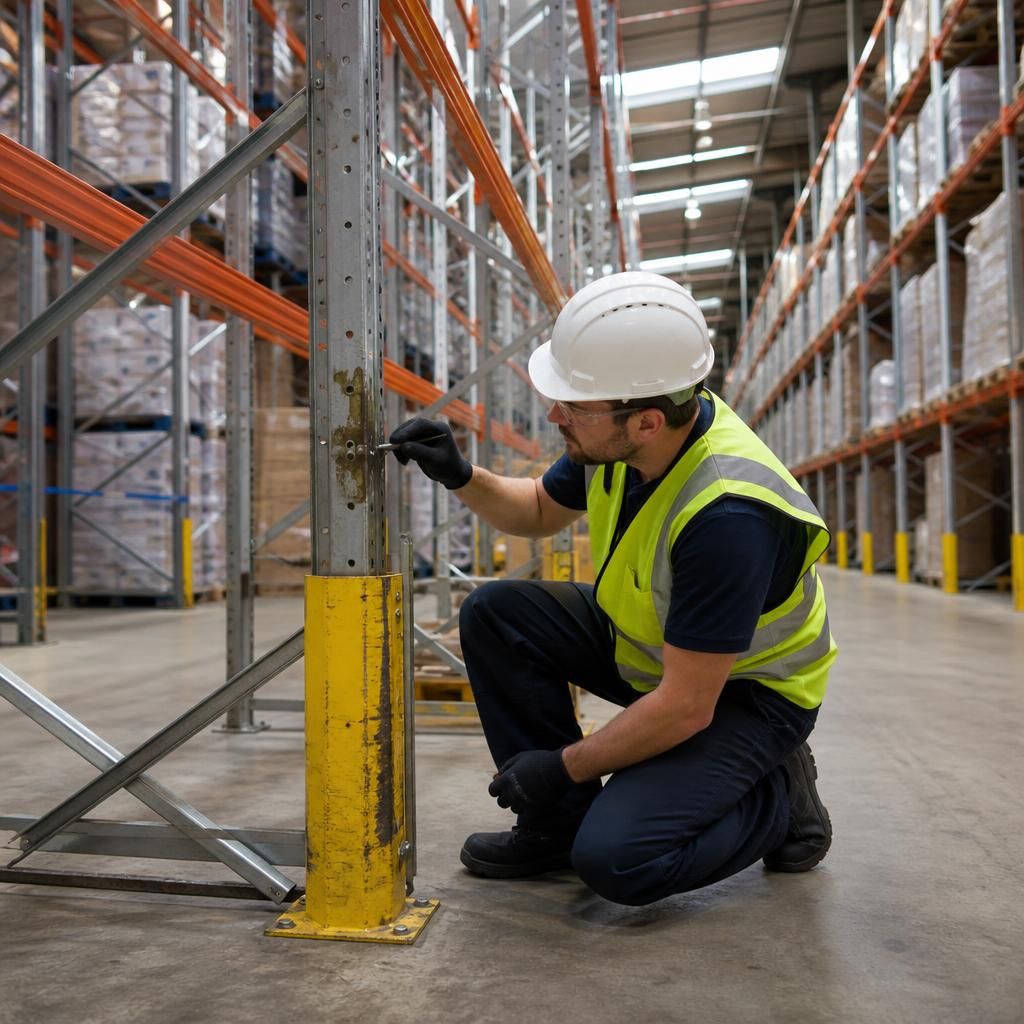
The cost of warehouse racking repairs is most accurately assessed after inspecting the damaged area and the connected structure. A visible impact may have affected uprights, beams, bracing, fixings or nearby bays, so replacing one obvious component may not address the full repair requirement.
Before approving a quotation, check that it explains the proposed repair method, replacement parts, access equipment, unloading, isolation, labour and any post-repair inspection. This makes it easier to compare like-for-like prices and helps ensure the warehouse racking is safe and suitable for use when the work is complete.
Arrange an assessment of your warehouse racking repair costs
Arrange an Able Racking assessment to identify the repair work required and obtain a clear, site-specific indication of your warehouse racking repair costs.