
What are the benefits of professional warehouse racking repairs?
Professional warehouse racking repairs restore the structural safety and performance of damaged storage systems, helping protect people, stock and handling equipment. Prompt, competent repairs can also support compliance, prevent minor damage becoming more serious and reduce disruption to warehouse operations.
Professional warehouse racking repairs restore damaged storage systems to a safe, serviceable condition using a controlled process led by competent specialists. The main benefits are improved workplace safety, better compliance, reduced risk of further damage, more reliable storage performance and less disruption than allowing defects to remain unresolved.
Improved protection for people, stock and equipment
Impact damage, bent frames, damaged beams, displaced components and loose fixings can affect the stability and load-bearing performance of a warehouse racking system. A professional repair assessment identifies the affected components, considers the extent of the damage and determines the appropriate corrective action. This helps reduce the risk of collapse, falling stock, unstable pallets and further damage to handling equipment.
Where necessary, damaged areas can be isolated while repairs are arranged. This is safer than continuing to use an area that has been visibly compromised or relying on temporary measures that have not been properly assessed.
Repairs based on the actual condition of the system
Experienced operatives do more than replace an obviously bent component. They examine the surrounding structure, connections, protection and floor fixings to establish whether the impact has affected other parts of the installation. They can also consider the way the system is being loaded and used, as repeated impacts, incorrect pallet placement or overloading may contribute to recurring damage.
This condition-based approach helps ensure that the repair addresses the cause as well as the visible defect. It can prevent unsuitable parts being fitted and highlight where additional protection, revised operating controls or staff awareness may be required.
Support for workplace safety and compliance
Warehouse operators have a responsibility to maintain work equipment and provide a safe working environment. Professional repairs support this responsibility by creating a clear record of identified defects, actions taken and any restrictions placed on use. They also provide evidence that reported damage has been assessed and dealt with appropriately.
Repairs should be carried out in line with the manufacturer’s requirements, relevant installation guidance and recognised warehouse racking safety practice. A repair does not automatically make a system compliant if the original design, loading information or installation condition is unsuitable, so a competent inspection remains important where the damage is significant or the history is unclear.
Reduced risk of minor damage becoming major damage
A small defect can worsen through normal loading, pallet movement or another impact. For example, a damaged frame protector may leave an upright exposed, while a distorted beam connection may place additional stress on nearby components. Addressing defects promptly limits the opportunity for progressive damage and can reduce the scope of later remedial work.
Professional advice is particularly valuable when damage is near a base, connection, brace, beam end or other load-bearing part. These areas may look less serious than they are, and visual appearance alone cannot confirm that a system remains safe to use.
Less operational disruption
Planned repairs can often be organised around warehouse activity, with affected aisles or bays controlled while work takes place. This can be less disruptive than an emergency response after damage has spread or a larger section has had to be taken out of service. A repair plan can identify access requirements, stock movements, isolation arrangements and the equipment needed before work begins.
Professional contractors can also advise whether a bay should be unloaded, restricted or taken out of use until the repair is complete. These decisions should be based on the condition of the system rather than on production pressure.
More dependable storage performance
Correctly repaired warehouse racking supports consistent pallet storage and retrieval. Sound beams, frames, bracing, connections and floor fixings help maintain the intended geometry of the system, making it easier for operators to position loads safely and work within the stated configuration.
Following repairs, it is important to confirm that load notices remain accurate, replacement components are suitable and the repaired area is not used beyond its designed capacity. If the storage arrangement or loading requirements have changed, a separate design or capacity review may be needed.
Better value over the life of the installation
Repairing suitable components can avoid unnecessary replacement of larger sections and help extend the useful life of an installation. The decision should not be based on cost alone: replacement is more appropriate where components are beyond economical repair, incompatible, repeatedly damaged or unable to provide the required performance.
A professional assessment helps distinguish between a repairable defect and a condition that requires component replacement, redesign or wider corrective work. It can therefore prevent both under-repair, which leaves risk unresolved, and over-repair, which creates avoidable expense and disruption.
Clear follow-up and preventative action
Once repairs are complete, the affected area should be checked and returned to service only when it is safe to do so. Records should include the defect, the action taken, any replacement parts, restrictions applied and recommendations for follow-up inspections or preventative measures.
Regular inspections, prompt reporting of impacts, suitable end-of-aisle and upright protection, correct loading practices and operator training all help reduce repeat damage. Professional repairs are therefore most effective when combined with an ongoing warehouse racking safety programme rather than treated as a one-off response.
If damage is visible, isolate the affected location where practicable and arrange an assessment before continuing to use it. Able Racking can help determine the urgency of the defect, advise on safe interim controls and carry out suitable remedial work based on the condition of the installation.
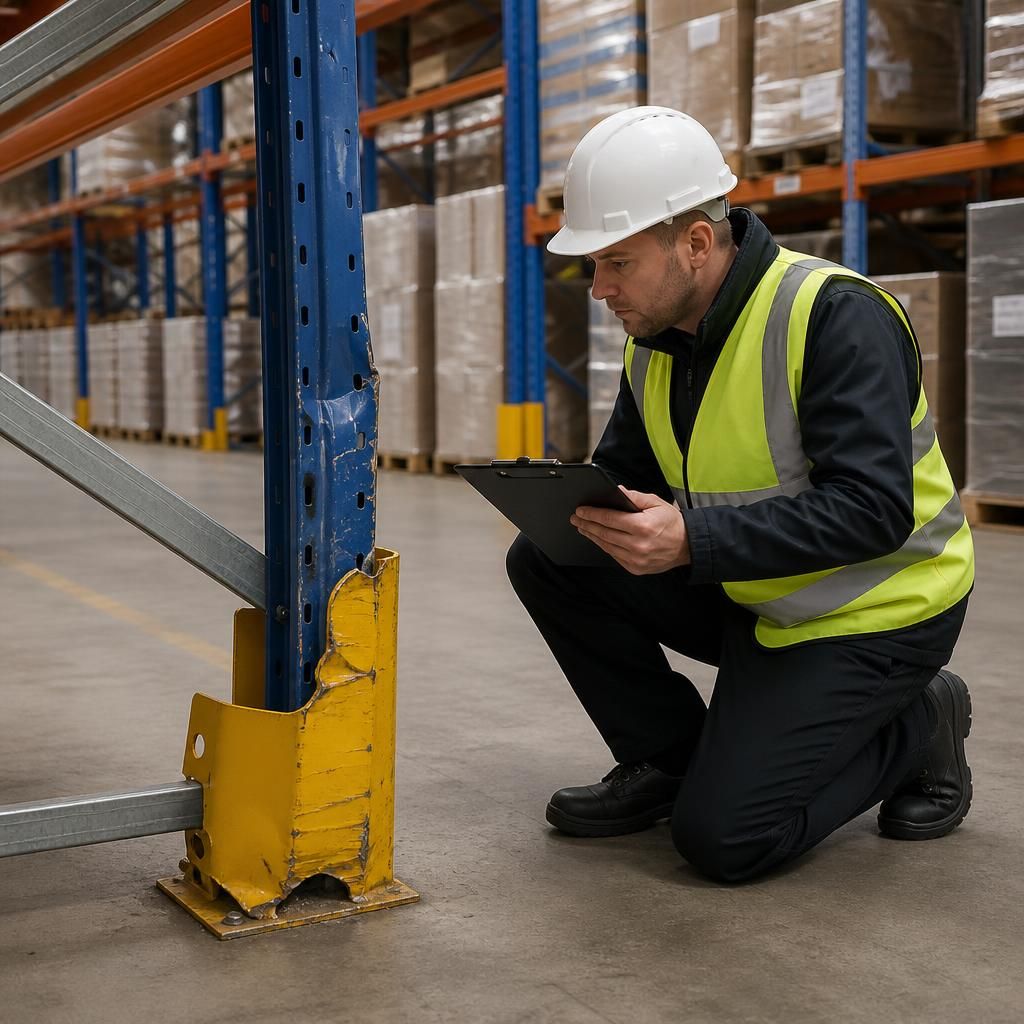
Professional warehouse racking repairs restore damaged structural components to a safe and serviceable condition after an impact, defect or deterioration has been identified. A competent repair assessment considers the affected upright, beam, bracing, connections, floor fixings and surrounding components, rather than replacing only the most visibly damaged part.
This condition-based approach helps protect people, stock and handling equipment while reducing the risk of further damage. It also supports a controlled return to service, with suitable advice on isolation, load restrictions, replacement components and follow-up inspections where required.
Arrange a Professional Warehouse Racking Repair Assessment
If your warehouse racking has been damaged or its condition is uncertain, arrange a professional repair assessment to establish the appropriate corrective action. Able Racking can advise on safe interim controls and suitable remedial work.