
Can warehouse racking repairs be performed without interrupting operations? Yes, many warehouse racking repairs can be planned and completed with minimal disruption by isolating affected areas, scheduling work during quieter periods and using rapid repair methods. However, severely damaged sections may need to be unloaded and taken out of service until they are made safe.
Yes, many warehouse racking repairs can be planned and completed with minimal disruption by isolating affected areas, scheduling work during quieter periods and using rapid repair methods. However, severely damaged sections may need to be unloaded and taken out of service until they are made safe.
Yes, many warehouse racking repairs can be completed without stopping the entire warehouse operation. A competent repair team can usually reduce disruption by isolating the affected bay or aisle, arranging work during quieter periods, coordinating with site management and using repair methods suited to the damage. However, damaged sections must not remain in use simply to maintain productivity. If the structure presents an immediate safety risk, it should be unloaded and taken out of service until it has been made safe.
The extent of the disruption depends on the location and severity of the damage, the type of warehouse racking involved, access requirements and whether replacement components are available. Localised damage to a frame, upright or protection component may be repaired within a controlled work area, while widespread impact damage, instability or deformation may require a larger exclusion zone and temporary changes to warehouse routes.
A practical repair plan normally begins with an inspection and risk assessment. The affected warehouse racking should be identified, labelled and assessed for signs such as bent uprights, damaged beams, displaced components, missing safety pins or compromised floor fixings. The inspector can then establish whether the area requires immediate isolation, temporary controls or planned repair work. This prevents unnecessary closures while ensuring that unsafe equipment is not used.
Where it is safe to do so, the repair area can be separated from active operations using barriers, warning signs and controlled access arrangements. Forklift and pedestrian movements may be redirected temporarily, with a clear method for preventing vehicles or personnel from entering the work zone. Only the affected area should be restricted where the risk assessment confirms that adjoining warehouse racking remains stable and safe to use.
Scheduling also has a significant effect on operational continuity. Repairs may be arranged during quieter shifts, planned maintenance periods or agreed times when stock movements are limited. This requires coordination between the repair team, warehouse management and forklift operators. The timing should account for stock removal, safe access, delivery commitments and any permit-to-work or site induction requirements.
Some repairs use specialist methods that avoid dismantling an entire section. For example, an approved repair system may reinforce or replace a damaged upright without removing unaffected components. The correct method depends on the manufacturer’s design, the condition of the structure and the findings of the inspection. Repairs should never be improvised, welded or altered without confirming that the solution is suitable for the warehouse racking system.
Stock may need to be removed from the affected bay before work begins. This is particularly important where damage affects a load-bearing component or where stored goods could fall during repair activity. Stock removal can often be planned in advance and transferred to available storage, reducing the time that the bay is unavailable. The repair team should also confirm that any temporary storage arrangement does not overload other warehouse racking or obstruct emergency routes.
For urgent damage, the priority is to control the risk rather than preserve normal throughput. A visibly leaning frame, severely bent upright, displaced beam or failed connection may indicate that the load capacity has been compromised. In these circumstances, the affected section should be isolated immediately and unloaded only under a controlled procedure. Attempting to continue picking from or loading the damaged area could increase the likelihood of collapse and cause wider operational disruption.
Once the repair is complete, the work should be checked before the area is returned to service. This includes confirming that replacement components and fixings are correctly installed, protection is reinstated where required and the repaired section is suitable for its intended loads. Updated inspection records, repair details and any revised restrictions should be provided to the responsible site team. Warehouse staff should also be informed when the area is safe to use again.
To keep repairs from becoming disruptive, customers should:
- Report damage promptly, including the location, type of damage and any photographs that can be taken safely.
- Prevent further use of visibly damaged warehouse racking until it has been assessed.
- Provide accurate information about operating hours, stock movements and access restrictions.
- Make the required work area accessible and remove obstructions before the repair appointment.
- Agree how vehicles, pedestrians and stock will be managed while the work is taking place.
- Keep inspection and repair records available for future safety reviews.
Professional planning can therefore allow routine warehouse racking repairs to take place with limited interruption, but safety controls determine whether a section can remain operational. Where damage is serious or the structure’s stability is uncertain, temporary downtime is necessary. A short, controlled restriction is safer and usually more efficient than allowing damage to worsen and creating a larger unplanned shutdown.
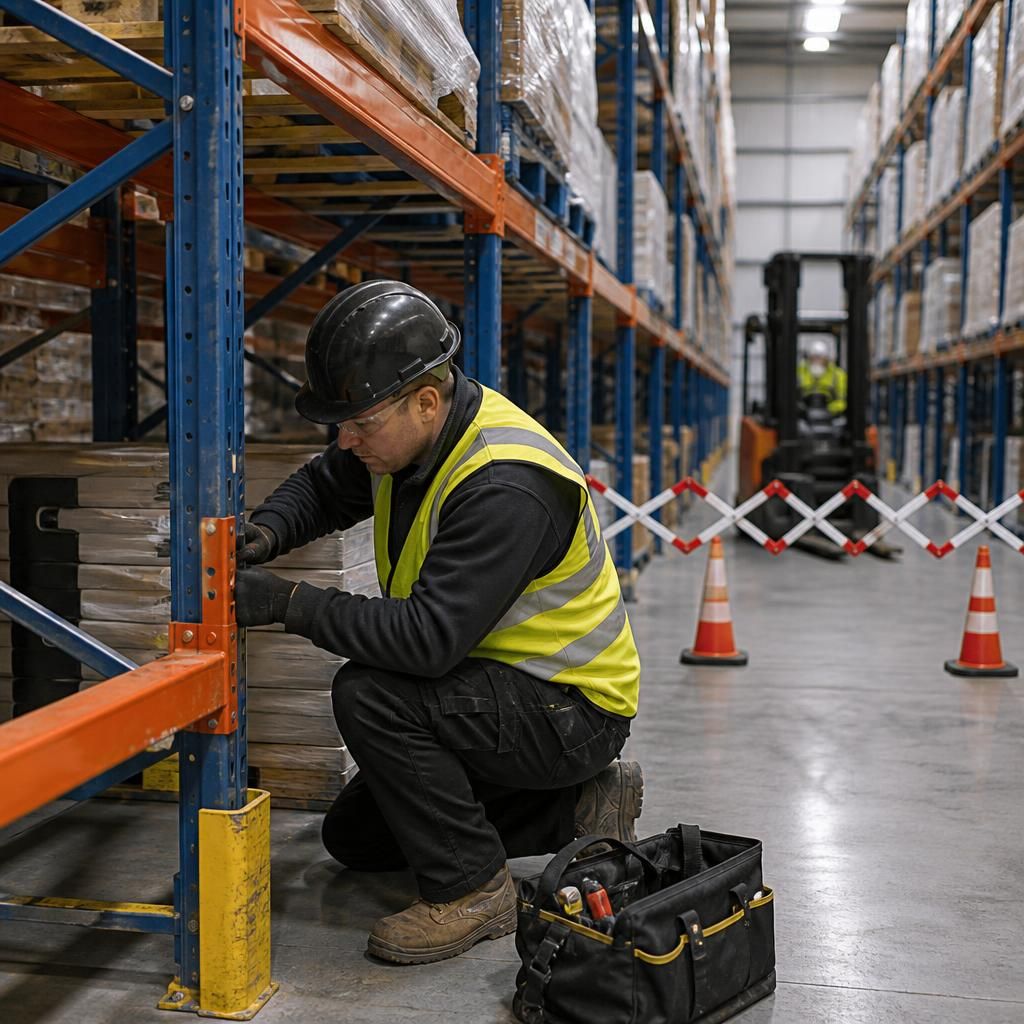
Warehouse racking repairs can often be completed without interrupting the whole operation when the affected bay or aisle is isolated and the work is planned around site activity. Barriers, warning signs and controlled access prevent forklifts and pedestrians from entering the repair area while unaffected warehouse racking remains available for use, subject to a competent inspection.
Stock may need to be removed from the damaged section before repairs begin, particularly where a load-bearing component is affected. Planning this transfer in advance, confirming access and scheduling the work during a quieter period can reduce downtime. If the warehouse racking is unstable or severely damaged, the section must remain out of service until repairs have been completed and its safe return to use has been confirmed.
Plan Your Warehouse Racking Repairs
Contact Able Racking to arrange an inspection and plan warehouse racking repairs around your operational requirements. Our experienced team can help identify the safest repair method, manage access controls and minimise disruption.