
What materials are used for effective warehouse racking repairs? Effective warehouse racking repairs use manufacturer-approved steel components, engineered repair systems, replacement beams or uprights, compatible fixings, protective coatings and, where required, floor anchors. The materials must match the original system and be selected following a competent inspection to restore structural performance and compliance.
Effective warehouse racking repairs use manufacturer-approved steel components, engineered repair systems, replacement beams or uprights, compatible fixings, protective coatings and, where necessary, floor anchors. Materials must match the existing system and be selected after a competent inspection to restore structural performance, safety and compliance.
Effective warehouse racking repairs use compatible, manufacturer-approved steel components and engineered repair materials selected after a competent inspection. The correct solution may involve replacing a damaged upright, beam or bracing member, or installing a tested repair system that restores the component’s strength, stability and protection. Materials must be suitable for the original warehouse racking design, the applied loads and the conditions in the working area.
Structural steel replacement components
Structural steel is the principal material used for most warehouse racking repairs. Where damage is severe or the component has lost its intended capacity, the safest option is often to replace the affected part rather than straighten or reinforce it. Common replacement components include:
- Upright sections and frames
- Horizontal beams and beam connectors
- Bracing members and frame ties
- Base plates and footplates
- Guard rails and other steel protection components
Replacement steel must have the correct profile, dimensions, thickness, connection details and load-bearing characteristics. A visually similar component is not necessarily suitable. Differences in steel grade, perforation pattern, connector design or section geometry can affect the capacity and stability of the complete installation.
Engineered warehouse racking repair systems
When a damaged upright can be safely retained, an engineered repair system may be fitted around or alongside the affected section. These systems generally use formed or fabricated steel channels, plates, sleeves or reinforcing sections. They are designed to transfer loads past the damaged area and provide a controlled, documented repair.
A repair system should only be used where its design is appropriate for the damage and the warehouse racking configuration. The repair must extend far enough beyond the damaged area, be installed in the specified position and use the correct fixings. Improvised plates, loose steel sections or untested reinforcement can conceal damage without reliably restoring structural performance.
Bolts, fixings and connectors
High-quality bolts, nuts, washers and proprietary connectors secure repair components to the existing warehouse racking. Their size, grade, thread, coating and tightening requirement must match the repair design. Beam connectors and locking devices are particularly important because they help maintain the connection between beams and uprights during normal loading and operational movement.
Existing fixings may be reused only when they are confirmed to be undamaged, suitable and permitted by the repair specification. Corroded, stretched, deformed or missing fixings should be replaced. Fasteners must be tightened correctly; over-tightening or under-tightening can both compromise the connection.
Floor anchors and base components
Where an upright or base has moved, or where a repair affects the connection to the floor, replacement anchors may be required. These can include mechanical anchors or other specified fixing systems suitable for the floor construction and the loads imposed by the warehouse racking.
The floor must be checked before anchors are installed. Cracked or damaged concrete, voids, unsuitable drilling locations and services beneath the floor can affect the reliability of the fixing. Anchor type, embedment, spacing and installation torque should follow the repair design and the fixing manufacturer’s instructions.
Protective coatings and corrosion control
Repair components commonly have a painted, powder-coated, galvanised or otherwise corrosion-resistant finish. The appropriate coating depends on the existing warehouse racking, the internal environment and the exposure to moisture, chemicals or abrasion.
Small areas of coating damage may be treated with a compatible repair coating after the steel has been cleaned and prepared. This helps limit corrosion, but paint is not a structural repair and cannot restore a bent, buckled or weakened component. Where corrosion has reduced the steel section or affected a connection, the underlying damage must be assessed and the component repaired or replaced.
Shims, packing and levelling materials
Steel shims or approved packing materials may be used to correct minor base-level differences where they are allowed by the design. They must be durable, stable under load and positioned so that they do not create an unintended point load or interfere with the base plate and anchor arrangement.
Uncontrolled use of timber, loose sheet material or unsuitable plastic packing is not an acceptable substitute for an engineered solution. Levelling materials should not be used to compensate for a distorted upright, inadequate floor or incorrectly installed frame.
Materials for protection against further impact
Where damage has been caused by vehicle or handling equipment impact, repairs may be accompanied by additional steel guards, end-of-aisle protection, upright guards or other impact protection. These components are intended to absorb or deflect contact before it reaches the structural frame.
Protection must be securely fixed, correctly positioned and compatible with aisle widths, access arrangements and load-handling equipment. It should not obstruct inspections, create a trip hazard or transfer impact forces into the repaired component in an unsafe way.
Why material compatibility matters
Warehouse racking is a connected structural system rather than a collection of interchangeable parts. A repair material can appear robust while still being unsuitable if it changes the way loads are transferred through the frame. Compatibility should therefore be checked against:
- The original manufacturer’s design and component profile
- The type and extent of damage
- Beam spans, bay configuration and stored load requirements
- The condition of the floor and existing anchors
- Clearances, access routes and operational equipment
- Corrosion, temperature, moisture and other environmental conditions
Materials should also be traceable through product information, installation instructions and repair documentation. This provides a clear record for future inspections and helps confirm that the completed work matches the approved method.
Materials that should not be used as a substitute for a proper repair
General-purpose steel, unverified brackets, unsuitable bolts, adhesive-only fixes, welds carried out without an approved method and makeshift packing should not be used to repair damaged warehouse racking. Welding can alter the properties of the steel and may invalidate the original design unless it is specifically engineered, controlled and approved.
Similarly, straightening a visibly bent component does not necessarily return it to its original strength. The decision to repair, replace or isolate the affected area should follow an assessment by a competent person and, where necessary, the system manufacturer or a suitably qualified structural engineer.
How the materials are selected and verified
- The damaged warehouse racking is inspected, photographed and assessed for severity, location and likely cause.
- The affected components and the surrounding structure are identified, including any secondary damage.
- The repair method is selected using the original system details, load information and relevant manufacturer or engineering guidance.
- Compatible steel components, fixings, anchors and protective materials are specified and sourced.
- The repair is installed to the approved instructions, with the area isolated from use where required.
- The completed work is checked, recorded and returned to service only when its condition and stability are satisfactory.
In practice, the best repair material is not simply the strongest or most readily available option. It is the tested, compatible component that addresses the actual damage without compromising the rest of the warehouse racking. A competent inspection and properly documented repair method are essential to confirm that the finished installation is safe, compliant and suitable for continued operation.
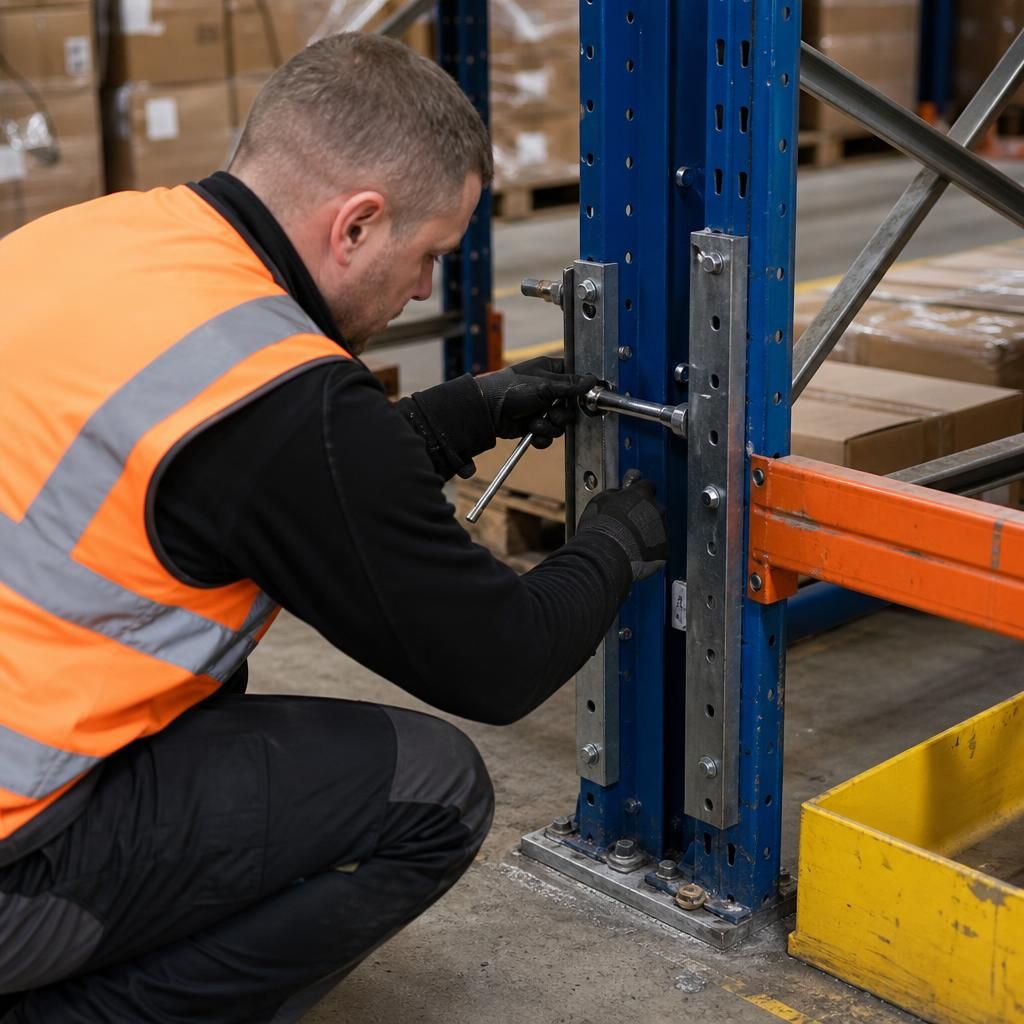
Compatible structural steel is the key material in an effective warehouse racking repair. Replacement uprights, beams, bracing and repair sections must match the original system’s profile, dimensions, connection details and load requirements; a similar-looking steel component may not restore the intended strength or stability.
Bolts, connectors, anchors and protective coatings must also be suitable for the repair design and working environment. These materials should be selected after a competent inspection, installed to approved instructions and recorded so future inspections can confirm that the repair remains safe and compliant.
Arrange a warehouse racking repair assessment
Arrange a warehouse racking repair assessment with Able Racking to identify the correct materials and repair method for any damaged components. Our experienced team can assess the condition, specify compatible parts and advise on the next steps.