
When should you conduct a pallet racking inspection?
Conduct a pallet racking inspection before the system is first used, after any alteration, impact or significant damage, and at least every 12 months by a technically competent person. Supplement this with regular in-house visual checks so defects can be reported, isolated and repaired promptly.
A pallet racking inspection should be conducted before a system is first used, after any alteration, relocation, impact or significant damage, and at intervals determined by the risks in the warehouse. A technically competent person should carry out a formal inspection at least every 12 months, supported by routine in-house visual checks and prompt reporting of defects.
The inspection frequency should reflect the working environment. Busy warehouses with frequent forklift movements, high turnover, vulnerable loads, challenging operating conditions or a history of impacts may require more frequent formal inspections. The responsible person should set the inspection regime through a risk assessment rather than relying solely on a fixed calendar date.
Carry out an inspection at the following points:
- Before first use: confirm that the installed system matches the design, is correctly assembled and is suitable for the intended loads and operating conditions.
- After installation, alteration or relocation: inspect the system before it is returned to service. Changes to beam levels, bays, components, layout or load requirements can affect the system’s capacity and stability.
- After an impact: inspect any upright, frame, beam, guard, anchor or nearby component involved in a collision, even if the damage is not immediately obvious.
- After significant damage or an abnormal event: events such as fire, flooding, a structural disturbance or contact with other equipment may justify an immediate inspection.
- During routine operation: trained warehouse personnel should complete regular visual checks and report damage as soon as it is identified.
- At least annually: a technically competent person should complete a documented expert inspection, in line with the manufacturer’s instructions and recognised industry guidance such as BS EN 15635.
Routine visual checks are not a substitute for the formal inspection. They should be completed at a frequency appropriate to the risks, often as part of the warehouse’s regular operating checks. Staff should know how to identify damage, who to report it to and what action to take if a component may no longer be safe.
A formal pallet racking inspection should examine the complete installation, including:
- uprights, frames, baseplates and bracing;
- beams, beam connectors, locking devices and safety pins;
- frame and column protectors, end barriers and other protective equipment;
- floor fixings, anchors and any signs of movement or instability;
- corrosion, distortion, cracks, missing components and damaged welds;
- beam deflection, frame alignment and signs that the structure is out of plumb;
- load notices, safe working load information and the suitability of stored loads;
- clearances, aisles and access routes around the installation; and
- evidence that previous defects have been repaired and that repairs are suitable.
Damage should be assessed by a competent person rather than judged solely on appearance. A bent upright, displaced beam, missing locking pin or damaged anchor can affect the load-bearing capacity of the whole bay. Where there is a serious or uncertain defect, the affected area should be clearly identified, unloaded where necessary and taken out of use until it has been assessed and made safe.
Inspection records should state the date, location, findings, risk classification, recommended action, responsible person and completion date. Keep records with the warehouse’s safety documentation and use them to identify recurring impacts, weak points in working practices or areas where additional protection and operator training may be needed.
Repairs should be completed using compatible, properly specified components and in accordance with the system design and manufacturer’s requirements. Replacing a damaged part without investigating the cause may leave the installation vulnerable to repeat damage. After repair, the affected area should be checked before loads are returned and any revised load information or operating controls should be communicated to warehouse staff.
For Able Racking customers, an inspection can be arranged when a scheduled review is due or sooner following an alteration, impact or concern raised by your team. Our experienced operatives can assess the installation, document defects, advise on appropriate repairs and help establish a practical inspection routine for the warehouse.
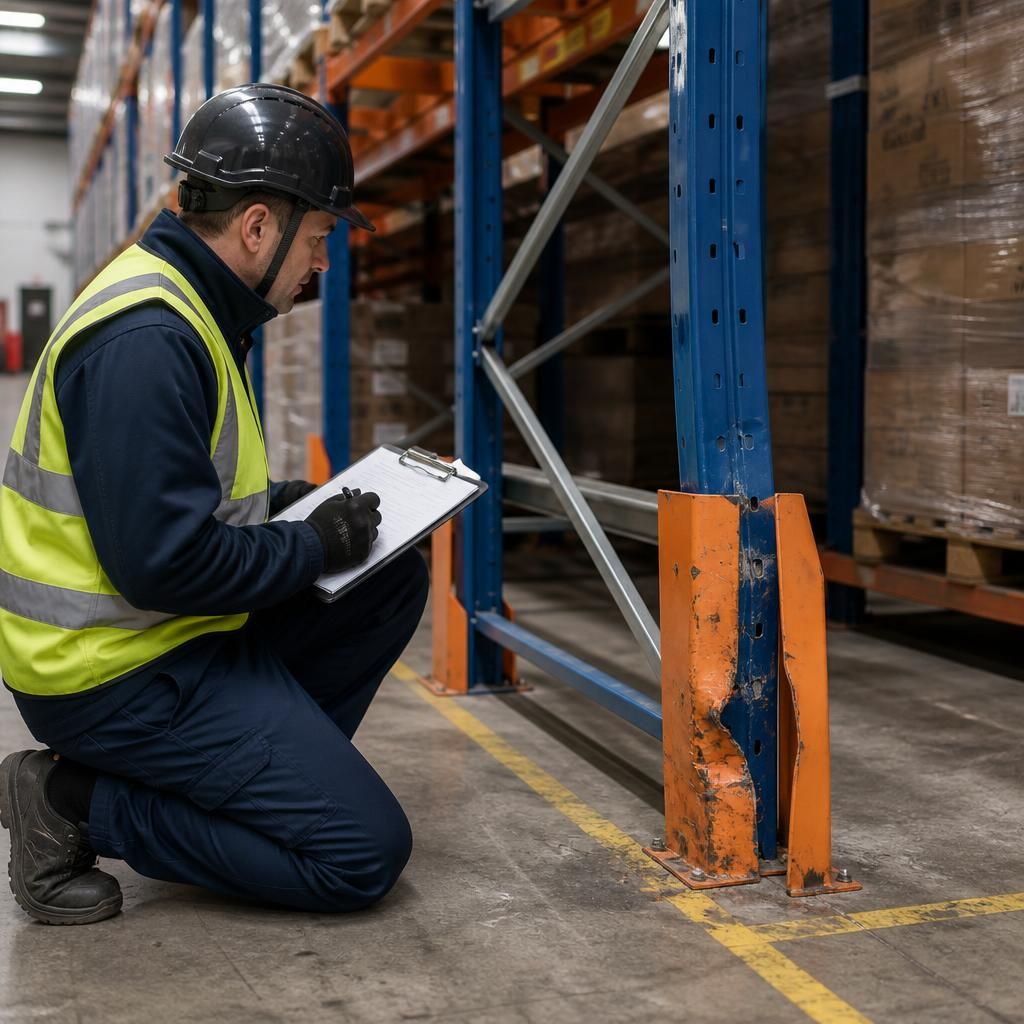
A pallet racking inspection is required after any collision, alteration, relocation or significant damage, not only when the scheduled review is due. Forklift impact can distort an upright, loosen a beam connection or damage an anchor without producing an obvious visual warning.
Isolate the affected bay, prevent further loading and report the damage to the responsible person. A technically competent inspector should assess the complete area, including nearby components, before it is returned to service. The inspection should confirm whether repair or replacement is needed and whether the repaired installation remains suitable for its intended loads.
Arrange Your Pallet Racking Inspection
Contact Able Racking to arrange a technically competent pallet racking inspection following an alteration, impact, damage or as part of your scheduled review. Our experienced team can assess defects, recommend suitable repairs and help keep your warehouse safe and operational.