
What types of parts are used to enhance the longevity of pallet racking systems?
Parts that help extend the life of pallet racking systems include replacement beams, frames, connectors, safety pins, bracing, column protectors, end-of-aisle guards and load plaques. Using correctly specified parts to repair damage, protect vulnerable areas and maintain safe load distribution helps prevent further deterioration and keeps the system compliant.
The parts used to extend the service life of pallet racking systems are those that restore structural performance, protect vulnerable areas and maintain correct load distribution. Common examples include replacement beams, upright frames, connectors, bracing, locking pins, column protectors, end-of-aisle guards, row spacers, floor fixings and load notices. Each part must be correctly specified for the existing system and fitted following a suitable inspection or repair assessment.
Replacing a damaged component is not simply a matter of finding a part with the same appearance. Beam profiles, frame dimensions, connector designs, steel grades, load capacities and fixing arrangements can vary between systems. A compatible replacement should be selected using the original manufacturer’s information where available, or verified by a competent warehouse racking specialist.
Structural replacement parts
- Replacement beams: Damaged, bent or visibly distorted beams should be assessed and replaced where they no longer meet the required condition. Correctly specified beams support the intended pallet loads and maintain the designed bay configuration.
- Upright frames and columns: Uprights transfer loads to the floor and form the main vertical structure. A damaged frame, column or foot section may affect the stability of an entire bay and should not be straightened or repaired informally unless a competent engineer has approved the method.
- Beam-to-frame connectors: Connectors engage the beam with the upright and are essential for transferring loads safely. Replacement connectors must match the frame and beam design, with no reliance on improvised welding, drilling or substitutions.
- Bracing components: Horizontal and diagonal bracing helps keep frames square and stable. Bent, loose or missing bracing should be replaced with the correct component rather than altered on site.
- Safety pins and locking devices: These prevent beams from being accidentally lifted out of their connectors during normal operations. Missing, damaged or incorrectly fitted locking devices should be replaced promptly.
Protective parts
- Column protectors: These help shield upright columns from impacts caused by handling equipment. They are particularly useful at aisle ends, access points and other areas where vehicle movements bring a higher risk of contact.
- End-of-aisle guards: These provide additional protection to exposed frame ends and can reduce the likelihood of impact damage in busy traffic routes. Their design and anchoring arrangement should suit the warehouse racking layout and the type of handling equipment in use.
- Barrier systems and corner protection: Physical barriers can separate vehicle routes from storage structures and help protect vulnerable corners, frame lines and loading areas. They should be positioned so that they do not obstruct access, emergency routes or routine inspections.
- Floor fixings and base plates: Correct anchors, bolts and base components secure frames to the floor. Loose, missing or damaged fixings can reduce stability and should be checked as part of a repair assessment.
Protective equipment reduces the likelihood of future damage, but it does not make damaged warehouse racking safe by itself. Any impact should be reported, the affected area should be unloaded where necessary and the damage should be assessed before the system is returned to normal use.
Parts that support safe operation
- Load notices and plaques: Clear load information helps operatives understand the permitted beam and bay capacities. Notices should reflect the actual configuration, including any changes to beam levels or components.
- Pallet supports: These can provide additional support beneath pallets where the system design requires them. The correct support type and spacing are important because unsuitable supports may not carry the intended load safely.
- Row spacers and ties: Where specified in the original design, these maintain the relationship between back-to-back frames and help preserve the planned layout. They should be replaced if bent, loose or missing.
- Replacement clips, bolts and fittings: Small fixing components are easy to overlook, but missing or incompatible fittings can affect the performance of larger structural parts.
Parts should be selected as part of a controlled repair process. Start by identifying the location and type of damage, record the affected bay and component, and prevent use of the area if there is a risk to people, stock or stability. A competent person can then determine whether the part needs monitoring, immediate replacement or a wider structural assessment.
Repairs should also consider the cause of the damage. If vehicle impact is recurring, replacing a column without improving protection or traffic control may only provide a short-term solution. Similarly, repeated overloading, poor pallet placement or unauthorised changes to beam levels can continue to place excessive stress on replacement parts.
Do not mix components from different systems unless their compatibility and structural suitability have been confirmed. A part that fits physically may still have a different capacity, connector arrangement or design specification. Welding, drilling, cutting or straightening structural components can also alter their performance and should not be used as an informal substitute for an approved repair.
After replacement, the repaired area should be checked for correct installation, secure fixings, appropriate protection and accurate load information. The repair should be recorded, and the warehouse racking should be monitored during subsequent inspections. This approach combines structural replacement, impact prevention and good operating control to help prolong the system’s safe working life.
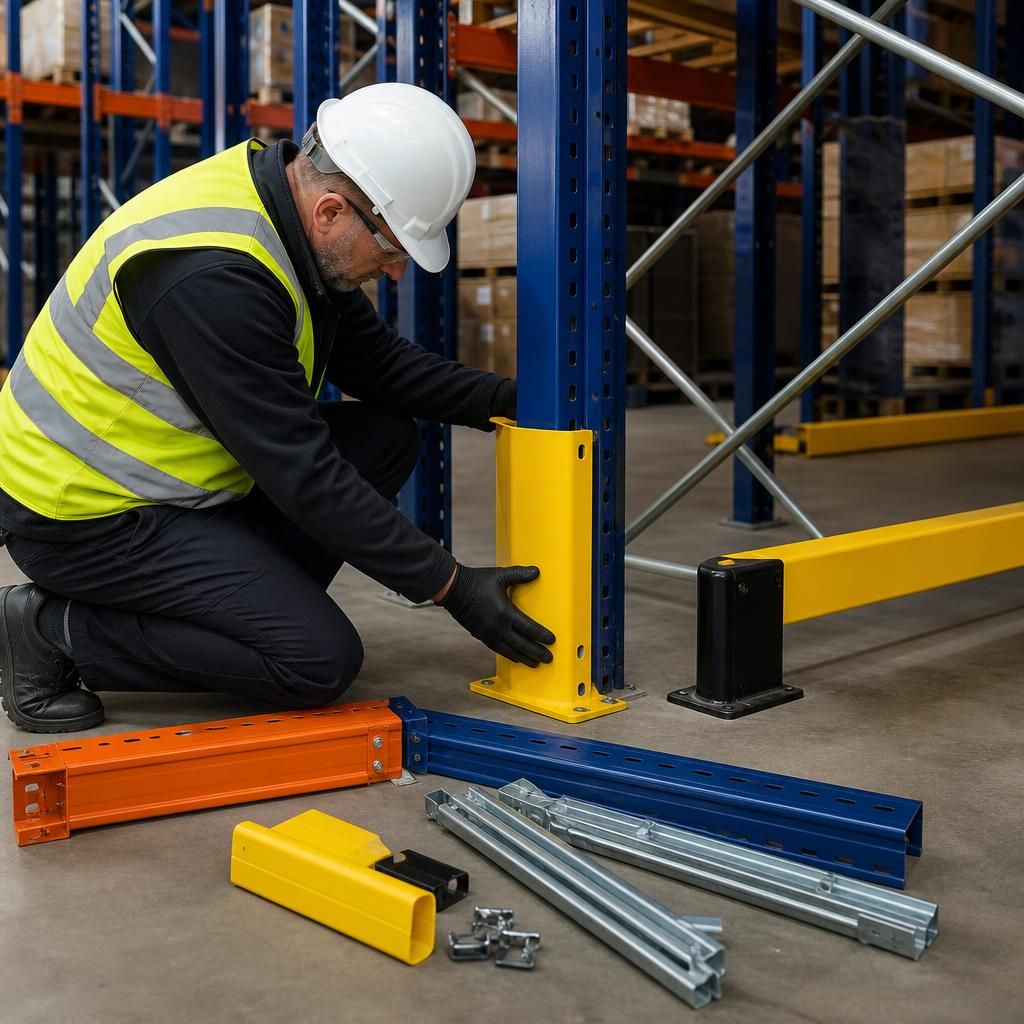
The parts that most effectively extend a pallet racking system’s service life are correctly specified replacement components and protective equipment. Beams, upright frames, connectors, bracing, locking devices, floor fixings and column protection must match the existing system and be suitable for its design loads.
Physical compatibility alone is not enough. A replacement part may fit the structure but have a different connector arrangement, steel specification or load capacity. Before fitting any component, the damaged area should be identified, the bay taken out of use where necessary and the repair assessed by a competent warehouse racking specialist. Informal modifications such as welding, drilling, cutting or straightening can compromise structural performance.
Protective parts, including column protectors, end-of-aisle guards and barriers, help prevent repeated impact damage from handling equipment. They should be selected for the traffic routes and installed without obstructing access, emergency routes or inspections. After a repair, check the fixings, locking devices, load information and surrounding components, then record the work for future inspections.
Arrange an expert pallet racking parts assessment
Contact Able Racking to arrange an expert assessment of your pallet racking parts, including damaged components, compatibility and protective requirements. We can help identify the appropriate repairs and replacement parts for your system.