
What components are most susceptible to damage in a pallet racking system?
The components most susceptible to damage in a pallet racking system are the upright frames, beam connectors, horizontal beams, bracing and baseplates, particularly where forklifts or pallets make contact. Damage such as bends, dents, distortion, loose connections or cracked welds should be reported promptly so the affected parts can be assessed and repaired or replaced safely.
The components most susceptible to damage in a pallet racking system are the upright frames, horizontal beams, beam connectors, bracing, baseplates and load protection accessories. These parts are particularly vulnerable to impact from forklift trucks, pallets and handling equipment, as well as damage caused by overloading, incorrect installation or poorly positioned loads. Any bent, distorted, cracked, loose or visibly displaced component should be reported promptly so it can be assessed by a competent person before the affected bay is used again.
Upright frames are among the most vulnerable parts because they support the full structure and are positioned at the ends of each bay, where forklift contact is most likely. Impact can cause dents, bends, twisting or local buckling in the uprights. Damage may also affect the vertical holes used to connect the beams, making it difficult to maintain secure and correctly levelled beam positions. Even apparently minor distortion can reduce the frame’s capacity, so uprights should not be straightened or repaired by force on site.
Horizontal beams can be struck by forklift masts, loads or pallets during placement and retrieval. Common signs of damage include dents, bends, sagging, twisted sections, damaged end plates and cracked welds. A beam that has moved from its original position or no longer sits correctly in its connectors may not transfer loads as designed. Beam damage can also result from loads being placed unevenly, dropped onto the beam or exceeding the specified capacity.
Beam connectors and locking devices are small but critical components. They secure each beam to the upright frame and help prevent accidental displacement. They may become bent, cracked, partially detached or damaged when a beam is hit. Missing or incorrectly fitted locking pins are also a concern. A beam should never be considered secure simply because it appears to be resting on the upright; its connector and locking mechanism must be correctly engaged and in good condition.
Bracing members help maintain the alignment and stability of an upright frame. Diagonal and horizontal braces can be bent by impacts, damaged at their fixing points or loosened by vibration and repeated movement. Distorted bracing may cause the frame to lean or lose its intended structural stiffness. The surrounding frame, fixings and connections should be checked as well, as damage is not always limited to the part that shows the most obvious mark.
Baseplates and floor fixings are exposed to impact from handling equipment and can be damaged when an upright is struck. Typical issues include bent baseplates, loose or missing anchors, cracked welds, damaged flooring around the fixing and movement at the foot of the frame. If a baseplate has lifted, shifted or separated from the floor, the bay should be isolated until the cause and extent of the damage have been established. Replacing a fixing without checking the surrounding structure may not resolve the problem.
Protection equipment, including upright guards, end-of-aisle protection and barrier systems, is designed to absorb or deflect impacts. It can therefore show damage before the structural parts behind it do. Crushed, displaced or loose protection should be inspected rather than ignored. A damaged guard may no longer provide the intended level of protection, and an impact strong enough to damage it may also have affected the upright, floor fixing or frame alignment.
Decking, support bars and pallet supports can be damaged by dropped loads, incorrectly sized pallets or excessive point loading. Inspect for broken boards, bent support bars, displaced decking, split surfaces and gaps that could allow a pallet to become unstable. These parts should remain correctly seated and suitable for the type and weight of load being stored. Damaged or incompatible decking must be replaced with a component that is appropriate for the system, rather than adapted from an unapproved alternative.
Damage is more likely where aisles are restricted, visibility is poor, loads overhang, pallets are in poor condition or operators have insufficient clearance to manoeuvre. Repeated contact in the same location may indicate a layout, training or operating issue rather than an isolated component failure. Reviewing traffic routes, load placement and operator practices can help prevent recurring damage after repairs have been completed.
During a visual check, look for:
- bent, dented or twisted uprights and beams;
- loose, missing or damaged locking devices and connectors;
- cracked welds, split sections or damaged fixing points;
- displaced, missing or damaged bracing;
- loose baseplates, damaged anchors or movement at floor level;
- leaning frames, uneven beam levels or changes in bay alignment;
- damaged guards, decking, support bars or pallet supports; and
- loads that are unstable, overhanging or unsuitable for the system.
If damage is found, prevent further use of the affected location where necessary, identify the bay clearly and inform the responsible person. Do not weld, drill, heat, straighten or paint over damaged structural parts without an approved repair method. A competent inspector should determine whether the component can remain in service, requires immediate unloading and repair, or must be replaced. Repairs should follow the system manufacturer’s requirements and take account of the original design, loading information, connections and surrounding components.
Prompt reporting and accurate records help identify recurring impact points and ensure that replacement parts match the existing warehouse racking system. Regular workplace checks, planned inspections and suitable operator training provide the best opportunity to detect damage before it affects the safety, capacity or performance of the installation.
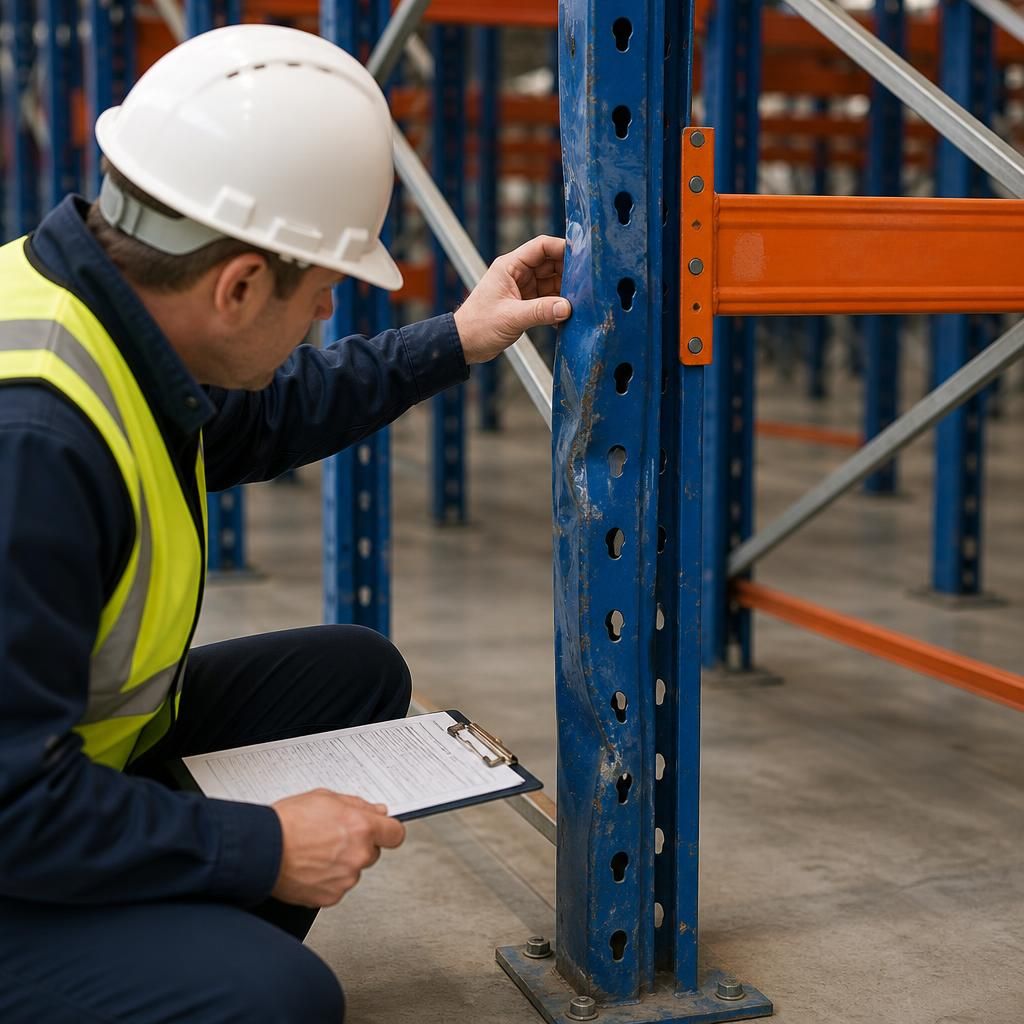
Upright frames are among the components most susceptible to damage because they support the stored load and are positioned where forklift trucks commonly manoeuvre. Impacts can cause dents, bends, twisting, local buckling or damage around the beam connection holes. Even minor-looking distortion can affect the frame’s alignment and load-bearing capacity.
Do not attempt to straighten, weld or heat a damaged upright on site. Isolate the affected bay where necessary and arrange an assessment by a competent person, who can determine whether the frame requires unloading, repair or replacement in line with the warehouse racking system’s design and manufacturer’s requirements.
Arrange an assessment of damaged pallet racking components
If any pallet racking component shows signs of impact, distortion or displacement, arrange an assessment by a competent Able Racking professional before the affected bay is used again. We can advise whether the component requires unloading, repair or replacement in line with the warehouse racking system’s design.