
What are common indicators that a pallet racking system needs repair?
A pallet racking system may need repair when you notice bent or split frames, damaged beams, missing or loose fixings, leaning uprights, displaced safety pins, or signs that loads are no longer sitting level. Stop using the affected area where necessary, isolate the damage and arrange an inspection by a competent specialist before repairs or replacement parts are carried out.
A pallet racking system needs repair when any structural component, connection or protection device is damaged, distorted, loose, missing or no longer performing as intended. The main warning signs are bent or split uprights, damaged beams, displaced safety pins, loose fixings, leaning frames, impact damage, corrosion and loads that are no longer supported evenly. Isolate the affected area where necessary and arrange an assessment by a competent warehouse racking specialist before the system is used again.
1. Bent, twisted or split uprights
Uprights carry the vertical loads within a pallet racking frame. A bend, crease, tear, split weld or other deformation can reduce the frame’s load-bearing capacity and affect its alignment. Damage is often caused by forklift impact, but it can also result from overloading, poor installation or movement of the structure.
Do not attempt to straighten a damaged upright in place. The affected bay should be unloaded and clearly identified while a competent person assesses whether the component can be repaired using an approved method or must be replaced.
2. Damaged or visibly deflected beams
Beams may become bent, dented, twisted or detached from their normal position following an impact or an incorrect installation. A beam that is permanently deflected, has damaged end connectors or shows cracking around a weld requires prompt attention. A beam may also need investigation if it has started to pull away from the upright or no longer sits securely in its connection.
Some movement can occur when a load is placed onto a beam, but permanent distortion, unexpected sagging or a change in the beam’s position should not be ignored. Loads should be removed from the affected level until the beam and its connections have been checked.
3. Missing, loose or displaced safety pins
Safety pins, locking clips and other beam-retention devices help prevent a beam from being accidentally lifted out of its upright connection. A missing or displaced device can leave the connection vulnerable, particularly where pallets are being loaded or removed frequently.
Replace the correct component in accordance with the system design and manufacturer’s requirements. Do not rely on an improvised substitute, cable tie or unrelated fixing. If the connector itself is bent or damaged, fitting a new pin alone may not make the connection safe.
4. Leaning frames or changes in alignment
A frame that is visibly leaning, out of square or no longer aligned with adjacent bays may indicate impact damage, failed anchors, an unstable floor condition or movement within the structure. Misalignment can place additional forces on uprights, bracing, beams and connections.
Check whether the change affects one bay or a continuous run, and prevent further use until the cause has been established. Repositioning a frame without understanding why it moved can conceal a serious defect and allow the problem to return.
5. Damaged anchors, floor fixings or bracing
Floor anchors and bracing help keep a pallet racking structure stable. Warning signs include loose or missing anchors, cracked concrete around a fixing, pulled-out anchor bolts, damaged horizontal or diagonal bracing and missing components.
These parts should be assessed as part of the complete frame rather than repaired in isolation. The correct replacement fixing depends on the system, base material, installation requirements and design loads. Drilling new holes or changing anchor positions without approval can compromise the structure.
6. Impact damage, corrosion or other deterioration
Forklift strikes are a common source of damage, even when the affected component appears to have suffered only a small dent. Protective guards may reduce the likelihood of impact, but they do not make a damaged upright or beam safe. Inspect the surrounding components as well as the point of contact because an impact can affect connections, anchors and bracing that are not immediately visible.
Corrosion, flaking metal, damaged paint, moisture-related deterioration and cracking can also weaken components over time. Surface contamination should not simply be painted over. The extent and cause of the deterioration should be established before deciding whether cleaning, treatment, repair or replacement is appropriate.
7. Pallets or loads no longer sit correctly
Loads that lean, sit unevenly, project into an aisle or contact adjacent components may indicate a damaged beam, altered frame spacing, missing supports or a problem with the pallet itself. Uneven loading can increase stress on the structure and create a risk of falling goods.
First check the pallet condition, load dimensions, beam levels and the positioning of any pallet supports. If the issue remains after the load has been correctly positioned, stop using the affected location and arrange an inspection. Never increase a load or alter beam levels to compensate for a suspected defect without confirming that the system remains suitable for the intended load.
What to do when damage is found
- Make the area safe. Prevent access to the affected bay or aisle where there is a risk of collapse, falling goods or further impact.
- Unload only where it is safe to do so. A damaged structure should not be disturbed if removing the load could make the condition worse. Follow the site’s emergency arrangements and seek competent advice.
- Record the defect. Note the location, component, type of damage and any known impact. Photographs can help with identification, but they do not replace a physical assessment.
- Arrange a competent inspection. The inspector should assess the complete installation, identify the cause and classify the action required, such as monitoring, prompt repair or immediate isolation.
- Use approved parts and methods. Replacement uprights, beams, bracing, anchors and protection should be compatible with the existing warehouse racking system and its design requirements.
- Update records before reuse. Keep details of the inspection, repair and any revised load information. The affected area should only return to service when the repair has been completed and confirmed as suitable.
Routine checks by trained staff can identify obvious defects between formal inspections, but they do not authorise unsafe repairs or replace a competent inspection. Any uncertainty about the severity of damage should be treated cautiously: isolate the affected location and obtain professional advice before loading it again.
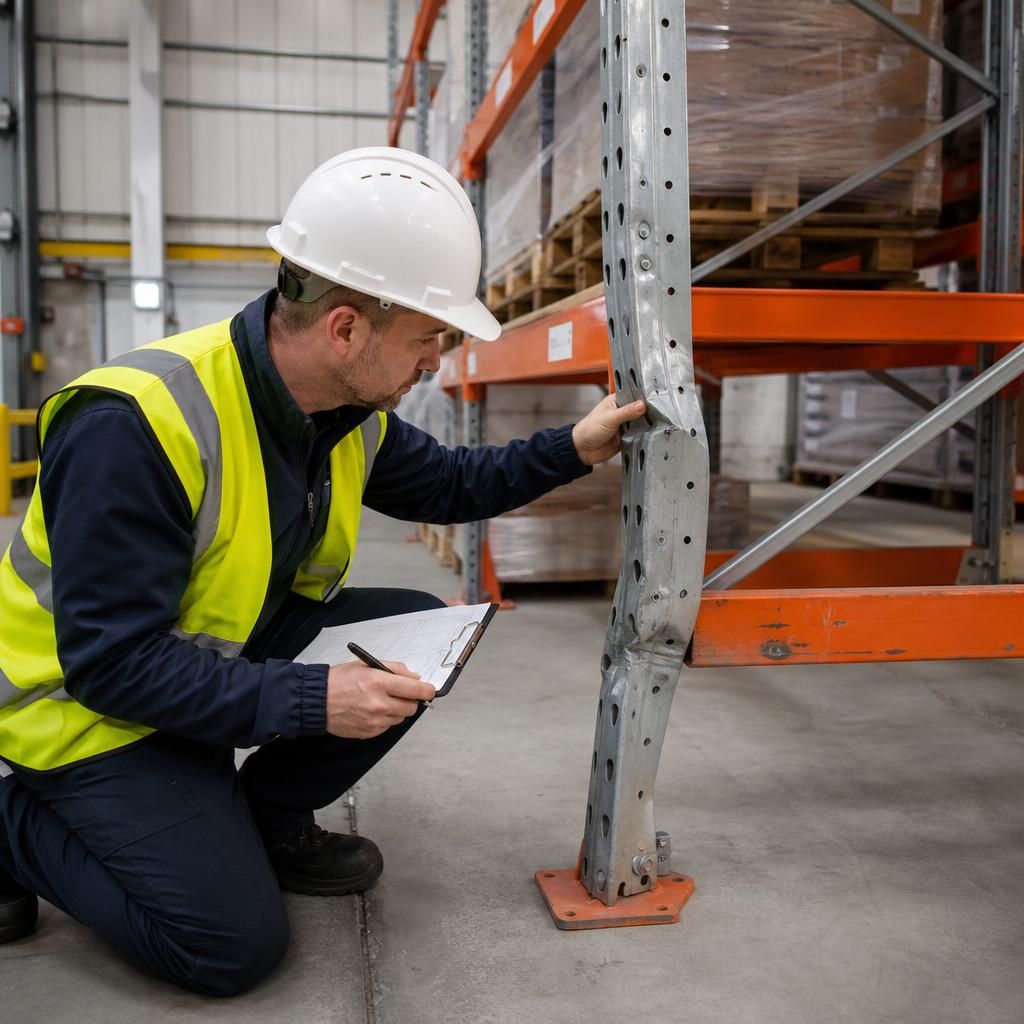
A visible change in the position, shape or condition of a pallet racking component is a warning that the affected bay may no longer be safe to use. Bent uprights, damaged beams, loose anchors, missing safety pins and leaning frames should be treated as defects rather than cosmetic issues.
Isolate the affected location where necessary, prevent further loading and arrange an assessment by a competent warehouse racking specialist. Do not straighten damaged steel, drill new fixing holes or fit improvised replacement parts. The inspection should establish the cause of the damage and confirm whether approved repair parts, component replacement or wider corrective work is required before the bay returns to service.
Arrange an Expert Pallet Racking Repair Inspection
If you have identified damage or a change in condition, arrange an expert pallet racking inspection before the affected bay is used again. Able Racking can assess the installation and advise whether approved repair parts, component replacement or further corrective work is required.