
How do I choose the right pallet racking repair parts for my system?
Choose pallet racking repair parts by matching them to your system’s manufacturer, profile, dimensions, load requirements and type of damage. Confirm compatibility from the original specifications or an expert assessment before fitting any replacement, as an incorrect component can affect the system’s safety and compliance.
Choose pallet racking repair parts by confirming the system manufacturer, upright and beam profiles, dimensions, load requirements and damage type. The replacement must be designed for that specific warehouse racking system and verified by a competent person before fitting. A part that appears similar may have different steel thickness, fixing dimensions, load capacity or connection details, so visual similarity alone is not proof of compatibility.
Start by identifying the warehouse racking system. Record the manufacturer, product range, installation date if known, upright section, beam type and any identification markings. Check the original layout drawings, load notices, inspection records and previous repair documentation. Manufacturer names or product codes may be stamped on components, shown on labels or recorded in the original handover information.
If the manufacturer or product range cannot be confirmed, do not select a replacement solely by measuring the visible component. An experienced inspector or repair specialist can assess the profile, connection arrangement and structural condition, then identify a suitable repair method. This is particularly important where the system has been altered, extended or repaired using parts from different sources.
Measure the damaged component accurately. Useful details include:
- the upright profile, including its width, depth, thickness and perforation pattern;
- the beam length, height, section profile and connector design;
- the dimensions and fixing positions of footplates, bracing, guards and other accessories;
- the distance between frames, beam levels and any clearances needed for pallets or handling equipment; and
- the location and extent of the damage, including distortion, cracking, tearing, impact marks or loosened connections.
Measurements should be taken from an undamaged matching component where possible. Damaged steel can be bent, stretched or displaced, making it unsuitable as the sole reference for replacement dimensions. Photographs showing the full frame, the damaged area and any identification marks can also help an expert confirm the correct part.
Match the part to the function it performs. Common pallet racking repair parts include replacement uprights, beams, beam connectors, footplates, bracing members, locking pins, shims, anchors and protection equipment. These components are not interchangeable simply because they occupy a similar position. For example, a beam connector must engage correctly with the upright perforations and provide the intended locking arrangement; a footplate must transfer loads properly and accept the specified anchors; and a brace must have the correct length and connection points.
Where damage affects a load-bearing component, the appropriate solution may be a complete replacement rather than a small accessory or local patch. Bent uprights, damaged beam ends, torn sections and distorted connections should not normally be straightened, welded or drilled on site unless a competent structural assessment and approved repair method specifically allow it. Unauthorised modifications can change the design assumptions and invalidate the system’s load information.
Check the load and design requirements. The replacement part must support the loads and configuration for which the system is being used. Confirm the pallet weights, beam levels, bay widths, frame heights, number of storage positions and any changes to the original arrangement. A component that fits physically may still be unsuitable if the current storage configuration places different loads on the warehouse racking.
Review the load notices and manufacturer’s design information before changing beam levels, adding bays or replacing components with a different profile. If the proposed part changes the system’s geometry or capacity, the arrangement may need to be assessed and the load notice updated. Do not assume that a heavier-looking component automatically increases the safe working load.
Consider the type and severity of damage. The part required depends on what caused the failure and whether surrounding components have also been affected. A forklift impact may damage the upright, baseplate, anchors, bracing and adjacent beam connections, even where only one area is immediately visible. An inspection should therefore check the complete bay and neighbouring bays before parts are ordered.
Components should be taken out of service and the affected area controlled where damage could reduce stability. Pallets may need to be unloaded using a safe method, and the area should remain protected until the repair has been completed and checked. Painting over impact marks, hammering distorted steel back into position or fitting a guard over structural damage does not constitute a repair.
Use protection parts for prevention, not as a substitute for repair. Upright guards, end-of-aisle barriers, frame protectors and other impact protection can reduce the likelihood or severity of future vehicle contact. Select them according to the upright profile, aisle arrangement, handling equipment and required clearance. They must be securely installed without obstructing access, anchors or inspections, and they should not conceal existing damage.
Protection can also include replacement locking devices, suitable anchors and correctly fitted safety accessories. These parts support the safe operation of the system but do not restore a damaged load-bearing component unless the repair design specifically states that they form part of an engineered solution.
Do not mix parts without verification. Components from different manufacturers or product ranges may have different steel grades, tolerances, connection geometry and design capacities. Even parts supplied as universal may only be suitable for particular profiles or applications. Ask the supplier or repair specialist to confirm compatibility in writing, including the intended manufacturer, component code, dimensions and application.
New and reclaimed components should also be assessed differently. A used part may have hidden corrosion, previous impact damage, drilled holes or fatigue that is not apparent during a quick visual check. Reuse is only appropriate where the component’s condition, specification and suitability have been verified. Damaged or unidentified parts should not be installed in a working warehouse racking system.
Confirm installation requirements before purchase. Some repairs require temporary support, unloading, specialist access equipment or a defined sequence of work. Check whether the part is supplied with the required fixings, locking pins, anchors or installation instructions. Confirm the tools and access arrangements needed, particularly where work takes place at height or in an active warehouse.
Repairs affecting structural components should be completed by competent operatives who understand the system and the manufacturer’s installation requirements. Once installed, check that connections are fully engaged, locking devices are present, anchors are correctly fitted and the repaired bay is aligned. The completed work should be recorded, including the parts used, the location, the reason for repair and any updated load information.
Use inspection records to prevent repeat damage. The correct replacement part restores the system, but the underlying cause should also be addressed. Review vehicle routes, pedestrian separation, pallet placement, aisle clearance, loading practices and the position of existing protection. Damage that repeatedly occurs in the same location may indicate that a guard, barrier, operating change or additional training is needed.
If the system’s identity, measurements, load requirements or damage severity are uncertain, pause the order and arrange an expert assessment. Providing photographs, component measurements, layout information and inspection records will help the repair specialist specify the correct pallet racking repair parts and avoid an unsuitable replacement. This approach supports safe, compliant and efficient warehouse operations while preserving the intended performance of the warehouse racking system.
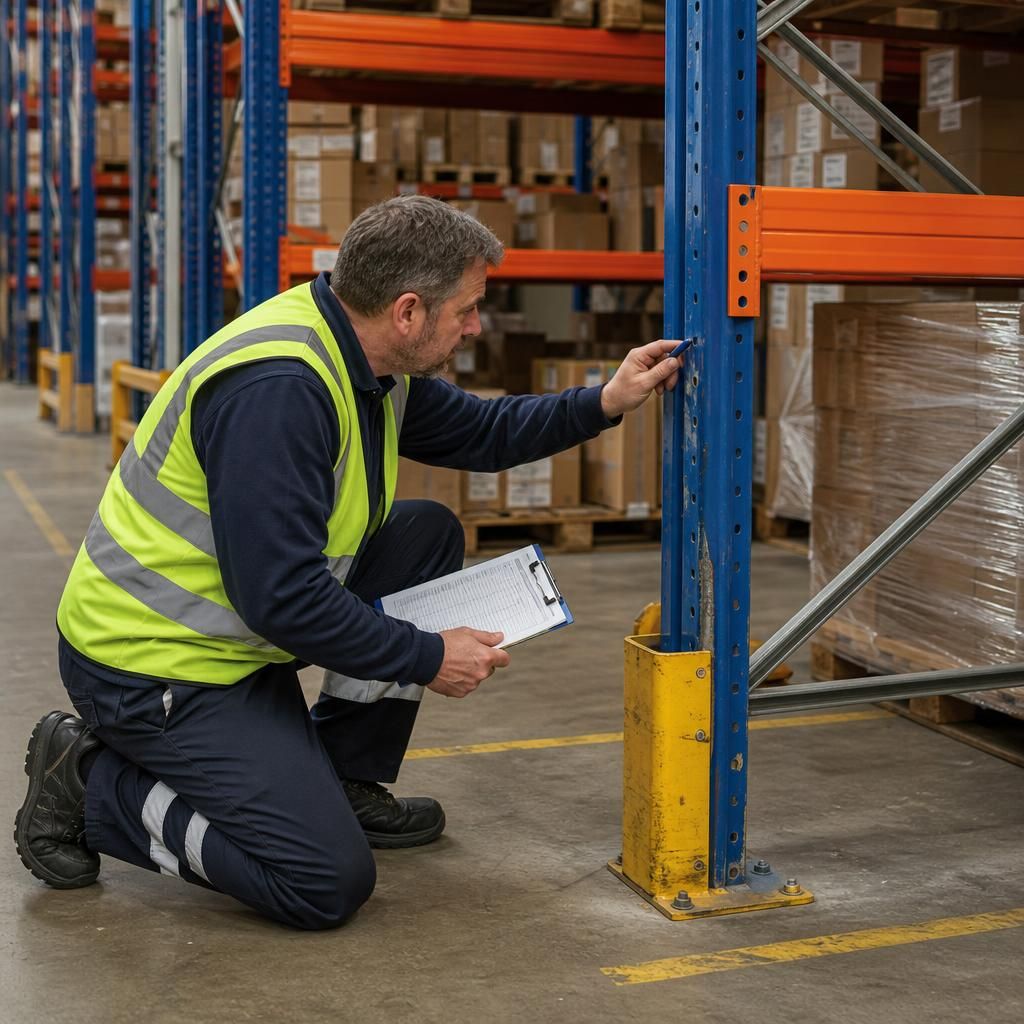
The correct pallet racking repair part is the one verified for your system’s manufacturer, component profile, dimensions and load requirements—not simply the part that looks similar. Confirm the upright or beam specification using original drawings, identification markings and an undamaged matching component wherever possible.
Before ordering, provide clear photographs, accurate measurements and details of the damage. A competent repair specialist can then check connector geometry, fixing points and surrounding damage, helping ensure the replacement is suitable and does not compromise the safety or compliance of the warehouse racking system.
Need help choosing the right pallet racking repair parts?
Send us the system details, component measurements and photographs of the damage, and our experienced team can help identify suitable pallet racking repair parts. We can also arrange an expert assessment where compatibility, load requirements or the extent of damage is uncertain.