
What types of warehouse racking materials are available for same-day solutions?
Warehouse racking materials available for same-day solutions typically include durable steel frames and beams, with timber, chipboard or wire mesh decking selected to suit the load and storage environment. Availability depends on compatible stock, condition and safety requirements, so Able Racking will assess the materials before recommending or installing a suitable solution.
Same-day warehouse racking solutions are usually assembled from structural steel frames and beams, with timber, chipboard or wire mesh decking selected according to the load, access requirements and warehouse environment. Used components may also be available, provided their condition, dimensions, compatibility and safe working loads can be verified before installation. Same-day availability depends on suitable stock being held locally or sourced quickly, not simply on whether a particular material exists.
Structural steel is the principal material used for most pallet warehouse racking systems. Upright frames transfer the load to the floor, while horizontal beams support pallets or decking. Steel provides the strength, durability and dimensional consistency needed for industrial storage, and individual components can often be matched with existing systems when the profile, dimensions and connection details are compatible.
Steel components may have painted, powder-coated or galvanised finishes. Painted and powder-coated steel is common in general warehouse environments, while galvanised finishes can provide additional protection where humidity, temperature variation or other conditions increase the risk of corrosion. The finish does not remove the need for regular inspections: impact damage, corrosion, distortion and loose or missing components must still be identified and addressed.
Timber decking can provide a practical surface for pallets, cartons and other stored goods. It is often selected where a continuous shelf surface is required or where the items being stored are not suitable for direct placement on beams. The timber must be appropriate for the intended loading conditions and properly supported. Damaged, split, contaminated or excessively worn boards should not be reused.
Chipboard decking is another option for creating a solid storage surface. It can be suitable for boxed goods and hand-loaded areas when the boards are correctly specified, supported and protected from moisture. Chipboard is more vulnerable to water damage and edge deterioration than steel, so its condition should be checked carefully, particularly in warehouses where leaks, wash-down processes or high humidity are possible. Boards must not be treated as interchangeable if their thickness, span capability or support arrangement differs.
Wire mesh decking is made from steel mesh panels supported by the warehouse racking beams. Its open construction allows light through the storage levels and helps water from sprinkler systems reach areas below, subject to the requirements of the building’s fire protection design. Mesh decking is also useful where visibility, ventilation or resistance to minor spills is important. The panel design must suit the beam arrangement and the stored load, and damaged mesh, bent supports or broken welds require replacement or an appropriate repair.
Steel shelves and panels may be used for smaller goods, cartons or hand-loaded storage rather than palletised products. These components can create adjustable levels and a more organised picking area. Their suitability depends on the weight and distribution of the goods, the shelf span and the way the panels connect to the frame. Heavy or concentrated loads should not be placed on light-duty components without confirming their rated capacity.
Other materials and components may be required to complete a same-day warehouse racking installation. These can include row spacers, baseplates, shims, beam locks, safety pins, upright guards, end-of-aisle protection, back protection and load notices. They are not substitutes for sound frames and beams, but they help the completed system operate safely and remain identifiable during future inspections. Replacement parts should match the existing system rather than being selected solely because they appear to fit.
For used warehouse racking, the material itself is only one part of the assessment. Able Racking checks for:
- visible bending, twisting, cracking, corrosion, impact damage and unauthorised alterations;
- matching upright frames, beams, decking and connection details;
- legible or verifiable safe working load information;
- secure beam connections, locking devices, baseplates and floor fixings;
- decking that is correctly supported and free from unsafe damage;
- compatibility with the warehouse floor, aisle layout, handling equipment and operating practices.
A same-day solution should therefore begin with an assessment of the required load and available space. The relevant information includes pallet dimensions, unit weights, how loads are placed and removed, the lifting equipment used, the desired number of storage levels and any environmental conditions that could affect the materials. Photographs, existing system details and accurate measurements can help identify compatible stock before the installation team attends site.
Materials should not be mixed casually. Frames and beams from different systems may have different connection geometry, steel thicknesses, capacities and deflection characteristics. A component can look similar yet be unsuitable when combined with another manufacturer’s or system’s parts. Able Racking will verify compatibility and capacity, then recommend whether a used component can be retained, repaired, replaced or rejected.
Before the warehouse racking is put into service, the completed installation should be checked against the agreed layout and load requirements. Protection, fixings, beam locks, decking and safety notices should be in place, and any defects should be resolved before goods are stored. Ongoing inspections are also important because forklift impacts, overloading and changes to the layout can affect steel, decking and protective components over time.
In practical terms, steel frames and beams offer the structural foundation for most same-day warehouse racking work, while timber, chipboard, wire mesh and steel panels provide different ways to support or organise goods. The safest choice is determined by verified capacity, condition, compatibility and the working environment—not by material type alone. Able Racking can assess available stock and existing installations so that a prompt solution remains suitable, compliant and dependable.
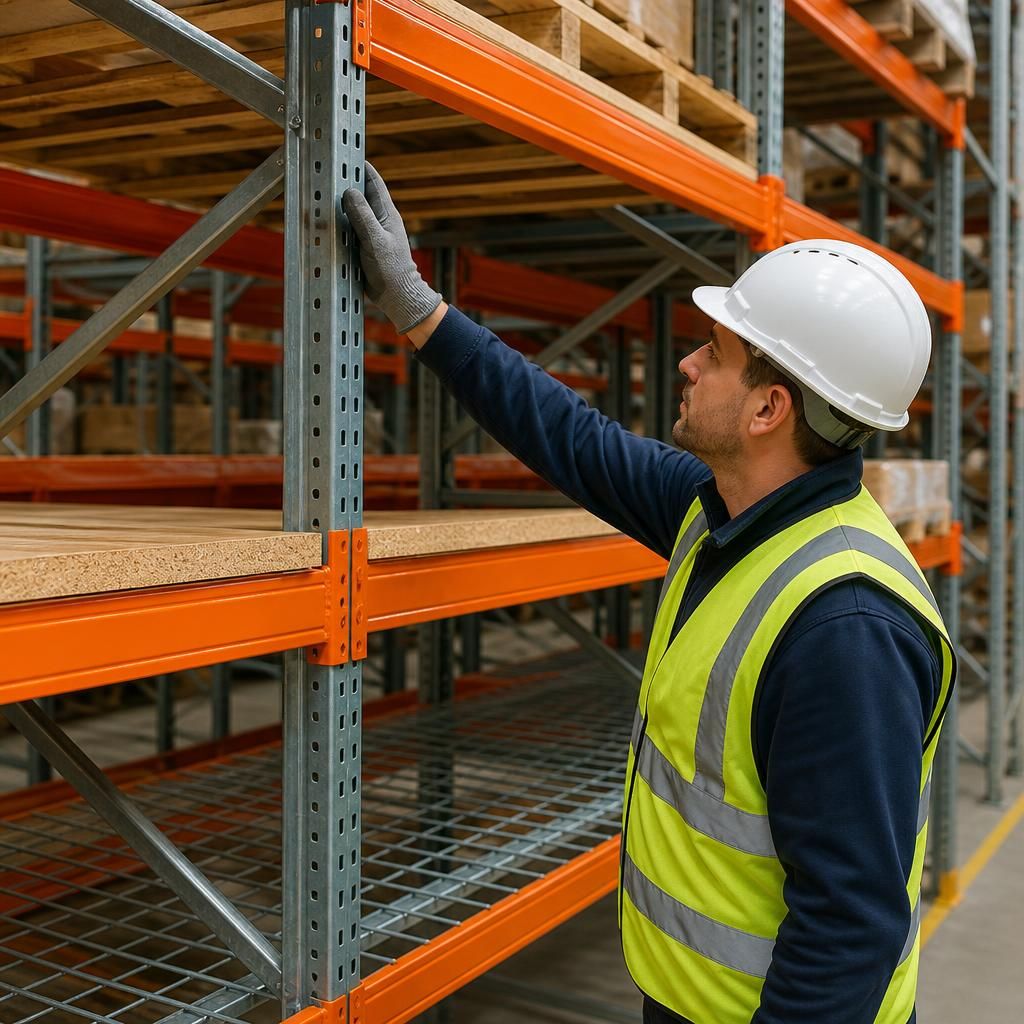
Steel frames and beams form the structural basis of most same-day warehouse racking solutions, while timber, chipboard or wire mesh decking provides the surface for stored goods. The correct material depends on the load, span, handling equipment and warehouse conditions, rather than availability alone.
Used components must be checked for bending, corrosion, impact damage and secure connections before they are reused. Frames, beams and decking must also be compatible with one another, with verified safe working loads and adequate support. Able Racking assesses these details before recommending materials, helping ensure a prompt installation remains safe, compliant and suitable for continued warehouse use.
Arrange your same-day warehouse racking materials assessment
Contact Able Racking to arrange an assessment of your same-day warehouse racking materials, including their condition, compatibility and safe working loads. We can help identify suitable components for a prompt, safe and compliant solution.