
What factors should be considered when choosing same-day used pallet racking?
When choosing same-day used pallet racking, consider its condition, load capacity, dimensions, compatibility with your warehouse layout, safety compliance, availability of suitable components and total cost. A competent inspection and professional installation should confirm that the selected warehouse racking is structurally sound, correctly configured and suitable for your stored loads.
Choosing same-day used pallet racking requires more than confirming that stock is available. The key considerations are its structural condition, safe working load, dimensions, compatibility with the warehouse layout, availability of matching components, inspection records, installation requirements and total cost. A professional assessment should confirm that the warehouse racking is suitable for the intended loads and can be installed safely without compromising the operation of the warehouse.
Condition and structural integrity
Inspect every beam, upright, brace, connector, footplate and protective component before purchase. Used warehouse racking may show signs of previous impact, corrosion, distortion, poor repairs or excessive wear. Components with bends, cracks, failed welds, severe corrosion or visibly damaged connections should not be accepted for use. Minor cosmetic marks may not affect performance, but they still need to be assessed by a competent person rather than judged by appearance alone.
Where possible, review the history of the equipment, including previous inspections, repairs, alterations and working environments. A clear history helps establish whether the system has been maintained properly and whether its current configuration can be verified.
Load capacity and stored goods
The selected system must safely support the loads that will be stored. Confirm the weight of each pallet, the number of pallets per bay, the beam levels, the distribution of the load and the way pallets will be placed and removed. Pallet dimensions, load stability and any uneven weight distribution can all affect the required capacity.
Do not rely on a similar-looking system or assume that components from different configurations have the same capacity. Beam length, upright profile, frame height, beam position and connection type can affect the manufacturer’s load rating. Load notices should reflect the installed arrangement, and the capacity should be supported by reliable technical information or a competent structural assessment.
Dimensions and warehouse compatibility
Measure the available floor area, clear height, aisle widths, access routes, doorways, sprinkler clearances, lighting and other fixed obstructions before selecting equipment. The dimensions of the used pallet racking must suit the building and the handling equipment used on site.
Check that the proposed layout allows pallets to be placed and retrieved without striking uprights, beams, building structures or services. Forklift turning space, pedestrian routes, emergency access and fire safety arrangements must remain adequate. A system that fits physically may still be unsuitable if it restricts safe movement or reduces operational visibility.
Compatibility of components
Same-day availability can encourage businesses to combine components from different sources, but compatibility must be confirmed before installation. Uprights, beams, connectors, bracing, baseplates and safety accessories should be suitable for one another and for the proposed configuration.
Do not modify components by drilling, cutting, welding or making other unauthorised alterations. If replacement parts are required, use components that are technically appropriate and approved for the system. A competent installer can identify whether the available stock provides a complete and stable solution or whether additional parts need to be sourced.
Safety and compliance requirements
Used warehouse racking should be assessed against current workplace safety expectations and the manufacturer’s instructions where these are available. The assessment should consider impact damage, anchoring, bracing, floor condition, protection at vulnerable locations, beam locking devices and the suitability of the layout for the site’s handling activities.
Inspection and installation should be completed by suitably competent professionals. Following installation, the system should be checked in its final configuration, with any required load information displayed clearly. The warehouse operator remains responsible for reporting damage, controlling unsafe areas and arranging periodic inspections and maintenance.
Availability of matching stock
Same-day solutions depend on what is currently available. Before committing to a purchase, confirm that there are enough matching beams, frames, connectors, braces, baseplates, guards and other required accessories to complete the planned layout. A small shortage can delay installation or result in an unsuitable mixture of components.
It is also sensible to consider whether replacement parts will remain available after installation. A lower initial price may provide poor value if future repairs require difficult-to-source components or extensive changes to the system.
Installation access and timescales
Confirm what same-day delivery and installation actually include. The timing may depend on access to the site, availability of suitable handling equipment, preparation of the floor, removal of existing equipment and the complexity of the layout. The warehouse should be ready for installation, with obstructions removed and safe access provided for the installation team.
Professional installation helps ensure that frames are aligned, beams are correctly secured, anchors are suitable and protective measures are fitted in the intended positions. It also provides an opportunity to identify problems that were not apparent during the initial selection process.
Total cost rather than purchase price
Compare the complete cost of the solution, including delivery, inspection, installation, dismantling or disposal of existing equipment, repairs, replacement components, protection, load notices and any required alterations to the warehouse. Used warehouse racking may have a lower purchase price than new equipment, but additional work can affect the final cost.
The cheapest available components are not necessarily the most economical choice if they require extensive repairs, create layout compromises or cannot be supported by reliable capacity information. A clear quotation should identify what is included and highlight any items that remain the customer’s responsibility.
Future operational requirements
Consider whether the selected system will continue to meet expected changes in stock, pallet sizes, handling methods and storage volume. A layout that meets an immediate requirement may become inefficient if it leaves no practical scope for expansion or adjustment.
Future changes should be planned carefully. Altering beam levels, adding bays or changing the loading arrangement can affect capacity and stability, so modifications should be reviewed by a competent person before use.
Final checks before approval
- Confirm the condition and identity of all major components.
- Verify the required load capacity using dependable technical information.
- Check measurements, aisle clearances, access routes and building constraints.
- Ensure that all components and safety accessories are compatible.
- Review inspection findings and any recommended repairs.
- Agree the delivery, installation and handover arrangements.
- Confirm that load information and maintenance responsibilities will be addressed.
- Compare the full installed cost with the operational value of the solution.
Used pallet racking can provide a practical same-day storage solution when its condition, capacity and configuration are properly verified. The decision should be based on documented suitability and safe installation, not simply on speed or availability. Able Racking can assess the proposed warehouse racking, identify unsuitable components and help ensure that the completed installation is safe, compliant and appropriate for the intended use.
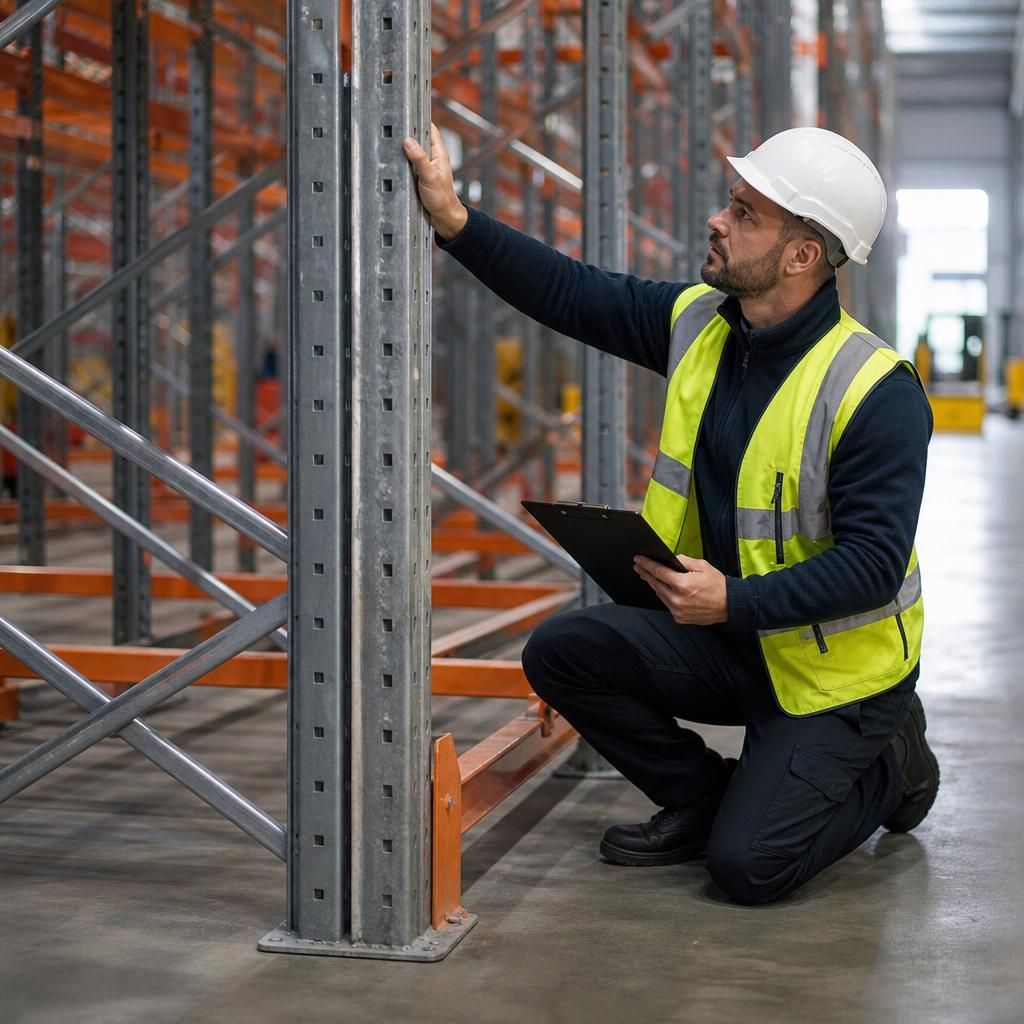
The condition of used pallet racking is a primary consideration because previous impact, corrosion or unauthorised repairs can affect its structural performance. Before approval, a competent person should inspect the uprights, beams, bracing, connectors, footplates and protective equipment.
Cosmetic marks may not prevent reuse, but bent sections, cracks, failed welds, severe corrosion and damaged connections should be rejected or assessed for replacement. The inspection should also confirm that the available components match the proposed layout and that the completed warehouse racking can be installed, anchored and protected safely.
Discuss Your Same-Day Used Pallet Racking Requirements
Discuss your same-day used pallet racking requirements with Able Racking to confirm condition, capacity, compatibility and installation arrangements before proceeding.