
What factors influence the longevity and maintenance needs of warehouse racking systems?
The longevity and maintenance needs of warehouse racking systems depend on loading practices, installation quality, operating conditions, impact exposure, corrosion, and the effectiveness of routine inspections. Correct loading, prompt reporting of damage, scheduled safety checks and timely repairs help preserve structural performance and reduce avoidable maintenance.
The longevity of warehouse racking systems is mainly influenced by design quality, installation accuracy, loading practices, operating conditions, impact exposure, corrosion, inspection routines and the speed of any repairs. A correctly specified and installed system that is used within its design limits, inspected regularly and repaired promptly will generally require less disruptive maintenance and provide more reliable long-term service.
Design and specification
The system must be suitable for the loads, pallet dimensions, handling equipment and working environment. Beam capacities, upright configuration, aisle widths, clearances and floor conditions all affect structural performance. Changes to pallet weights, storage heights or handling equipment can alter the original design assumptions. Any significant operational change should therefore be reviewed by a competent warehouse racking specialist before the system is altered or loaded differently.
Installation quality
Accurate installation is essential from the outset. Uprights must be correctly aligned and secured, beams must be properly located, protection must be fitted where required and the structure must be installed in accordance with the approved design and manufacturer’s instructions. Poor alignment, missing components, inadequate anchoring or unsuitable repairs can create weaknesses that become more serious through normal use. A professional handover should include relevant documentation, load information and guidance for warehouse staff.
Loading and day-to-day use
Overloading, unevenly distributed pallets and loads that project beyond the intended storage position can place additional stress on beams and frames. Pallets should be in good condition, correctly positioned and appropriate for the support arrangement. Operators should follow the stated load limits and avoid placing loads onto damaged beams, bent frames or unsuitable pallets. Load notices should remain visible and reflect the current configuration.
Handling equipment is a significant source of damage. Forklift contact can bend uprights, dislodge beams or damage guards, even when the impact appears minor. Drivers should receive suitable training, aisles should be kept clear and traffic routes should be managed to reduce collision risk. Damage must be reported immediately rather than left until a planned maintenance visit.
Inspection and preventative maintenance
Regular visual checks by trained warehouse personnel help identify obvious damage, displaced components, missing safety pins, overloading and changes in loading conditions. These checks do not replace a formal inspection by a competent person. A structured inspection examines the condition and stability of the system, records defects and assigns appropriate action according to the seriousness of the risk.
Maintenance needs are reduced when inspection findings are recorded and acted upon consistently. Records should identify the location and nature of each defect, the temporary controls applied, the repair or replacement completed and the person who confirmed that the issue was resolved. Isolating unsafe areas and reducing or removing loads may be necessary until corrective work has been completed.
Impact damage and repairs
Damage is more likely in busy warehouses with frequent vehicle movements, restricted visibility or inadequate protection. Upright guards, end-of-aisle protection and clearly managed traffic routes can reduce the likelihood and severity of impacts, but they do not eliminate the need for inspections.
Do not straighten, weld, drill or modify damaged components as an improvised repair. Such work can change the material properties or structural behaviour of the system and may invalidate the original design. A competent specialist should assess the damage and specify whether the component can remain in service, requires replacement or needs another controlled remedial action. Temporary measures should not be treated as a permanent solution.
Environment and corrosion
Moisture, condensation, temperature changes, chemicals, dust and outdoor exposure can accelerate corrosion or degrade protective finishes. Corroded sections may lose strength, while contamination can conceal defects during routine checks. The warehouse environment should be considered when selecting finishes and components, and any signs of corrosion should be assessed rather than simply painted over. Leaks, standing water and chemical exposure should be addressed at source where possible.
Changes to the warehouse
Alterations to floor levels, building structure, lighting, fire protection, traffic routes or adjacent equipment can affect safe operation. Removing protection, repositioning frames, changing beam levels or adding components without approval may alter load paths and clearances. Keep the original drawings, load information and inspection records available, and obtain technical advice before making changes.
Practical measures that extend service life
- Use the system only for the loads and pallet types for which it was designed.
- Keep load notices legible and update them when the configuration or loading conditions change.
- Train operators to position loads carefully and report impacts or defects immediately.
- Maintain clear aisles, good lighting and suitable vehicle controls.
- Carry out routine user checks and arrange formal inspections at the required intervals.
- Keep damaged areas out of use until they have been assessed and made safe.
- Use compatible replacement components and controlled repair methods.
- Review the system after changes to stock, equipment, layout or operating conditions.
In practice, maintenance requirements are usually driven less by age alone than by the way the system is loaded, operated and managed. Prompt reporting, competent inspections and suitable repairs help prevent minor defects becoming structural problems. If there is uncertainty about a load limit, damaged component, proposed alteration or inspection finding, obtain a competent assessment before continuing to use the affected area.
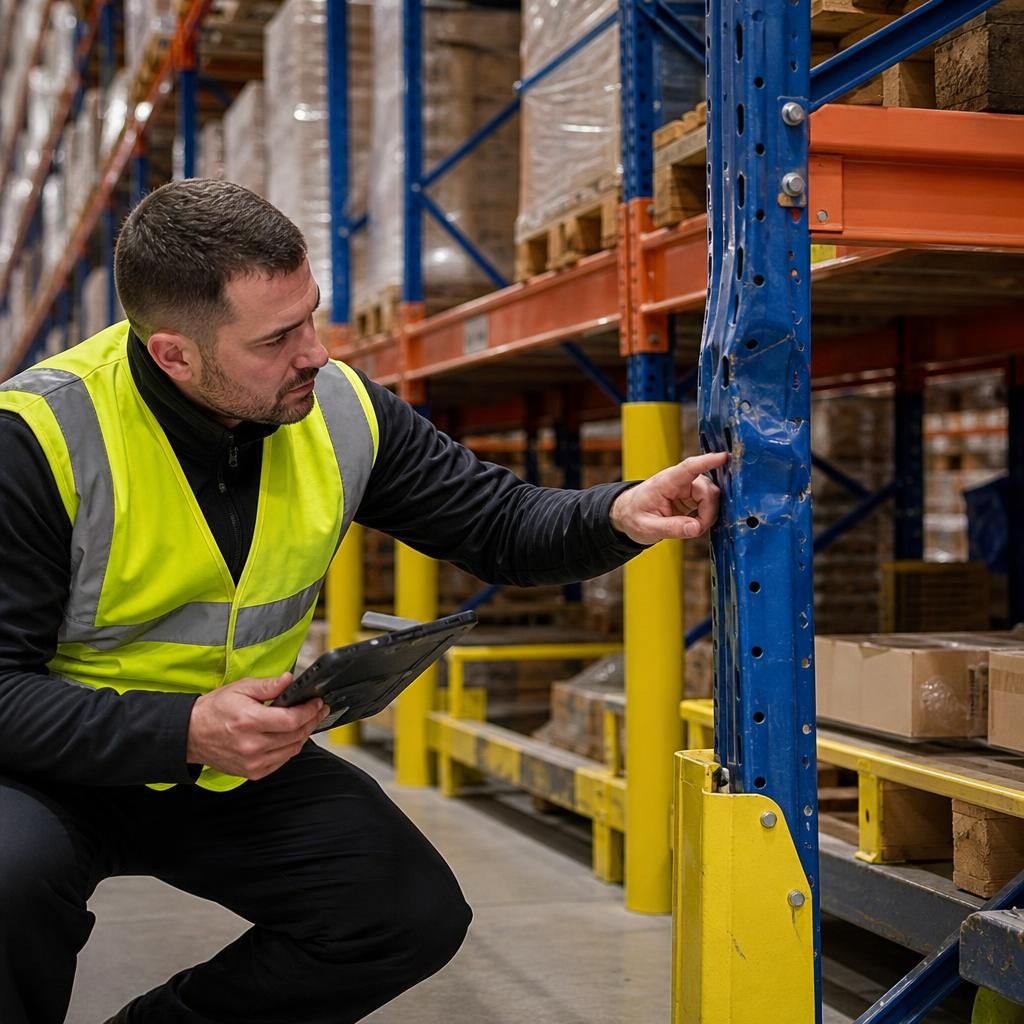
Promptly managing impact damage is one of the most effective ways to extend the service life of warehouse racking systems. Forklift contact can bend uprights, dislodge beams or damage protective components, even when the defect appears minor. Warehouse staff should report impacts immediately, isolate any affected area where necessary and arrange assessment by a competent specialist. Damaged components should not be straightened, welded or drilled as an improvised repair, because this may alter their structural performance. Regular user checks, formal inspections and correctly specified repairs help prevent small defects from developing into more serious maintenance issues.
Arrange a warehouse racking inspection and maintenance review
Contact Able Racking to arrange a warehouse racking inspection and maintenance review. Our competent team can assess damage, loading conditions and maintenance requirements, then recommend appropriate corrective action.