
What are the maintenance requirements for selective pallet racking systems in a warehouse?
Selective pallet racking systems require regular visual checks, scheduled inspections by a competent person, prompt reporting of damage, and repairs using suitable components. Maintenance should also include keeping load information visible, preventing overloading, checking protection and housekeeping, and removing unsafe sections from service until they are made safe.
Selective pallet racking system maintenance requires routine visual checks, planned inspections by a competent person, prompt reporting of damage and repairs using suitable components. Maintenance must also keep load information accurate and visible, prevent overloading, protect the structure from vehicle impact, control corrosion and maintain clear, orderly warehouse conditions.
A maintenance programme should be based on the manufacturer’s instructions, the warehouse risk assessment, the operating environment and the level of vehicle and pedestrian activity. Systems exposed to frequent forklift movements, harsh conditions, heavy loads or repeated changes in configuration may need more frequent checks than systems in a lower-risk environment.
Routine checks by warehouse staff
Operators should be encouraged to report damage as soon as it is noticed. A brief visual check should form part of normal warehouse activities, particularly before loading or unloading areas where vehicles operate. The person carrying out the check should look for:
- Bent, twisted or visibly damaged uprights, beams, bracing or connectors.
- Missing, displaced or unsecured beam locking devices and other retaining components.
- Impact damage to frames, guards, end protectors, barriers and floor fixings.
- Unauthorised alterations, removed components or signs that the layout has been changed without approval.
- Loads that are unstable, incorrectly positioned or beyond the stated capacity.
- Damaged pallets, protruding goods or items at risk of falling.
- Corrosion, cracking, loose fixings, damaged floor surfaces or other conditions that could affect stability.
- Obstructions in aisles, emergency routes, access points or areas needed for inspection and maintenance.
These checks do not replace a formal inspection. Their purpose is to identify problems early and ensure that potentially unsafe equipment is not left in use.
Planned inspections by a competent person
A technically competent person should carry out a formal inspection at intervals determined by the risk assessment and the manufacturer’s guidance. In the UK, warehouse operators commonly arrange a thorough inspection at least every twelve months, with more frequent inspections where risk or operating conditions justify them. The inspection should be suitably independent, systematic and recorded in a written report.
The inspector will assess the condition and stability of the complete installation, rather than looking only at obvious impact points. This includes the frames, beams, bracing, connectors, locking devices, anchors, guards, supports, pallets and surrounding floor. They should also consider the way the system is being used, including load placement, vehicle movements, housekeeping, access arrangements and any changes made since the previous inspection.
Inspection findings should be communicated to the person responsible for warehouse safety. Any recommended action should be given a clear priority and completed within the stated timeframe. Keeping inspection reports, photographs, repair records and close-out evidence provides a useful maintenance history and helps demonstrate that identified defects have been managed properly.
Managing damage and carrying out repairs
Damaged components should be reported immediately and assessed by a competent person. The affected area may need to be unloaded, isolated or taken out of service until its condition has been confirmed. A damaged upright, beam or connection should not be left in use simply because the system appears to remain standing.
Repairs should use compatible, approved components and follow the original design requirements or the supplier’s instructions. Improvised repairs, welding, drilling, heating, straightening or mixing incompatible parts can change the performance of the structure and should not be undertaken without appropriate technical approval. Where a component has lost its designed strength, replacement is often safer than attempting to restore it.
After repairs, the installation should be checked before it is returned to service. This check should confirm that components are correctly fitted, fixings are secure, protection is reinstated and the system remains suitable for its stated loads and configuration.
Maintaining safe loading and configuration
Load notices should remain visible, legible and relevant to the current layout. They should reflect the beam arrangement, bay configuration, pallet type and load capacities. If beam levels, bay widths, components or operating conditions change, the capacity should be reviewed before the altered system is used.
Warehouse teams should be trained to place loads evenly and securely, keep within the stated capacity and avoid dropping or dragging pallets onto beams. Pallets should be suitable for the support arrangement and in good condition. Loads should not overhang into access routes or be positioned where they could fall when neighbouring pallets are moved.
Protective measures such as upright guards, end barriers and aisle protection should be maintained in good condition and securely fixed. These measures reduce the consequences of vehicle contact but do not make impacts acceptable; forklift routes, speed controls, visibility and operator practices remain important parts of prevention.
Housekeeping and environmental maintenance
Clean, unobstructed aisles make damage easier to identify and reduce the risk of collisions. Spilled liquids, loose packaging and broken pallet material should be removed promptly. The floor should be kept in a condition that supports stable vehicle movement and secure fixing of the installation.
Where the warehouse is exposed to moisture, chemicals, temperature changes or other corrosive conditions, the system should be checked for deterioration and protected in accordance with the manufacturer’s recommendations. Any change in the building, lighting, fire arrangements, vehicle type or storage operation should also trigger a review of the installation and its maintenance arrangements.
Good maintenance records should include:
- The date and scope of each inspection or check.
- The name and competence of the person carrying it out.
- Defects identified, their location and risk priority.
- Immediate controls, such as unloading or isolating an affected area.
- Details of approved repairs or replacement components.
- Evidence that repairs have been completed and the area released for use.
- Any changes to loads, layout, protection or operating procedures.
- Training or briefings provided to warehouse staff.
Maintenance is most effective when it is treated as a continuing safety process rather than an annual appointment. Clear reporting arrangements, regular housekeeping, competent inspections and prompt corrective work help preserve the capacity and stability of selective pallet racking systems throughout their working life.
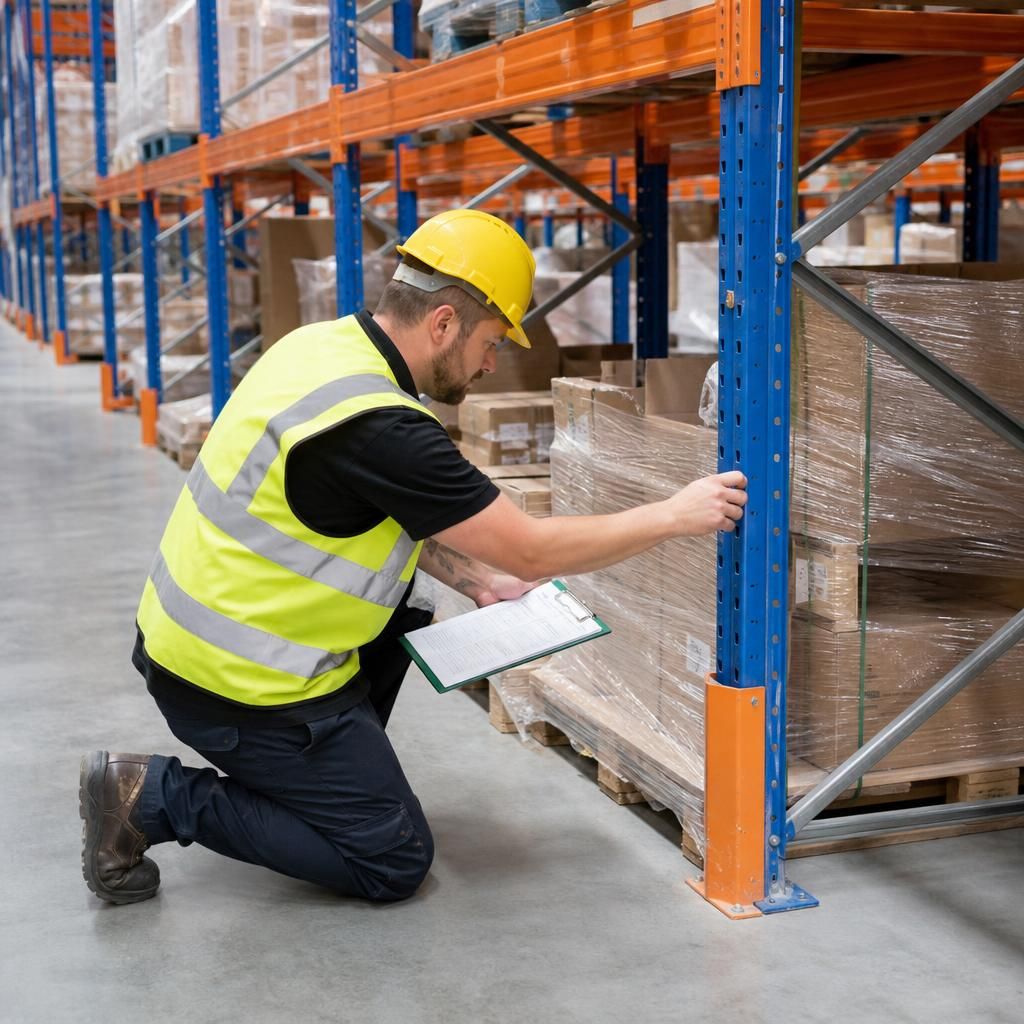
Selective pallet racking system maintenance includes routine visual checks, competent-person inspections and prompt action when damage is identified. Warehouse staff should report bent frames, damaged beams, missing locking devices, loose fixings, unstable loads and impact damage immediately.
A damaged area should be unloaded or isolated until its condition has been assessed. Repairs must use compatible, approved components and follow the manufacturer’s instructions; improvised welding, drilling or straightening can affect structural performance. After repair, the installation should be checked before being returned to service, with the work and release decision recorded for future inspections.
Arrange a selective pallet racking maintenance inspection
Arrange a selective pallet racking maintenance inspection with Able Racking to identify damage, confirm compliance and keep your warehouse storage system safe to use.