
What are the key benefits of using selective pallet racking systems in warehouses?
Selective pallet racking systems provide direct access to individual pallets, making stock retrieval straightforward and supporting efficient warehouse operations. Their adjustable beam levels accommodate different pallet sizes and load requirements, while making good use of available warehouse space.
Selective pallet racking systems provide direct access to individual pallets, making stock retrieval straightforward and supporting efficient warehouse operations. Adjustable beam levels accommodate different pallet sizes and load requirements, while the system makes effective use of available warehouse space without restricting access to stock stored elsewhere.
Direct access to every pallet
The main benefit of selective pallet racking is selectivity. Each pallet position can normally be reached without moving other pallets first, which helps warehouse teams pick, replenish and check stock efficiently. This is particularly useful where products have different demand levels, expiry dates, batch references or rotation requirements.
Direct access also makes stock checks more practical. Operatives can identify and remove the required pallet using the warehouse’s location system, reducing unnecessary handling and helping maintain accurate inventory records.
Flexible storage for changing requirements
Beam levels can be adjusted to suit the dimensions and weight of the goods being stored. This allows one system to accommodate different pallet heights and changing product ranges, provided the revised configuration remains within the manufacturer’s specified limits and is properly assessed.
This flexibility is valuable when stock profiles change over time. Rather than replacing the complete installation, a warehouse may be able to alter beam positions, add compatible components or reconfigure selected bays. Any alteration should be carried out by competent personnel and followed by an appropriate safety inspection.
Efficient use of available space
Selective pallet racking uses the warehouse’s vertical and floor space more effectively than storing pallets only at ground level. Designing the system around the building height, aisle requirements, handling equipment and pallet dimensions can increase storage capacity while preserving the access needed for daily operations.
Good design is essential. A system that prioritises storage density without allowing suitable aisles, clearances and safe handling routes may reduce productivity and create avoidable risks. The layout should therefore balance capacity with access, visibility, vehicle movement and emergency arrangements.
Improved warehouse productivity
Consistent pallet locations and clear access routes help operatives locate goods and complete handling tasks with less unnecessary movement. This can support more organised receiving, put-away, picking and dispatch processes. Selective pallet racking is especially practical where orders contain varied products or where pallets are frequently accessed individually.
The system can also support clearer warehouse zoning. Different areas may be allocated for fast-moving stock, reserve pallets, returns, quarantine goods or particular product types, subject to the operational and safety requirements of the site.
Scalable and adaptable installation
Selective pallet racking can be installed as part of a new warehouse layout or extended as storage needs develop. Additional bays, runs and accessories may be possible where the building, floor, handling equipment and original system design allow. Planning future requirements at the design stage can make later changes more straightforward.
Expansion should never be based solely on available floor space. The proposed change must take account of the load capacity of the components, floor suitability, stability, aisle widths, impact protection and the compatibility of any new parts with the existing system.
Practical cost and operational advantages
Compared with more specialised storage arrangements, selective pallet racking is a relatively straightforward system to configure, use and maintain. Its standardised components and adjustable layout can provide a practical balance between storage capacity, accessibility and installation cost. The most suitable choice depends on pallet volumes, turnover, building constraints, handling methods and the level of selectivity required.
Because pallets remain accessible, businesses do not generally need to move several other loads simply to reach a selected product. This can reduce handling steps and help limit disruption to stock movements, although productivity still depends on effective layout planning, trained operatives and suitable warehouse equipment.
Support for safer warehouse operations
A well-designed and correctly used selective pallet racking system provides defined storage locations and predictable load placement. This helps operatives understand where pallets should be positioned and how loads should be handled. The system must be clearly marked with its safe working load information, used within its design limits and protected from avoidable impact wherever vehicle movements create a risk.
Regular inspections are an important part of maintaining these benefits. Damage, unauthorised alterations, displaced components and overloaded beams can affect the system’s safety and performance. Reported damage should be assessed promptly, with unsafe areas unloaded or isolated until suitable repairs or corrective action have been completed.
Overall, selective pallet racking is beneficial where a warehouse needs accessible pallet storage, adaptable configurations and an efficient balance between capacity and day-to-day usability. Its performance depends on competent design, correct installation, proper loading practices, operator training and ongoing inspection. These controls ensure that the system continues to support productivity without compromising the safety of people, stock or handling equipment.
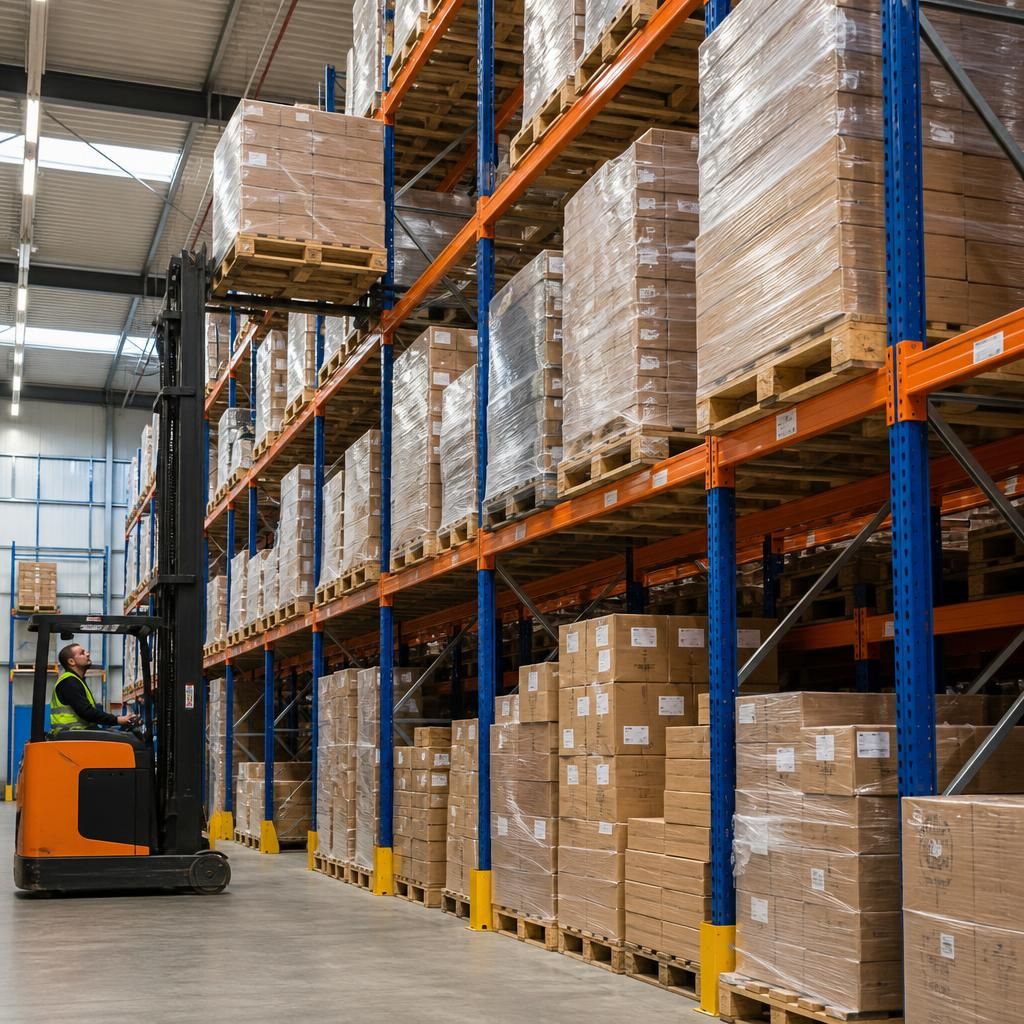
Selective pallet racking systems provide direct access to individual pallets, so operatives can retrieve, replenish and check stock without moving other loads first. This supports efficient warehouse processes where products have different demand levels, batch references, expiry dates or rotation requirements.
Clearly allocated pallet positions also make stock locations easier to identify and help reduce unnecessary handling. When the layout, aisle widths and load capacities are properly designed, selective pallet racking can improve day-to-day productivity while retaining the access needed for safe vehicle and pedestrian movement.
Discuss your selective pallet racking requirements with our experts
Discuss your selective pallet racking requirements with our experts to assess your warehouse layout, load needs and access requirements. We can provide practical guidance on suitable design, installation and ongoing safety considerations.