
What are the key benefits of using selective pallet racking systems in a warehouse setting? Selective pallet racking provides direct access to individual pallets, flexible storage for different load types, efficient use of warehouse space and straightforward stock rotation, making it suitable for many warehouse operations.
Selective pallet racking provides direct access to individual pallets, making stock retrieval and rotation straightforward while accommodating different pallet sizes and load types. Its adjustable layout supports efficient warehouse space use, flexible storage arrangements and cost-effective changes as operational requirements evolve.
Selective pallet racking systems provide direct access to individual pallets while offering a flexible, cost-effective way to organise warehouse stock. Each pallet position can usually be reached without moving other loads, which supports efficient picking, clear stock visibility and straightforward stock rotation. The system is particularly useful for warehouses handling a wide range of products, pallet sizes or stock-keeping units.
Direct access to every pallet
The main benefit of selective pallet racking is accessibility. Operators can retrieve a particular pallet from its allocated position without unloading adjacent bays or working through a sequence of stored goods. This reduces unnecessary handling and helps make put-away and retrieval activities more predictable.
Direct access is valuable where stock is frequently picked, where orders contain different product lines, or where particular batches need to be located quickly. It also makes cycle counting, stock checks and condition inspections easier because each storage position is clearly identifiable.
Flexible storage for different loads
Selective pallet racking can be configured to suit the dimensions, weights and handling requirements of the goods being stored. Beam levels can be adjusted to accommodate changing pallet heights, subject to the system design, safe clearances and the stated load capacity. Different bay layouts may also be planned for standard pallets, mixed inventory or areas requiring more frequent access.
This adjustability allows the storage system to support changes in product ranges and warehouse activity without requiring a complete redesign. Any alteration to the structure or beam arrangement should be assessed by a competent person, as changes can affect the system’s capacity and safe operation.
Efficient use of available warehouse space
By storing pallets vertically, selective pallet racking makes better use of the warehouse’s available height than floor storage alone. A carefully planned layout can create defined aisles, improve pallet positioning and reduce stock being left in unsuitable or obstructive locations.
Space efficiency depends on more than fitting in as many pallets as possible. A suitable design must account for handling equipment, aisle widths, pedestrian routes, emergency access, lighting, sprinkler requirements and safe working clearances. The most effective arrangement balances storage capacity with the access needed for daily operations.
Improved stock control and rotation
Clearly allocated pallet positions help warehouse teams identify where goods are stored and where they should be returned. This can improve stock accuracy and reduce the time spent searching for inventory. Selective pallet racking is also compatible with common stock rotation methods, including first-in, first-out arrangements, when the layout and operating procedures are planned accordingly.
Because individual pallets remain visible and accessible, damaged packaging, incorrect labelling or poorly positioned loads can often be identified sooner. Good housekeeping and accurate warehouse records remain essential; the storage system supports stock control but does not replace appropriate procedures or inventory management software.
Cost-effective installation and future changes
Selective pallet racking is generally a practical option where access to a broad range of individual pallets is more important than achieving the highest possible storage density. Its relatively straightforward design can make it an economical choice for many warehouse layouts, particularly where standard pallet handling equipment is already in use.
The system can also be extended, reconfigured or supplemented as operational needs change, provided the floor, structure, components and load requirements are properly assessed. Planning changes in advance helps avoid unsuitable additions and ensures that any new or altered sections remain compatible with the original design.
Suitable for varied warehouse operations
Selective pallet racking can support manufacturing stores, distribution centres, trade warehouses, wholesalers and other operations that need accessible pallet storage. It can be used alongside picking areas, goods-in and dispatch zones, provided the complete layout maintains safe separation between vehicles, pedestrians and stored loads.
It is especially suitable when the warehouse holds a large number of different product lines or when stock turnover varies between items. However, it may be less appropriate where the priority is maximum density for a small range of uniform products. In those circumstances, another storage arrangement may provide a better balance between capacity and access.
Better operational visibility
A consistent bay layout makes it easier for supervisors and operators to understand how space is being used. Clearly marked locations can support put-away instructions, picking routes and routine checks. This can contribute to more orderly warehouse activity and help identify underused, overloaded or incorrectly used positions.
The benefits depend on correct specification, professional installation and ongoing control. Load notices should be displayed where required, operators should be trained in the safe use of the system, and any impact damage or alteration should be reported promptly. Regular inspections and maintenance help preserve the system’s structural condition and ensure that its practical benefits continue throughout its service life.
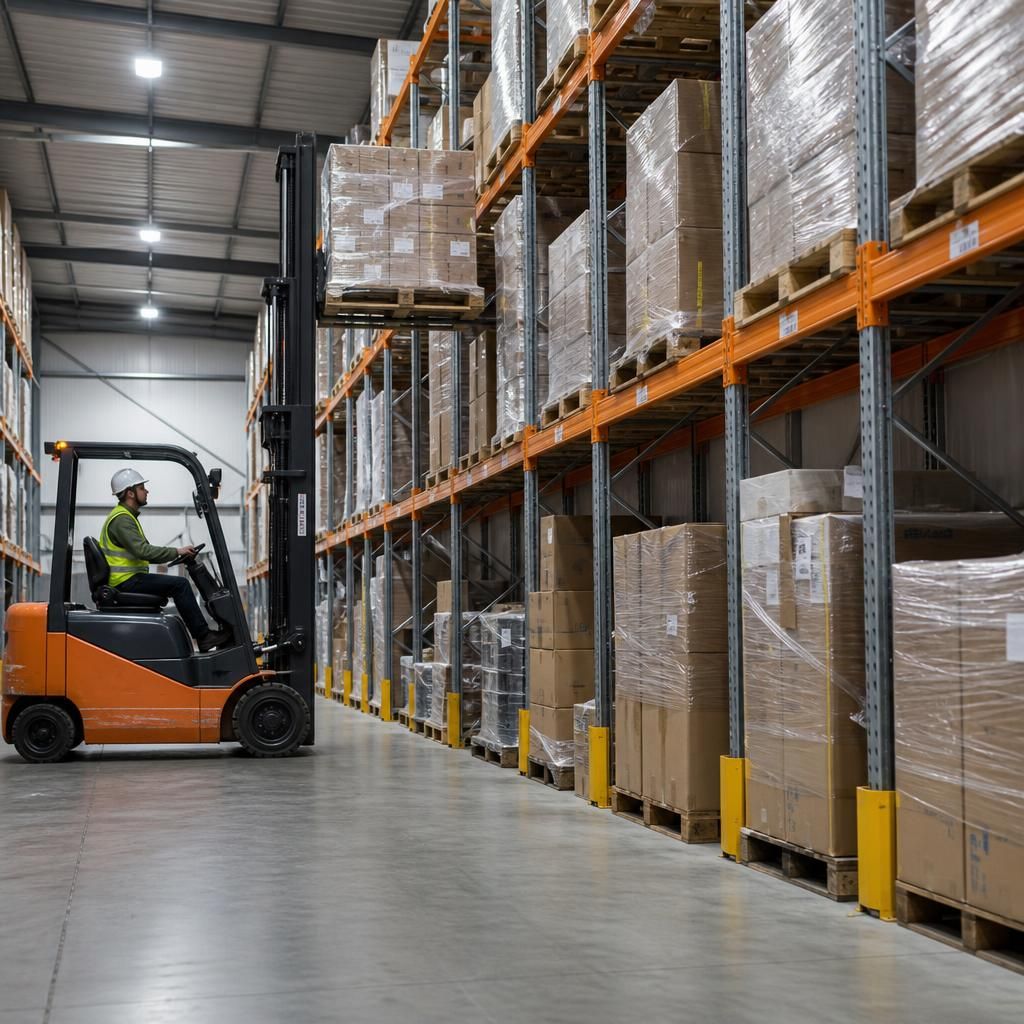
Selective pallet racking is a storage system designed to give operators direct access to each individual pallet position. This means a chosen pallet can normally be retrieved without moving other loads, making put-away, picking and stock checks more predictable.
Direct access is particularly useful for warehouses handling multiple product lines, variable stock levels or goods that need regular rotation. Clearly allocated positions improve stock visibility, help operators locate products efficiently and make it easier to identify damaged packaging, incorrect labels or unsuitable loads during routine checks.
The layout should still be designed around safe aisle widths, handling equipment, pedestrian routes and the required load capacity. With suitable planning, clear location markings and trained operators, selective pallet racking can support efficient day-to-day warehouse activity without compromising safe access to stored goods.
Plan the right selective pallet racking system for your warehouse
Speak to Able Racking about planning a selective pallet racking system that matches your stock, handling equipment, available space and required load capacities. Our experienced team can help review your warehouse layout and identify a safe, practical configuration.