
How does selective pallet racking compare with other racking systems in terms of flexibility and cost?
Selective pallet racking is usually the most flexible warehouse storage option because every pallet can be accessed directly, while alternative systems can offer higher density but may reduce selectivity or require greater investment. Its straightforward layout and installation often make it cost-effective, although the best choice depends on available space, stock rotation, access requirements and operational priorities.
Selective pallet racking is generally the most flexible warehouse storage option because it provides direct access to every pallet location. Compared with higher-density systems, it usually requires more aisle space, but its straightforward design, adjustable beam levels and relatively simple installation often make it one of the most cost-effective choices for warehouses handling varied stock, frequent pallet movements or a wide range of product lines.
Flexibility and selectivity
The main advantage of selective pallet racking is selectivity. Operators can reach a particular pallet without moving other stock first, which supports efficient picking, replenishment and stock checking. This is particularly useful where products have different demand rates, batch references, expiry dates or storage requirements.
Beam levels can usually be adjusted to accommodate changes in pallet height, provided the revised configuration remains within the system’s design and load limits. Additional bays, levels, protection and accessories can also be incorporated as the warehouse develops. These features allow the layout to adapt without replacing the entire storage system.
Other systems may provide greater storage density, but often achieve this by limiting direct access. The most suitable option therefore depends on whether the priority is maximum pallet capacity, rapid access, stock rotation, floor-space efficiency or a combination of these factors.
Comparison with other pallet storage systems
- Drive-in and drive-through systems: These systems reduce the number of aisles and can store pallets densely, making them useful for large quantities of similar products. However, access is more restricted because handling equipment enters storage lanes. Drive-in arrangements generally suit last-in, first-out stock rotation, while drive-through configurations can support first-in, first-out movement where loading and unloading are managed from opposite sides. They are less flexible than selective pallet racking when the warehouse contains many product lines or requires frequent access to individual pallets.
- Double-deep systems: Storing pallets two positions deep can improve density while retaining more selectivity than drive-in storage. However, specialised reach equipment may be needed, and the rear pallet cannot be accessed independently of the front position. This can make stock control and rotation less straightforward than with single-depth selective pallet racking.
- Push-back systems: Push-back storage provides good use of floor space and can hold several pallets within a lane. It is often suitable for grouped products with relatively predictable rotation. The pallets are not all directly accessible, and the system commonly operates on a last-in, first-out basis. It may therefore be less suitable where every pallet needs individual access or strict first-in, first-out control.
- Pallet flow systems: Pallet flow uses rollers to move pallets through a lane and can support controlled first-in, first-out rotation and high-throughput operations. It can be effective for products with regular movement, but it is more specialised and normally involves a higher initial investment than a basic selective layout. The pallet, load and operating process must all be suitable for the equipment.
- Mobile systems: Mobile storage can reduce fixed aisle space by moving storage runs to create an access aisle when required. This may provide high capacity where floor space is restricted, but the installation is more complex and the initial cost is generally higher. Movement controls, floor suitability, maintenance and access speed must all be considered. Selective pallet racking is usually simpler to expand, operate and modify.
How the costs compare
The purchase price of the frames, beams and accessories is only one part of the comparison. A proper assessment should also consider installation, handling equipment, floor preparation, protection, inspections, repairs, changes to the layout and the cost of retrieving stock over the system’s working life.
Selective pallet racking often has a lower initial cost than mechanically operated or more specialised high-density systems. Its standard components are widely adaptable, installation is comparatively uncomplicated and operators can use conventional access equipment where the aisle dimensions permit. It can also avoid the handling delays associated with moving other pallets to reach a selected load.
High-density alternatives may hold more pallets within the same footprint, potentially reducing the cost of additional warehouse space. That benefit needs to be weighed against their higher equipment or installation requirements, reduced selectivity, more demanding stock control and the possibility of slower access. A system that stores more pallets is not automatically the lowest-cost solution if it creates additional handling, picking or replenishment work.
Operating costs can also vary according to the load profile. Systems with rails, rollers, moving bases or powered components may require more specialist maintenance. Selective pallet racking has fewer mechanical elements, although it still requires appropriate inspections, prompt repair of damage and correct use by trained operators. Ignoring damage or making unauthorised alterations can increase risk and lead to avoidable costs in any storage system.
Which option is most suitable?
Selective pallet racking is normally a strong choice where the warehouse needs:
- direct access to most or all pallet locations;
- storage for many different products or stock-keeping units;
- regular changes in stock levels or pallet dimensions;
- straightforward stock rotation and stock identification;
- easy expansion, reconfiguration and maintenance; and
- a practical balance between capacity, access and initial investment.
A higher-density alternative may be more appropriate where the warehouse stores large volumes of a limited product range, has predictable stock rotation or faces significant space restrictions. The decision should be based on measured operational requirements rather than storage density alone. A layout that appears efficient on a plan may be less effective if it restricts vehicle movement, creates congestion or makes frequently required pallets difficult to reach.
What should be assessed before choosing a system?
Review the number and type of pallets, product turnover, load weights, pallet condition, required stock rotation, available clear height, aisle requirements, handling equipment and anticipated future changes. Consider whether pallets need individual access and whether the operation follows first-in, first-out or last-in, first-out principles. Fire protection, pedestrian segregation, column protection, floor condition and emergency access should also form part of the design review.
Any proposed configuration should be checked against the manufacturer’s specifications and the warehouse’s actual operating conditions. Once installed, the system should be used within its stated load limits, protected from impact and inspected at appropriate intervals. This approach helps ensure that the chosen storage solution remains safe, compliant and cost-effective rather than focusing only on the initial purchase price.
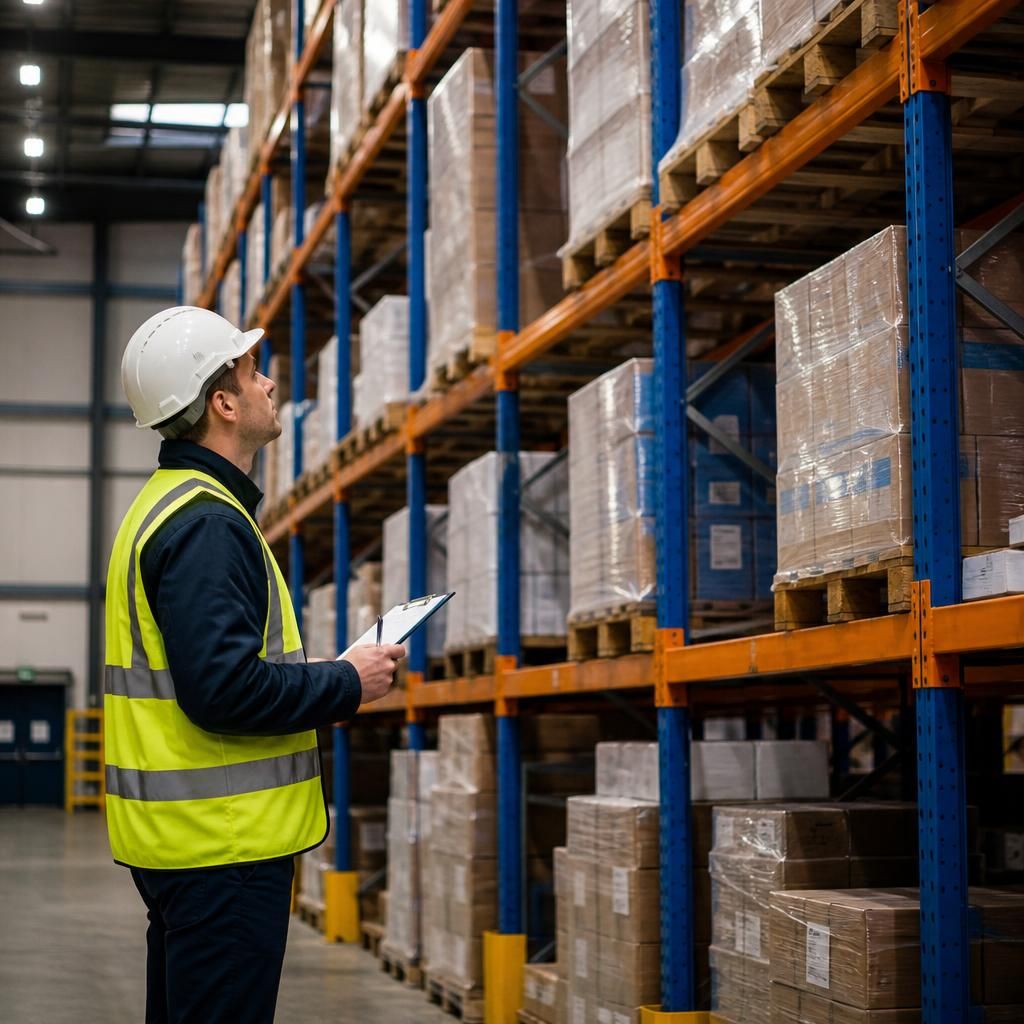
Selective pallet racking is often cost-effective because it combines direct access to each pallet with a relatively straightforward layout, installation process and maintenance regime. Its value should be assessed across the system’s working life, not only by comparing the initial purchase price.
Higher-density alternatives may store more pallets in a smaller footprint, but can involve specialist handling equipment, more complex installation or restricted access to individual loads. These factors may increase handling time and operating costs, particularly where products change frequently or require regular picking and replenishment.
- Compare installation, protection and floor-preparation requirements.
- Allow for inspections, damage repairs and future layout changes.
- Consider access time, stock rotation and handling equipment requirements.
- Check whether the system can accommodate changing pallet sizes and product lines.
Request Expert Advice on Your Selective Pallet Racking System
Request expert advice from Able Racking to compare selective pallet racking with alternative warehouse racking systems for your stock profile, access requirements and available space. Our experienced team can help assess the most practical and cost-effective configuration for your operation.