
What are the safety considerations when implementing high-density and narrow aisle racking?
High-density and narrow aisle racking must be designed, installed and operated with suitable clearances, load capacities, protection and access controls for the equipment and traffic using the warehouse. Regular inspections, prompt repairs, clear operating procedures and thorough operator training are essential for maintaining safe, compliant warehouse racking.
High-density and narrow aisle warehouse racking must be designed, installed and operated around the loads, handling equipment, building conditions and traffic routes involved. Safe implementation depends on maintaining suitable clearances, observing load capacities, protecting vulnerable components, controlling access and carrying out planned inspections, repairs and operator training.
Start with a competent design. The layout should be based on the size, weight and type of pallets, the required storage density, the lifting equipment in use and the available floor capacity. A competent designer should confirm the suitability of the warehouse racking, aisle widths, operating clearances, beam levels, pallet positions and any restrictions caused by columns, doors, lighting, sprinklers or emergency routes. The completed design should be documented, approved and kept available for inspection.
Narrow aisles leave less room for steering errors and load movement than conventional layouts. High-density arrangements can also increase the consequences of a collision because damage may affect connected frames or adjoining storage positions. The layout must therefore provide enough clearance for the truck, load and operator, with no encroachment into pedestrian routes, fire exits or other access areas.
Confirm structural capacity and configuration. Every frame, beam, connector and ancillary component must be suitable for the intended loading arrangement. Safe working load notices should be clearly displayed and must match the installed configuration. Changes to beam levels, pallet types, load weights or the handling equipment can alter the design assumptions. Do not increase capacity, add levels or alter the configuration without approval from a competent person.
Floors should be checked for level, strength and condition, particularly where the system uses tall frames or guided handling equipment. Anchors must be installed correctly and the structure must be plumb and adequately supported. Where the warehouse racking is connected to or affected by the building structure, the relevant interfaces should be assessed before installation.
Protect the structure and people. End frames, corners, uprights and other exposed areas should have suitable protection where they are vulnerable to impact. Protection must be appropriate for the trucks and traffic using the area and must not conceal damage during inspections. Damaged protectors should be replaced rather than treated as a permanent substitute for safe traffic management.
Pedestrian and vehicle routes should be separated wherever reasonably practicable. Use clearly marked aisles, crossing points, barriers and speed controls appropriate to the site. Access to high-density warehouse racking should be restricted while trucks are operating, and unauthorised people should not enter active aisles. Good visibility, suitable lighting, mirrors or warning systems may be needed at junctions and blind spots.
Use suitable handling equipment. Trucks operating in narrow aisles must be compatible with the aisle width, lift height, floor condition and pallet position. Operators need sufficient visibility and control to place and retrieve loads without striking the structure. Where guidance systems are used, they should be correctly installed and maintained. Equipment must be examined, maintained and operated in accordance with applicable workplace requirements, including the Provision and Use of Work Equipment Regulations and, where relevant, the Lifting Operations and Lifting Equipment Regulations.
Loads should be stable, correctly palletised and suitable for the support provided. Pallets must not be damaged, overloaded or placed unevenly on beams or supports. Operators should check that the load is secure before movement and should never force a pallet into position. Any load that is leaning, damaged or visibly unstable should be isolated and assessed by a competent person.
Provide effective training and procedures. Training should cover the specific truck, warehouse racking layout and operating conditions at the site. It should include safe travel, load placement, reversing, pedestrian awareness, working in restricted aisles, reporting damage and responding to unstable loads. Written procedures should explain who may enter aisles, how work is controlled during maintenance and what operators must do when damage or an unsafe condition is found.
Truck operators should be appropriately trained and authorised for the equipment they use. Refresher instruction and site-specific familiarisation are important where the layout, equipment, traffic arrangements or stored products change. Contractors and temporary workers also need suitable information before entering operational areas.
Inspect and maintain the installation. Operators should report visible damage, displacement, missing components, damaged pallets and unsafe loads immediately. A responsible person should carry out regular visual checks, with the frequency determined by site conditions, use and risk. A more detailed expert inspection should be arranged at planned intervals in line with the relevant warehouse racking safety guidance and the manufacturer’s instructions.
Inspection findings should be recorded, communicated to responsible staff and prioritised according to risk. Serious damage may require the affected area to be unloaded and taken out of use immediately. Repairs should use compatible components and be completed by competent personnel; straightening, welding or improvising replacement parts can compromise the original design.
Control changes and emergencies. A management process should cover alterations to the layout, new trucks, different pallets, changes in load profiles and the installation of additional components. Fire protection, emergency exits, sprinkler clearances and evacuation routes must remain accessible. Spillages, fallen loads and damaged structures require clear isolation procedures so that people are not exposed while the problem is assessed.
Following recognised guidance, including BS EN 15635 where applicable, supports consistent inspection and maintenance arrangements, but compliance also depends on the actual condition and use of the installation. A documented risk assessment, suitable training, competent inspections and prompt corrective action provide the practical controls needed to keep high-density and narrow aisle warehouse racking safe and serviceable.
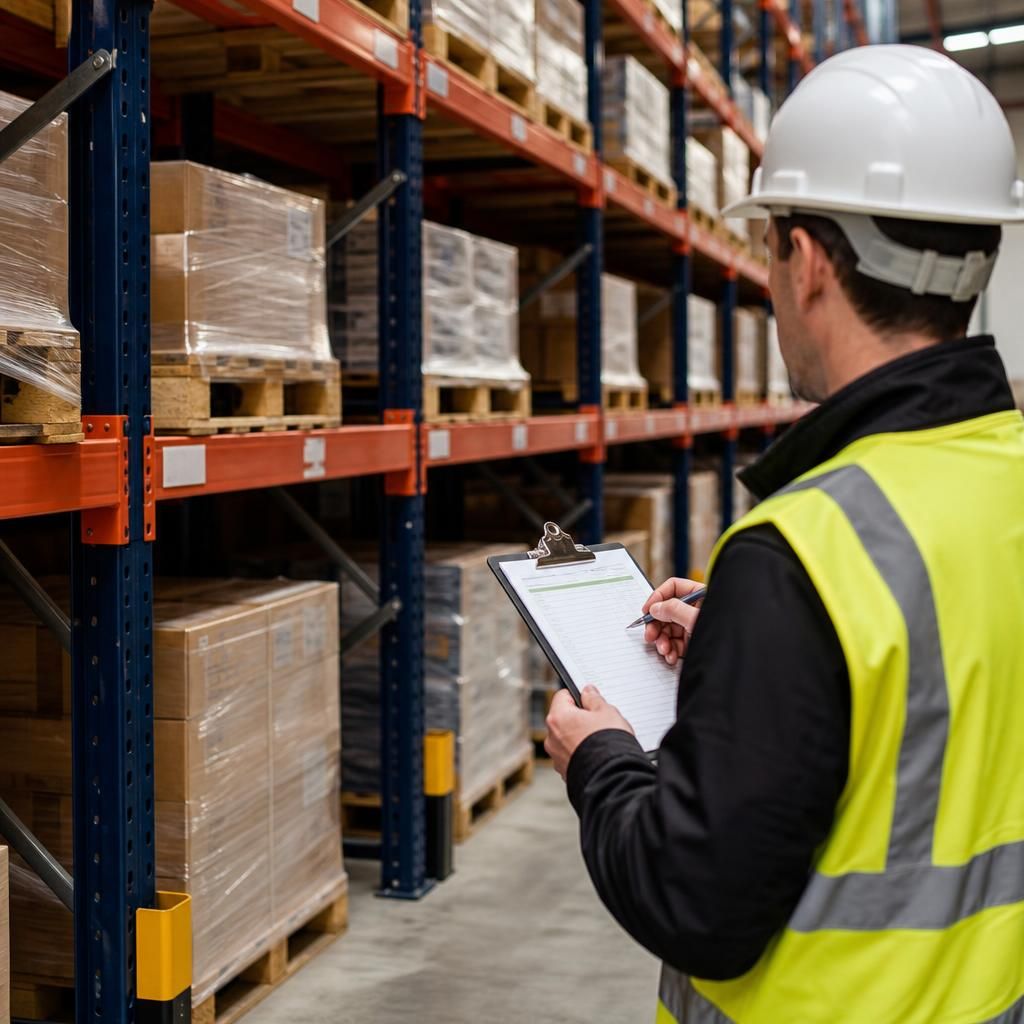
Safe high-density and narrow aisle warehouse racking depends on identifying damage early and preventing unsafe equipment or loads from remaining in service. Limited aisle clearance increases the likelihood that a minor impact could affect an upright, frame, beam or connected storage position.
Operators should report impacts, displaced components, damaged pallets, leaning loads and missing safety parts immediately. A responsible person should assess the affected area, isolate it where necessary and arrange competent repairs using compatible components. Regular visual checks, combined with planned expert inspections, help confirm that the warehouse racking remains suitable for its loads, handling equipment and operating conditions.
Arrange your warehouse racking safety inspection
Arrange a warehouse racking safety inspection with Able Racking to assess damage, loading, clearances and operating conditions. Contact our experienced team to agree a practical inspection plan for your site.