
What loading and unloading techniques optimise efficiency in Drive-In, Push-Back, and Pallet Flow racking systems?
Efficiency improves when each load is placed squarely, weight is distributed correctly, and the loading method matches the stock rotation requirement: Drive-In uses controlled back-to-front loading, Push-Back uses stable loading from the aisle towards the rear, and Pallet Flow uses accurate replenishment from the loading side with pallets moving freely to the picking face. During unloading, operators should follow the correct access sequence, keep fork movements controlled, check pallet condition, and avoid forcing loads or entering storage lanes unless the system and site procedures specifically permit it.
Efficient loading and unloading depends on matching the handling method to the warehouse racking system, stock rotation policy and pallet condition. Drive-In is normally loaded from the front towards the back and unloaded in the reverse order, Push-Back is loaded and unloaded from a single aisle with pallets moving along supported rails or carts, and Pallet Flow is replenished from the loading side while pallets move towards the picking face. In every system, operators should place pallets squarely, keep loads within the specified capacity, maintain clearances and use controlled fork movements.
General preparation before loading
- Confirm that the pallet type, dimensions, weight and condition are suitable for the system. Broken boards, protruding components, unstable wrapping and damaged bases can prevent safe movement or cause a load to catch on structural components.
- Check the storage location, load rating and operating method before placing the pallet. Do not assume that an empty position is suitable for every load.
- Make sure the aisle, access route and working area are clear of people, loose materials and obstructions.
- Approach at a controlled speed, keep the pallet centred on the forks and raise it only as much as necessary for the movement.
- Keep the load square to the lane or support equipment. A pallet entering at an angle can strike uprights, rails, guides or rear components.
- Follow the site traffic plan and use only trained operators and suitable handling equipment. The manufacturer’s instructions and the warehouse’s risk assessment take priority over general guidance.
Loading and unloading Drive-In warehouse racking
Drive-In is suited to storing larger quantities of fewer stock-keeping units where last-in, first-out rotation is acceptable. Because the handling equipment enters the storage lane, the loading sequence must protect both the pallet and the structure.
- Choose the correct lane before entering and confirm that it is free from obstructions, loose components and misplaced pallets.
- Load from the back of the lane forwards, placing the first pallet against the rear position or the furthest available support level. Continue towards the aisle, keeping each pallet aligned with the rails.
- Keep the forklift straight while entering and leaving. Avoid turning, braking sharply or repositioning the forks while inside the lane.
- Set the pallet down gently and ensure it is fully supported before withdrawing the forks. Do not push a pallet into position with the forks or use a pallet to move another load.
- For unloading, remove the front pallet first and work progressively towards the rear. Do not attempt to remove a rear pallet through an obstructing front position.
- Where the system is designed for it, follow the permitted entry and exit arrangement. Operators must never enter a lane on foot or drive into a location that is not intended for the equipment being used.
Loading a Drive-In lane unevenly, leaving unsupported gaps or placing pallets beyond their intended position can increase the risk of contact with the structure. If a pallet will not enter or withdraw freely, stop and investigate rather than forcing it.
Loading and unloading Push-Back warehouse racking
Push-Back stores pallets at different depths on inclined rails or carts, allowing access from one aisle. The loading sequence should use the system’s movement rather than relying on impact or excessive fork pressure.
- Position the forklift squarely at the aisle face and lift the pallet to the correct height for the intended level.
- Place the first pallet at the rear of the available position or against the designated stop, following the system instructions.
- For subsequent pallets, place the load on the front cart or support position and move it backwards in a smooth, controlled action. Keep the forks level and avoid accelerating into the load.
- Check that the pallet has settled correctly on the cart or rails before withdrawing the forks. The pallet should remain stable and centred, with no part hanging over an edge.
- During unloading, remove the front pallet steadily and allow the next pallet to move forward under controlled conditions. Do not stand in front of a moving load or attempt to stop it by hand.
- Unload only the required pallet where possible, keeping the remaining stock in its intended sequence. If a pallet does not advance, isolate the position and report the issue rather than applying additional force.
Push-Back systems can be affected by pallet dimensions, load distribution, friction and rail condition. Consistent pallet specifications and careful placement help the carts or rollers move predictably. Mixed pallet types should not be stored together unless the system has been assessed and approved for that use.
Loading and unloading Pallet Flow warehouse racking
Pallet Flow is generally operated on a first-in, first-out basis. Pallets are loaded at the replenishment side and travel along rollers or wheels towards the picking side. Accurate replenishment is essential because a poorly positioned pallet can interrupt the movement of every pallet behind it.
- Load from the designated replenishment side and confirm that the lane is clear before placing the pallet.
- Enter the pallet straight and set it down gently at the correct height. Keep the load centred so its base engages evenly with the rollers or wheels.
- Allow the pallet to move under the system’s own controlled action. Do not push it along with the forklift or use a second pallet to force movement.
- Check that the pallet has travelled to the correct position and that the lane’s separators, brakes and end stops are functioning as intended.
- Pick from the designated front face, removing the leading pallet first. Keep people and equipment clear of the travel path while pallets are moving.
- Replenish at a controlled rate and avoid introducing a new pallet until the lane has accepted the previous one safely.
Where a pallet stops short, moves excessively quickly or fails to reach the picking face, stop using the lane and report it for assessment. Rollers, wheels, brakes, guides and stops require inspection and adjustment by a competent person; operators should not improvise repairs or enter the lane to correct a blockage.
Techniques that improve efficiency across all three systems
- Use planned lane allocation. Assign locations according to stock rotation, product compatibility, pallet dimensions and expected demand. This reduces unnecessary relocations and prevents incompatible loads being placed together.
- Maintain a consistent loading sequence. Record or communicate which lanes are being filled, which are available for picking and which contain held or quarantined stock.
- Separate replenishment and picking activity where practical. Coordinating movements reduces congestion at the aisle face and makes it easier for operators to see hazards.
- Minimise handling. Move pallets only as far as the system requires. Repeated repositioning increases the chance of pallet damage, product instability and contact with the warehouse racking.
- Use visual checks at every placement. Confirm that the pallet is supported, stable, aligned and clear of adjacent components before withdrawing the forks.
- Keep working areas clean. Loose shrink wrap, timber, packaging and spillages can interfere with forklift travel and the movement of carts, rollers or pallets.
- Stop for abnormalities. Impact damage, displaced beams or rails, bent guides, unusual movement, missing safety components and damaged pallets should be reported and assessed before the location is used again.
Safety controls during loading and unloading
Loading efficiency must not be measured by speed alone. Correct positioning, predictable stock flow and avoidance of damage are more important than rushing individual movements. Operators should remain within their training, maintain visibility and use a banksman or other agreed control where the view is restricted. People must be kept out of active loading and unloading zones, and no one should pass beneath a raised load.
Load notices, system drawings and local procedures should state the permitted pallet type, maximum load, operating direction and any restrictions on access. These controls should be supported by regular warehouse racking inspections and prompt reporting of damage. A competent inspection can identify impact damage, distortion, loose components, rail problems and other conditions that may affect safe loading before they become an operational failure.
When a load cannot be placed or removed smoothly, the safest and most efficient response is to stop, secure the area and obtain advice from a competent person. Applying extra forklift force may damage the pallet, stored goods or warehouse racking and can turn a minor obstruction into a serious repair.
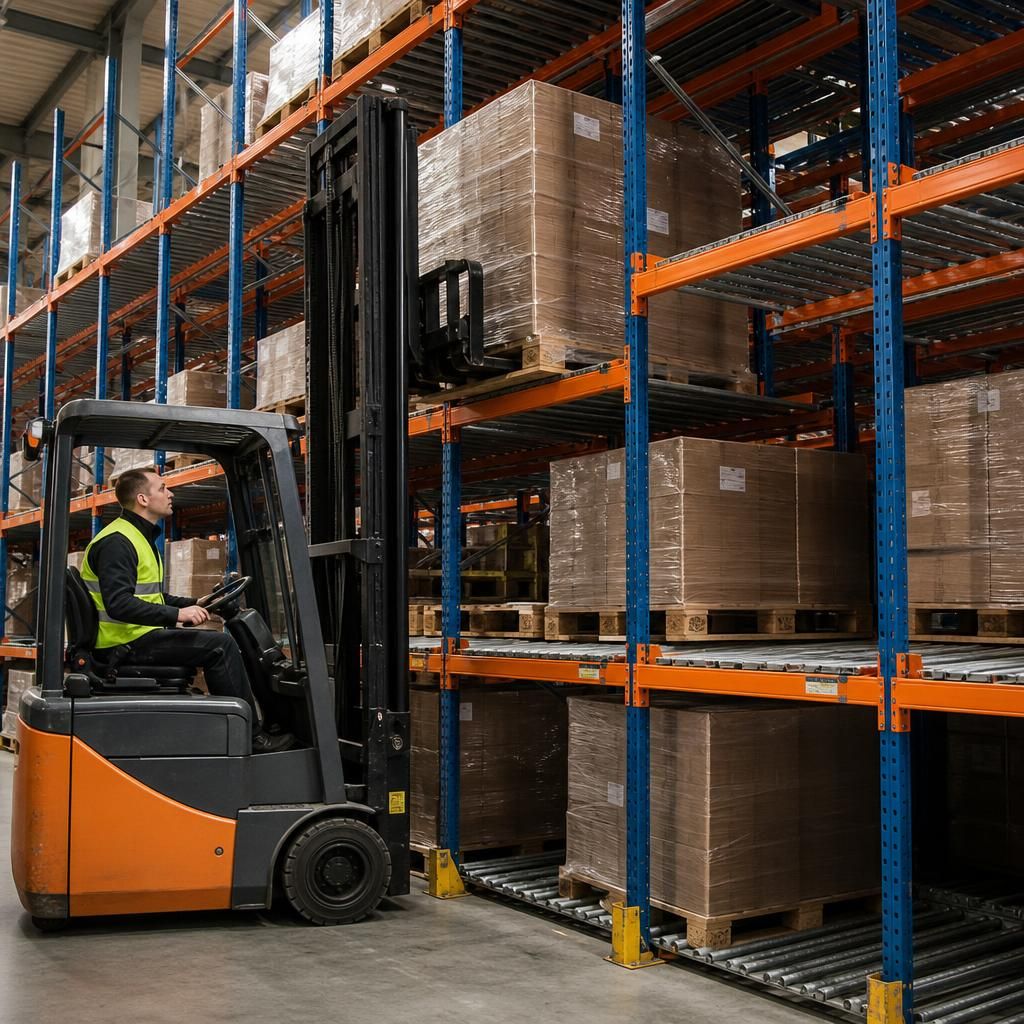
Correct pallet positioning is a key loading technique in Drive-In, Push-Back and Pallet Flow warehouse racking systems. Operators should approach squarely, keep the pallet centred and place it gently on the intended supports, rails or rollers. This allows loads to move as designed and reduces the risk of damage, blockages and structural impact.
The loading method differs between systems:
- Drive-In: load from the rear of the lane towards the aisle, keeping the forklift straight and each pallet aligned.
- Push-Back: place pallets steadily on the carts or rails, allowing each load to move back without using excessive fork pressure.
- Pallet Flow: replenish from the designated loading side and allow the pallet to travel under controlled system movement towards the picking face.
If a pallet will not enter, move or withdraw smoothly, stop the operation and report the issue. Forcing the load can damage the pallet, handling equipment or warehouse racking, while a competent assessment can identify the cause and restore safe, efficient flow.
Arrange a warehouse racking safety inspection
Arrange a warehouse racking safety inspection with Able Racking to identify damage, alignment issues and other conditions that could affect safe loading and unloading. Our experienced inspectors can provide practical recommendations to help keep your storage systems compliant and operating efficiently.