
What are the benefits of using FIFO systems like Pallet Flow racking in supply chain management?
FIFO systems such as pallet flow racking move the oldest pallet through the storage lane first, supporting accurate stock rotation and reducing the risk of expired, obsolete or deteriorated goods. They can also improve warehouse efficiency by creating a controlled loading and unloading process, making stock easier to identify and helping maintain consistent supply chain control.
FIFO systems such as pallet flow racking ensure that the oldest pallet available is retrieved before newer stock. Pallets are loaded from one side of a storage lane and move towards the picking face on rollers or wheels, usually under controlled gravity. This creates a clear first-in, first-out stock rotation method that can improve product quality, reduce waste and provide greater control across the supply chain.
Unlike conventional static storage, pallet flow racking separates replenishment from picking. Operatives load new stock at the rear of a lane while order pickers retrieve pallets from the front. As the leading pallet is removed, the next pallet moves forward into position. This reduces the need for vehicles or operatives to enter the storage lane and makes the intended stock sequence easier to maintain.
Key benefits of FIFO pallet flow systems include:
- More reliable stock rotation
- Reduced risk of expired, obsolete or deteriorated goods
- Faster picking and replenishment processes
- Better use of available storage space
- Clearer stock visibility and traceability
- Reduced handling and vehicle movement within storage aisles
- More consistent control of inventory across linked supply chain operations
Improved stock rotation
The main advantage of a FIFO system is that it supports a defined stock rotation policy. This is particularly important where product quality changes over time, including food, drink, pharmaceuticals, chemicals, cosmetics and other date-sensitive goods. By presenting the oldest available pallet at the picking face, the system helps prevent newer stock from being selected while older stock remains hidden behind it.
FIFO does not replace stock control procedures. Product dates, batch details and pallet identification still need to be recorded accurately, and loading instructions must be followed. However, the physical layout of pallet flow racking supports the required sequence, making it easier for warehouse teams to apply the correct process consistently.
Less waste and lower stock obsolescence
When stock is not rotated properly, it can pass its use-by date, become unsuitable for sale or lose value before it is identified. FIFO reduces this risk by bringing older stock forward for selection. This can help limit disposal, rework, markdowns and emergency stock checks.
Better rotation also improves planning. Purchasing and production teams can see which stock is likely to be used next, while warehouse managers can identify slow-moving goods before they become a larger problem. The result is stronger alignment between storage activity, order fulfilment and demand planning.
More efficient loading and picking
Pallet flow racking creates separate working faces for loading and unloading. Replenishment can take place from the loading side while picking continues at the opposite face, reducing interference between the two activities. This is useful in operations where stock is replenished frequently or orders must be assembled throughout the working day.
The system can also reduce the travel required to locate and retrieve pallets. Each lane is assigned to a product or stock keeping unit, and the next pallet in sequence is presented at the picking face. Clear lane identification, suitable labelling and disciplined replenishment procedures are still essential, but the storage arrangement can make the correct pallet easier to find.
Better use of warehouse space
FIFO pallet flow racking can provide dense storage while retaining direct access to the active pallet at the picking face. It is often suitable for operations that hold several pallets of the same product and need controlled rotation rather than unrestricted access to every pallet from an aisle.
Because loading and unloading can be carried out from separate sides, the layout may also reduce the number of access aisles required compared with some conventional storage arrangements. The actual space benefit depends on pallet dimensions, handling equipment, building constraints, fire protection requirements, pedestrian routes and the required number of product lines. A storage design should therefore be based on the complete operating process rather than capacity alone.
Greater stock visibility and traceability
A well-organised FIFO layout makes it easier to see which stock is available, which pallet is next for selection and where replenishment is required. This supports physical checks and can complement a warehouse management system or barcode-based process.
For batch-controlled products, the arrangement can help teams follow an agreed sequence and investigate discrepancies more efficiently. Traceability still depends on accurate scanning, labelling and records. If pallets are placed in the wrong lane, loaded in the wrong order or removed from an alternative location without being recorded, the FIFO benefit can be lost.
Reduced handling and improved workflow
By presenting pallets at a defined picking face, pallet flow racking can reduce unnecessary movement within storage lanes. This may help separate loading and picking traffic and create a more predictable workflow for forklift operators and pedestrians.
Reduced movement does not remove the need for safe working practices. Loads must be compatible with the system, handling equipment must be suitable, and operators must follow site traffic controls. The storage lanes, rollers, guides, frames and protection must also be inspected and maintained so that pallets move as intended without creating a hazard.
When is FIFO pallet flow most suitable?
FIFO pallet flow is generally most effective where there is regular throughput, multiple pallets of the same product and a genuine requirement to rotate stock in sequence. It can be particularly useful where goods have a limited shelf life, batch restrictions or quality requirements that make older stock a priority.
The design must take account of pallet condition, pallet type, load weight and load stability. Pallets need to travel smoothly through the lane without snagging, stopping unexpectedly or creating excessive impact at the discharge end. Some products and pallets may require specific roller arrangements, braking controls, separators or lane configurations.
Important limitations and control measures
FIFO systems are not automatically suitable for every product profile. A warehouse with a very large number of individual product lines and limited quantities per line may not obtain the best use of space from dedicated flow lanes. In addition, damaged or inconsistent pallets can affect movement and increase the risk of blockages.
Successful operation depends on correct loading. Pallets should be placed squarely in the lane, within the system’s specified load limits and in the correct sequence. Operatives should not force pallets forward, enter lanes unnecessarily or remove stock from the wrong end. Lane labels, stock records and routine housekeeping should support the physical FIFO process.
Regular inspections are also important. Checks should cover frames, beams, rollers, wheels, guides, stops, brakes, safety components, signs and impact protection. Any damage, abnormal pallet movement or change in system performance should be reported and assessed promptly. Repairs and adjustments should be completed by competent specialists and should not be improvised during normal operation.
Overall, pallet flow racking gives FIFO principles a practical physical structure. It helps older stock reach the picking face first, separates replenishment from retrieval and can improve space use, workflow, traceability and product control. The best results come from matching the system to the stock profile, designing lanes around the handling process and maintaining the installation so that every pallet moves safely and predictably.
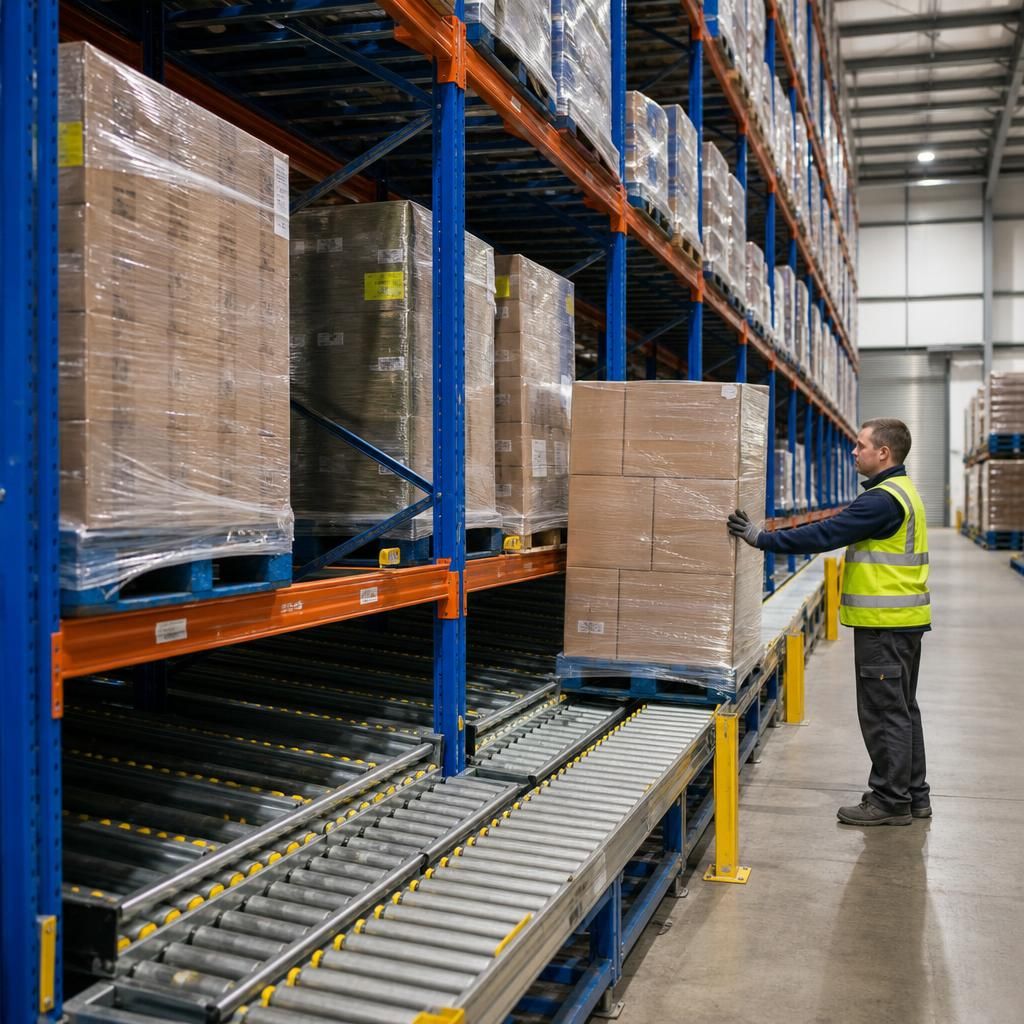
Pallet flow racking supports FIFO stock rotation by presenting the oldest pallet at the picking face first. Pallets are loaded at the rear of a lane and move forward under controlled gravity, allowing newer stock to follow behind without overtaking earlier loads.
This physical sequence helps warehouse teams manage date-sensitive, batch-controlled or perishable goods more consistently. It can reduce the risk of older stock being left behind, helping limit waste, obsolescence and unnecessary stock checks. Accurate labelling, scanning and loading procedures remain essential, as FIFO depends on both the storage system and the process used by operatives.
Separating replenishment from picking also makes the workflow easier to control. New pallets can be loaded from one side while order picking takes place from the opposite face, reducing interference between the two activities. Regular checks of rollers, guides, brakes, stops, frames and impact protection help ensure pallets continue to move safely and predictably.
Discuss Your Pallet Flow Racking Requirements
Discuss your pallet flow racking requirements with Able Racking to review stock rotation needs, lane design, load compatibility and safe operating procedures. Our experienced team can help assess whether a FIFO system is suitable for your warehouse and advise on inspection, maintenance and installation requirements.