
What role does technology play in automated racking systems?
Technology enables automated racking systems to store, retrieve and track goods with minimal manual handling, using warehouse control software, sensors, conveyors and automated vehicles. It improves inventory accuracy, space utilisation, operational efficiency and safety, provided the equipment is correctly specified, maintained and regularly inspected.
Technology is the control layer that enables automated warehouse racking systems to store, retrieve, locate and monitor goods with limited manual handling. Warehouse control software, warehouse management systems, sensors, scanners, conveyors, automated vehicles and safety controls work together to improve inventory accuracy, space utilisation, throughput and operational safety. The benefits depend on selecting suitable equipment, integrating it correctly and maintaining both the mechanical and digital systems throughout their service life.
Warehouse control and management software
Software coordinates the movement of goods through an automated warehouse racking system. A warehouse management system typically manages inventory records, order priorities, locations and stock movements, while warehouse control software translates those instructions into commands for conveyors, cranes, shuttles or other automated equipment.
This connection allows the system to identify an available storage location, assign a movement sequence and confirm when the task has been completed. It can also apply rules such as first-in, first-out rotation, batch control, date-sensitive picking or product-specific storage requirements. When systems are integrated properly, staff have a clearer view of stock location and equipment status without relying on manual records.
Sensors, scanners and identification technology
Automated warehouse racking systems use sensors and identification devices to confirm the position and condition of loads. Barcode scanners, radio frequency identification, photoelectric sensors, position sensors and load detection devices can identify pallets, verify movements and detect obstructions.
These technologies reduce the risk of a load being placed in the wrong location or moved before the system is ready. They can also identify an empty location, confirm that a pallet is correctly positioned and stop equipment if an unexpected object or person enters a protected area. The appropriate technology depends on the type of goods, pallet quality, operating environment and required level of traceability.
Automated movement and storage
Automation can control the movement of goods within warehouse racking through conveyors, automated storage and retrieval equipment, shuttles, cranes and automated guided vehicles. These systems reduce repetitive manual travel and can move goods consistently between goods-in, storage, picking and dispatch areas.
In high-density storage, automated equipment can use available locations more systematically than manual handling alone. It may also operate in areas with limited access or controlled conditions, provided the warehouse racking, equipment and operating procedures have been designed for those requirements. Automation does not remove the need for suitable load assessment, clearances, access arrangements or safe working practices.
Improved inventory accuracy and traceability
Technology records stock movements as they happen, creating a digital audit trail for receipts, storage tasks, replenishment and despatch. This supports more accurate inventory control and makes it easier to investigate discrepancies.
Real-time or near-real-time information can help warehouse teams identify stock that is unavailable, incorrectly located or approaching a required date. It can also support cycle counting by highlighting locations or product groups that need checking. The quality of the result depends on accurate master data, reliable scanning and disciplined processes when damaged goods, manual movements or system exceptions occur.
Space utilisation and operational efficiency
Automated systems can make storage decisions using product dimensions, weight, turnover and location availability. This helps reduce unnecessary empty space and can place frequently handled goods in locations that minimise travel or movement time.
Technology can also balance tasks across equipment, schedule movements during quieter periods and combine compatible jobs where appropriate. These controls may reduce congestion and improve the flow of goods, although the system must be configured around actual operating patterns rather than theoretical capacity. Poor data, unsuitable storage locations or bottlenecks at picking and despatch can limit the benefit of automation.
Safety monitoring and controlled access
Safety technology is an important part of an automated warehouse racking installation. Guarding, interlocked gates, light curtains, emergency stops, area scanners and access controls help prevent people from entering hazardous operating zones while equipment is moving.
Control systems can detect faults, overspeed conditions, unexpected movement, overloads or failed sensors and place equipment into a safe state. Alarm records and fault messages can help trained operatives identify problems before restarting the system. These safeguards must be supported by suitable risk assessments, clearly defined pedestrian routes, operator training and effective emergency procedures.
Automated controls are not a substitute for physical inspections. Warehouse racking, protective barriers, rails, pallets and associated equipment still need to be checked for impact damage, distortion, wear, corrosion and other defects. Any problem that could affect structural stability or safe operation should be isolated, reported and assessed by a competent person.
Condition monitoring and preventative maintenance
Modern systems can collect information about motor temperatures, vibration, operating cycles, fault frequency and component performance. This condition data can help maintenance teams identify developing issues and plan work before a failure interrupts operations.
Preventative maintenance should cover the automated equipment, control panels, software interfaces, sensors, guarding, conveyors and the warehouse racking itself. Maintenance records should show what was inspected, what was found, which parts were replaced and whether any follow-up action remains outstanding. A structured inspection and maintenance programme is particularly important where a failure could cause falling loads, equipment collision, restricted access or a significant operational interruption.
Integration with existing warehouse operations
Introducing automation requires more than installing machinery. The system must exchange reliable information with stock control, purchasing, order processing and despatch processes. Interfaces should be tested for duplicate messages, missing confirmations, incorrect stock status and failures during network or power interruptions.
Before implementation, the operation should review product dimensions, load weights, pallet quality, order profiles, peak demand, fire protection, building tolerances, maintenance access and emergency access. Manual fallback arrangements are also needed so that faults can be managed safely without creating uncontrolled movements or inaccurate stock records.
Limitations and practical considerations
Technology improves consistency, but it cannot correct poor system design, damaged loads, inaccurate data or inadequate procedures. Common issues include sensors becoming dirty or misaligned, barcode labels being unreadable, software interfaces losing communication and operators bypassing controls to resolve an urgent task.
These risks are reduced through commissioning checks, clear operating instructions, suitable training, controlled software changes and prompt fault reporting. Only authorised and competent personnel should adjust safety devices, alter control settings or return isolated equipment to service. Where a structural issue affects warehouse racking, the affected area should be made safe and assessed before use resumes.
Overall, technology gives automated warehouse racking systems their coordination, visibility and safety controls. It can improve how goods are stored and retrieved, but dependable performance comes from the combination of correctly specified equipment, accurate data, competent installation, trained operators, planned maintenance and regular warehouse racking inspections. Reviewing the physical system and its digital controls together provides the clearest way to maintain safe, efficient and compliant operation.
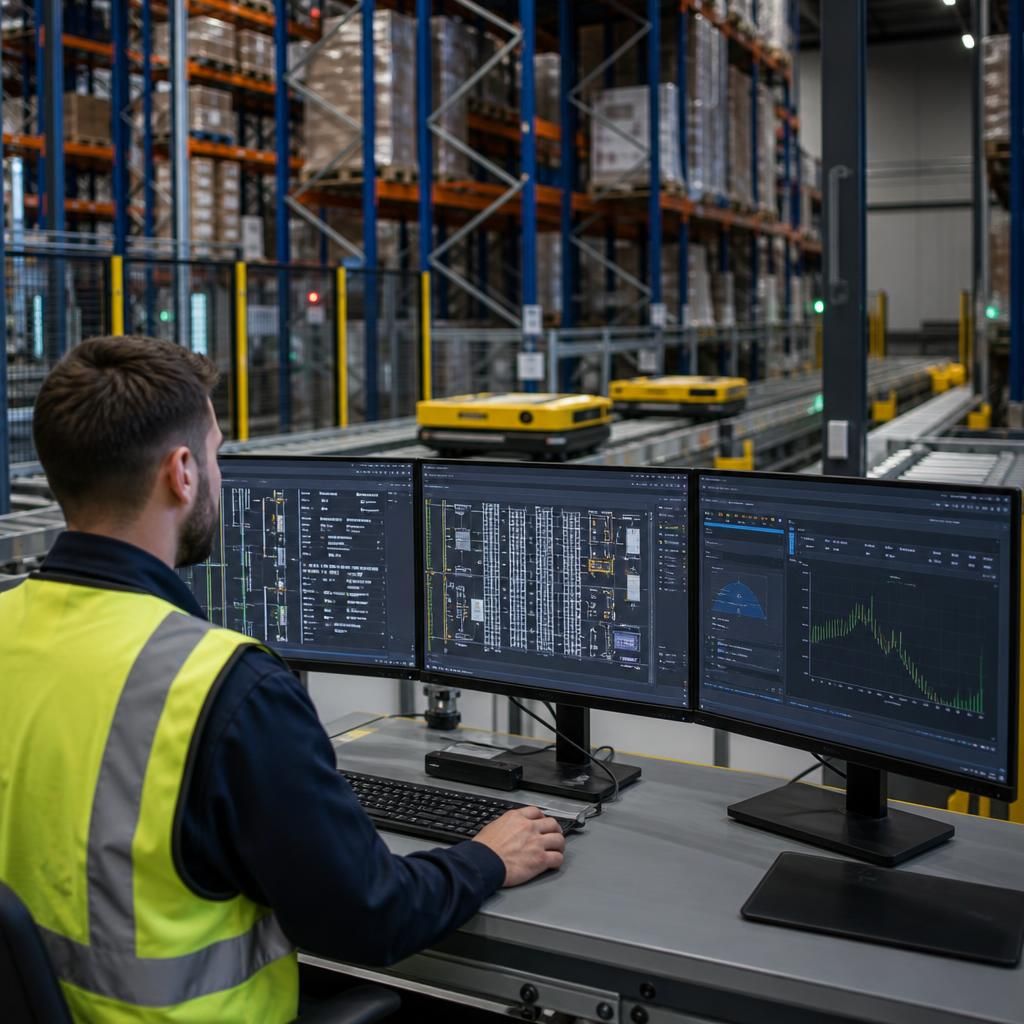
Safety technology helps automated warehouse racking systems control access, detect hazards and stop equipment when unsafe conditions arise. Guarding, interlocked gates, emergency stops, light curtains and area scanners work together to separate people from moving machinery and loads.
These controls support, rather than replace, competent inspections and maintenance. Sensors can become misaligned, protective equipment can be damaged and warehouse racking can suffer impact or distortion. Regular checks, fault reporting and prompt isolation of defects help ensure the automated system remains safe to operate.
Arrange an automated warehouse racking inspection
Arrange an automated warehouse racking inspection to assess the condition of the structure, safety controls and associated equipment. Contact Able Racking to discuss your inspection requirements and any maintenance concerns.