
What are the potential challenges and solutions in maintaining automated racking systems?
Maintaining automated warehouse racking systems can be challenging because mechanical wear, sensor faults, software issues and damaged components may reduce safety, accuracy and uptime. Regular inspections, preventative maintenance, prompt repairs, system testing and trained operators help identify faults early and keep the warehouse racking system compliant and reliable.
Maintaining automated warehouse racking systems requires coordinated care of the structure, conveyors, storage equipment, sensors, control software and safety procedures. Mechanical wear, impact damage, contamination, electrical faults and software errors can affect load handling, storage accuracy and system availability. A planned programme of inspections, preventative maintenance, testing and operator training helps identify problems early and restore safe operation quickly.
Mechanical wear and component failure
Automated warehouse racking systems contain moving equipment such as shuttles, cranes, lifts, conveyors and transfer units. Bearings, wheels, chains, belts, motors and guide rails can wear through normal use. If deterioration is not identified, the equipment may become noisy, slower, less accurate or unable to position loads correctly.
Maintenance should follow the equipment manufacturer’s recommendations and include checks on moving parts, fixings, alignment, lubrication, braking systems and protective guards. Maintenance records should show what was inspected, what was found and which actions were completed. Replacing worn components before failure is generally safer and less disruptive than waiting for a breakdown.
Damage to the warehouse racking structure
Forklift impacts, loading errors and contact from automated handling equipment can damage uprights, beams, bracing, rails, guides and protection barriers. Even apparently minor distortion can affect the capacity or stability of the installation, particularly where loads are handled automatically and the system depends on precise clearances.
Operators should report suspected damage immediately and isolate any affected location where necessary. A competent inspection can determine whether the area is safe to use, requires repair or must remain out of service. Repairs should use suitable components and approved methods; damaged structural parts should not be straightened, altered or improvised without competent technical advice.
Sensor, scanner and control faults
Automated systems rely on sensors, barcode readers, position detectors and safety devices to identify pallets, confirm locations and prevent unsafe movement. Dust, poor alignment, reflective surfaces, damaged cabling or a failed sensor can result in missed reads, incorrect stock locations, stoppages or unexpected equipment behaviour.
Routine checks should confirm that sensors are clean, securely mounted and correctly aligned. Scanner performance, emergency stops, interlocks, light curtains and other protective devices should be tested as part of a documented maintenance plan. Fault messages should be investigated rather than repeatedly reset, as clearing an alarm without addressing its cause can allow a developing defect to continue.
Software and communication problems
The warehouse management system, warehouse control system and equipment controls must exchange accurate information. Network interruptions, incompatible updates, incorrect product data or communication failures can prevent stock from being stored or retrieved correctly. These issues may be difficult to identify because the physical equipment can appear to be functioning normally.
Access to software should be controlled, with changes tested and recorded before they are introduced into live operations. Backups, recovery procedures and clear escalation arrangements should be maintained. When a fault occurs, the investigation should consider both the control system and the physical equipment, including whether the system’s location data matches the actual contents of each storage position.
Load quality and storage accuracy
Automated handling equipment requires consistent loads. Pallets that are damaged, unstable, overhanging, poorly wrapped or outside the specified dimensions may catch on guides, become difficult to retrieve or place excessive forces on the equipment. Incorrect product or pallet data can create similar problems.
Load standards should define acceptable pallet condition, dimensions, weight distribution and wrapping. Incoming loads should be checked, and unsuitable units should be corrected or moved to a suitable manual handling process. Storage locations should also be kept accurate so that the system does not attempt to retrieve a load from an occupied, empty or incorrectly recorded position.
Contamination and environmental conditions
Dust, packaging debris, moisture, temperature changes and poor housekeeping can affect sensors, electrical cabinets, conveyors and moving components. Uneven floors, inadequate lighting or restricted access can also make inspections and repairs more difficult.
Cleaning should form part of the maintenance schedule rather than being limited to visible areas. The correct cleaning methods should be used around electrical and sensitive equipment, and spills or leaks should be dealt with promptly. Environmental conditions should be reviewed against the design requirements of the automated installation, particularly where goods, refrigeration or production processes create unusual conditions.
Safety device and access-control failures
Automated warehouse racking systems must prevent people entering hazardous operating zones while equipment is moving. Gates, guards, interlocked doors, emergency stops, barriers and isolation controls must remain effective and accessible. A bypassed or defective safety device creates a serious risk, even if the main equipment continues to operate.
Safety functions should be tested at planned intervals and after relevant repairs or control changes. Only authorised, trained personnel should enter restricted areas, and maintenance work should follow suitable isolation and lock-off procedures. If a protective device does not operate as intended, the affected equipment should be taken out of service until the fault has been assessed and rectified.
Unplanned downtime and difficult fault finding
Breakdowns can interrupt picking, replenishment and dispatch, while intermittent faults can be particularly time-consuming to diagnose. Repeated resets may temporarily restore operation but can conceal the underlying issue and make reliable fault analysis more difficult.
A practical response plan should identify who receives fault notifications, who can isolate equipment, which spare parts are critical and how stock is handled during an outage. Fault logs should record alarms, operating conditions, affected locations and actions taken. Reviewing this information helps identify recurring failures and supports targeted preventative work.
Skills, training and communication
Operators, maintenance teams and warehouse managers each influence system safety. Operators need to understand normal operation, load requirements, alarm reporting and emergency procedures. Maintenance personnel need appropriate knowledge of the mechanical, electrical and control elements they work on. Managers need visibility of defects, overdue actions and restrictions on system use.
Training should be refreshed when equipment, software, processes or responsibilities change. Clear reporting routes and concise operating instructions reduce the risk of faults being ignored or unsafe workarounds becoming normal practice. Contractors should also receive suitable site information before carrying out inspection or maintenance activities.
How to maintain reliability over the working life of the system
- Carry out routine visual checks for impact damage, unusual noise, leaks, loose components, poor alignment and visible obstruction.
- Complete planned inspections and preventative maintenance in line with the equipment design, operating conditions and manufacturer’s guidance.
- Arrange competent warehouse racking inspections to assess the structural condition and identify damage that routine operators may overlook.
- Test control functions and safety devices, including emergency stops, interlocks, barriers and access controls.
- Keep software, product data and location records controlled, backed up and reviewed after changes.
- Set clear standards for pallet condition, load stability, dimensions and weight distribution.
- Record defects, isolate unsafe equipment and confirm that repairs have been completed before returning it to service.
- Review maintenance and fault records to identify repeat failures and improve the preventative maintenance plan.
Maintaining automated warehouse racking systems is therefore not limited to repairing machinery after a breakdown. It involves protecting the structure, preserving accurate control information, monitoring load quality, testing safety functions and ensuring that everyone understands their role. Regular competent inspections combined with responsive repairs and well-managed maintenance records provide the strongest basis for safe operation, dependable throughput and longer equipment life.
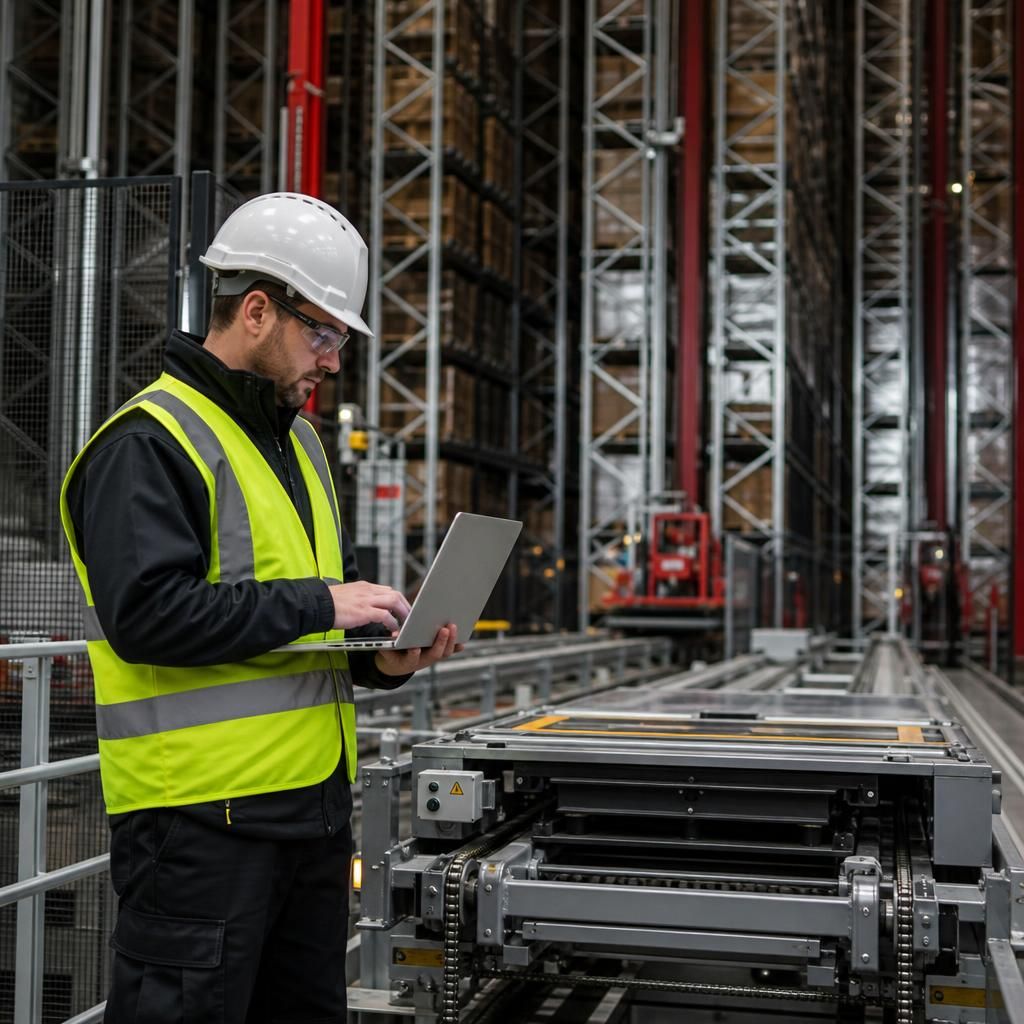
Safety devices are essential to maintaining automated warehouse racking systems because they prevent people from entering operating zones while machinery is moving. Guards, interlocked gates, emergency stops, light curtains and isolation controls must remain accessible, correctly aligned and fully operational.
Include these devices in planned maintenance and test them after relevant repairs or control changes. If a safety function fails, do not bypass it or repeatedly reset the system. Isolate the affected equipment, restrict access and arrange competent assessment and repair before returning it to service. Clear fault reporting and lock-off procedures help prevent unsafe workarounds during maintenance.
Book an Automated Warehouse Racking Inspection
Arrange an expert inspection of your automated warehouse racking system with Able Racking to identify structural damage, equipment defects and safety issues. Contact our experienced team to discuss your inspection requirements.