
What factors should be considered when integrating automated racking and ASRS systems into existing warehouse operations?
Integrating automated racking and ASRS systems into an existing warehouse requires careful assessment of available space, structural capacity, floor conditions, workflows, inventory characteristics, software compatibility, utilities and operational safety. The project should also include phased installation planning, staff training, maintenance arrangements and a detailed review of how the automated system will interact with existing warehouse racking and equipment.
Integrating automated racking and an automated storage and retrieval system (ASRS) into an existing warehouse requires a coordinated review of the building, storage equipment, processes, technology and people. The system must fit the available space and structural capacity, handle the intended inventory, connect reliably with warehouse software and operate safely alongside existing warehouse racking, vehicles and pedestrian routes.
Assess the existing warehouse before selecting equipment
A detailed site survey should be completed before the system design is confirmed. This should record the building dimensions, clear heights, columns, doors, loading areas, fire protection, lighting, drainage, services and access for installation and maintenance. The survey should also identify restrictions that could affect automated equipment, such as uneven floors, restricted access routes or areas where building movement may occur.
Existing warehouse racking should be inspected to confirm its condition, configuration and suitability for continued use. Damaged components, unapproved alterations or inadequate protection can affect the safe integration of new equipment. The proposed automated system should not obstruct rack inspections, emergency access, fire-fighting equipment or essential maintenance routes.
Confirm structural and floor capacity
Automated storage systems can impose concentrated loads on the floor and building structure. A competent assessment should confirm that the slab can support the equipment, stored loads, dynamic forces and fixing requirements. Floor flatness, level tolerances, joint positions and load-bearing capacity are particularly important for cranes, shuttles, conveyors and other accurately guided equipment.
Where the building cannot accommodate the proposed loads or tolerances, the design may need strengthening, local repairs or a different equipment arrangement. These requirements should be identified at the design stage rather than after installation has started.
Match the system to the inventory
The size, weight, shape, packaging and handling characteristics of the goods determine which automated solution is appropriate. Designers should consider pallet dimensions, container compatibility, load stability, product fragility, temperature requirements, hazardous properties and the frequency with which stock is accessed.
Stock data should also be reviewed for variability. A system designed around current inventory may become unsuitable if product dimensions, packaging or order profiles change. Allowance for future requirements can help avoid restricted capacity or costly modifications, provided that the additional space and equipment remain commercially justified.
Review workflows and material movement
The automated system should support the complete movement of goods, from receipt and identification through storage, picking, consolidation and despatch. Map existing workflows and identify where automated equipment will connect with manual handling, forklifts, conveyors, packing areas and loading operations.
Particular attention should be given to:
- Goods-in checks, labelling and induction points.
- Picking priorities and order sequencing.
- Locations for damaged, quarantined or unidentified stock.
- Traffic routes for vehicles and pedestrians.
- Buffer areas for peak activity or temporary process interruptions.
- Manual recovery arrangements when equipment or software is unavailable.
- Access for cleaning, inspection and planned maintenance.
Removing a manual buffer without replacing its function can create congestion elsewhere in the warehouse. Process modelling and operational trials should therefore test normal demand, peak demand and foreseeable interruptions before the final layout is approved.
Check software and data compatibility
ASRS equipment normally relies on warehouse management, warehouse control or enterprise systems to issue tasks and confirm stock movements. The integration should define how orders, locations, stock status, exceptions and confirmations will be exchanged between systems.
Data quality is as important as software compatibility. Product dimensions, weights, barcodes, storage rules and location records must be accurate. The project should include testing for communication failures, duplicate instructions, incorrect stock status, lost transactions and recovery after a power or network interruption. Clear ownership of master data and system support should be agreed before commissioning.
Plan utilities and environmental requirements
The installation may require suitable electrical capacity, network connectivity, lighting, ventilation, fire protection and environmental controls. The design should consider equipment heat output, dust, humidity, temperature, battery charging and the protection of sensitive controls.
Power supplies and network connections should include appropriate resilience where a failure could stop critical operations. Isolation points must be clearly identified, accessible and incorporated into the site’s maintenance and emergency procedures.
Design safety into the integration
Safety should be assessed across the combined operation, not only within the automated equipment. A risk assessment should consider access to moving machinery, trapping and crushing points, falling goods, unexpected starts, vehicle movements, pedestrian interaction, manual intervention and emergency recovery.
Suitable guarding, interlocked access doors, emergency stops, warning systems and controlled access points should be provided where required. Safety systems must be tested and documented, and any changes to existing warehouse racking, barriers, walkways or loading areas should be reviewed before use.
Operators and maintenance staff need clearly defined procedures for faults, blockages, inspection, isolation and safe access. Lockout and isolation arrangements should prevent equipment from restarting while a person is working within a restricted area. The operation should also remain aligned with relevant UK workplace safety duties, equipment-use requirements and manufacturer instructions.
Coordinate installation with live operations
Installing an automated system in an operating warehouse requires a method statement, delivery plan and carefully controlled work zones. The project team should agree how materials will enter the site, where equipment will be assembled, how existing operations will be protected and how temporary changes to traffic routes will be managed.
A phased approach can reduce disruption. It may involve preparing infrastructure first, installing equipment in defined areas, testing interfaces before live use and transferring work only after each stage has been verified. The transition plan should include contingency capacity for delayed deliveries, commissioning issues and unexpected faults.
Train the people who will operate and maintain the system
Training should reflect each person’s role. Operators need to understand normal controls, alarms, stock exceptions and safe access restrictions. Supervisors need to understand performance monitoring, escalation and recovery procedures. Maintenance personnel need suitable instruction on isolation, inspection, fault diagnosis and authorised access.
Training should cover how the automated system interacts with existing warehouse racking and manual processes. Refresher training is appropriate when equipment, software, layouts or working methods change. Written procedures should be available at relevant workstations and reviewed when experience identifies a safer or more effective method.
Agree inspection and maintenance arrangements
Preventative maintenance should be established before handover. This should cover mechanical components, sensors, guarding, safety devices, controls, fixings, conveyors, lifting equipment and software-related checks. Inspection intervals should be based on the equipment manufacturer’s instructions, operating conditions and the consequences of failure.
Existing warehouse racking should continue to receive appropriate inspections after automation is introduced. Automated equipment, impact protection and altered traffic patterns can change the risks to storage systems. Damage reporting, quarantine arrangements and repair controls should be clear so that defects are not left in service.
Keep records of commissioning tests, safety validation, inspections, repairs, software changes, training and modifications. These records provide evidence that the integrated operation is being managed and help maintenance teams identify recurring issues.
Validate the completed system before full operation
Before handover, test the system under realistic operating conditions. Validation should cover storage and retrieval accuracy, load handling, throughput against the agreed design, emergency stops, guarding, alarms, communications, power recovery and manual recovery procedures.
Any outstanding defects should have an identified owner and completion date. The final documentation should include as-built layouts, operating instructions, risk assessments, maintenance requirements, isolation procedures, training records and details of approved changes.
Careful integration is therefore a design and change-management exercise, rather than simply an equipment installation. Early inspection of the warehouse and existing warehouse racking, accurate operational data, compatible software, controlled commissioning and ongoing safety management give the ASRS system the best chance of delivering reliable performance without compromising the wider operation.
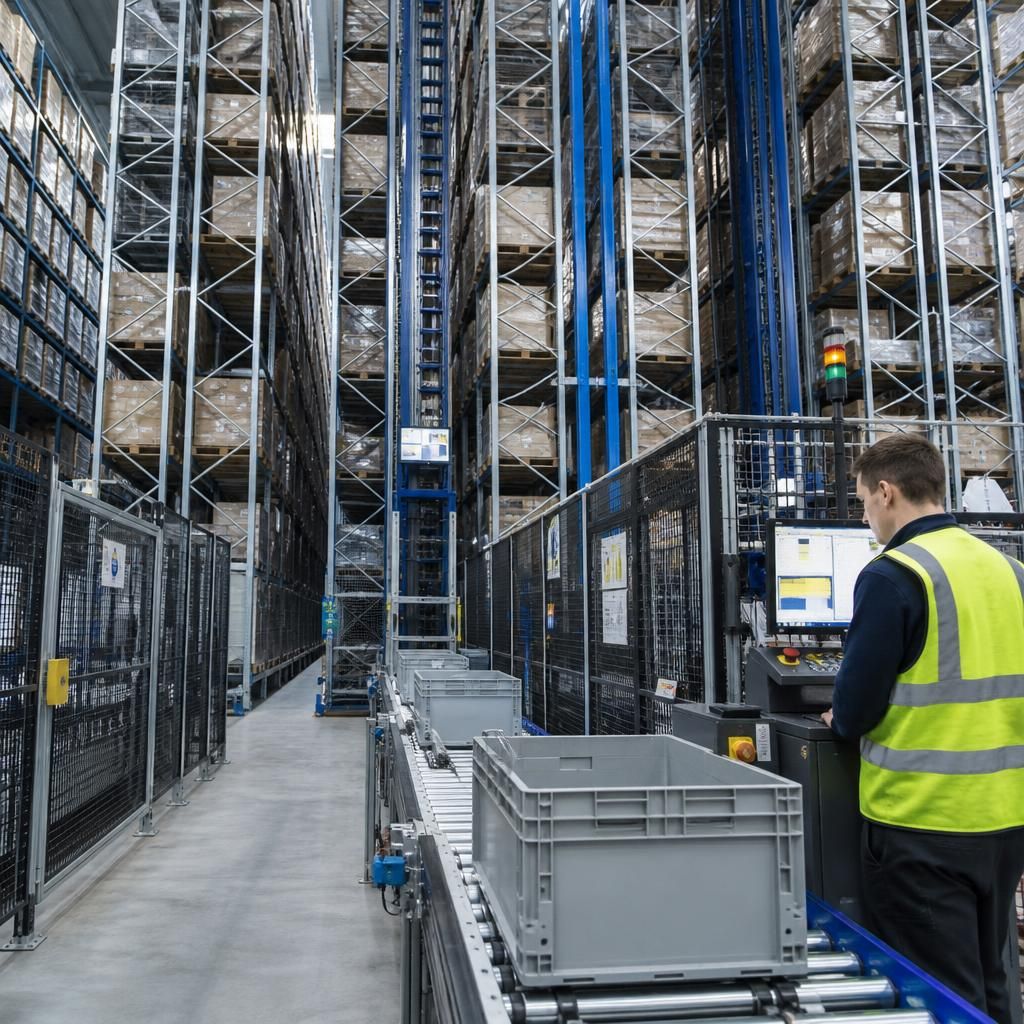
Integrating an automated storage and retrieval system (ASRS) into an operating warehouse means coordinating the new equipment with existing warehouse racking, workflows, software and safety controls before live use.
A phased installation helps control disruption. Agree protected work areas, temporary traffic routes and contingency arrangements before equipment arrives, then test each interface before transferring work to the automated system. Validation should include load handling, stock movements, alarms, emergency stops, power recovery and manual recovery procedures.
Handover should only take place when outstanding defects are assigned for completion and the site has the required risk assessments, operating instructions, isolation procedures, inspection arrangements and training records. This provides a controlled transition and helps confirm that the integrated operation is safe, reliable and maintainable.
Discuss your automated racking integration with Able Racking
Speak to Able Racking about integrating automated racking and ASRS equipment with your existing warehouse safely and efficiently. Our experienced team can help review your current operation, identify integration requirements and plan the necessary inspections, installation and ongoing maintenance.