
What are the benefits of integrating ASRS Systems into existing warehouse operations?
Integrating an ASRS into existing warehouse operations can increase storage capacity, improve inventory accuracy, reduce manual handling and support safer, more consistent order fulfilment. When planned around current processes, the system can be introduced in stages while minimising disruption and connecting with warehouse management software and other equipment.
Integrating an automated storage and retrieval system (ASRS) into an existing warehouse operation means connecting automated storage, retrieval and control equipment with the processes, people and software already in use. When properly planned, an ASRS can increase usable storage capacity, improve stock accuracy, reduce manual handling, support safer working practices and create more consistent order fulfilment without requiring the entire operation to be replaced.
More effective use of available space
An ASRS uses controlled storage locations and automated movement to make better use of the available building footprint. Products can be stored vertically and positioned according to size, weight, demand and handling requirements. This can reduce unnecessary travel routes and release floor space for other activities, such as receiving, picking, packing or dispatch.
The benefit depends on the building’s clear height, floor capacity, access arrangements, fire protection and the characteristics of the goods being stored. A proper survey is therefore essential before deciding whether existing space can accommodate the equipment and its operating clearances.
Improved inventory accuracy
ASRS equipment works from defined storage locations and relies on system records to control where goods are placed and retrieved. Scanning, identification technology and warehouse management software can record each movement, helping reduce misplaced stock, duplicate handling and manual data-entry errors.
This gives warehouse teams clearer information about stock availability and location. It can also support better traceability for products that require batch, lot, serial number or expiry-date control. Accuracy is strongest when product data is reliable, location rules are maintained and every movement is recorded consistently.
Reduced manual handling
Automating the movement of goods can reduce the amount of lifting, carrying, reaching and vehicle travel required from operatives. This is particularly useful for repetitive tasks, high-frequency picking and goods that are heavy, awkward or stored at height.
Automation does not remove the need for trained staff. Instead, it changes the nature of the work. Operatives may spend more time monitoring processes, resolving exceptions, replenishing goods, completing quality checks and managing dispatch activities. Workstation design, access controls, guarding and operating procedures must all be considered as part of the implementation.
Safer and more controlled operations
By limiting unnecessary movement through storage aisles and reducing interaction between people and handling equipment, an ASRS can help control several common workplace risks. Automated systems can also apply consistent movement patterns and prevent access to restricted areas while equipment is operating.
These benefits rely on suitable safeguarding, emergency stops, interlocked access points, inspection arrangements and clearly documented procedures. The system must be assessed alongside the rest of the warehouse, including pedestrian routes, loading areas, fire arrangements and any remaining manual handling activities. Staff need suitable instruction before using or working near the equipment, and operators must know how to respond to faults or emergency conditions.
More consistent throughput
An ASRS can provide a predictable flow of goods between storage, picking and dispatch. Automated sequencing may help prioritise urgent orders, group similar tasks and reduce the time spent searching for products. This can make output more consistent during busy periods, provided the system has been designed around the required order profile and replenishment process.
It is important to identify potential bottlenecks before installation. Conveyors, picking stations, packing areas, charging points, goods-in capacity and dispatch doors must be capable of handling the expected flow. Automating one part of the operation does not remove constraints elsewhere; it can expose them more clearly if they have not been addressed in the design.
Integration with existing software and equipment
One of the main benefits of integrating an ASRS rather than treating it as a standalone installation is the ability to connect storage activity with existing warehouse management, enterprise resource planning and order-processing systems. This can allow orders, stock movements and replenishment instructions to pass between systems with less manual intervention.
The integration should define which system is responsible for product records, stock status, location control, order release and exception handling. Data mapping, testing and user acceptance checks are necessary before live operation. Interfaces should also be monitored after launch so that communication failures, incomplete transactions and incorrect master data can be identified quickly.
A phased route to automation
Existing operations can often be improved through a staged approach. A business may begin by automating a specific product range, process or storage zone while continuing to operate other areas manually. This can reduce disruption and provide an opportunity to test software interfaces, procedures and training before expanding the system.
Phasing requires careful planning because installation work may affect access routes, stock locations, working areas and operating hours. Temporary storage, revised traffic management and a detailed changeover plan may be needed. The transition should also include clear contingency arrangements in case the automated equipment or its software interface is unavailable.
Better use of labour and operational information
Automation can reduce time spent on searching, travelling and repetitive movement, allowing available labour to be directed towards activities that require judgement or flexibility. System records can also provide useful information about demand patterns, stock movements, equipment status and recurring exceptions.
This information supports more informed decisions about replenishment, product locations, staffing and future capacity. It should be reviewed by people who understand the operation, as system data is only useful when the underlying product information, transaction discipline and process definitions are accurate.
What must be considered before integration
- Product dimensions, weights, packaging types and stability.
- Stock rotation, order profiles, peak demand and replenishment requirements.
- Building height, floor loading, access for installation and available service space.
- Compatibility with existing warehouse software, identification technology and material-handling equipment.
- Fire protection, guarding, emergency access, pedestrian segregation and statutory duties.
- Power supply, network resilience, environmental conditions and backup arrangements.
- Maintenance access, spare parts, inspection requirements and response procedures.
- Training for operators, supervisors, maintenance personnel and anyone working near the system.
Ongoing maintenance and performance
The benefits of an ASRS depend on maintaining both the physical equipment and the supporting software. Planned inspections, servicing, cleaning, safety checks and prompt fault resolution help preserve reliable operation. Changes to products, loads, software, equipment settings or surrounding warehouse processes should be assessed before they are introduced.
Performance should be reviewed against practical measures such as stock accuracy, order completion, equipment availability, exception frequency, manual intervention and safe working compliance. Regular review helps identify whether the system is delivering the intended benefit and whether processes need to be adjusted as the operation changes.
In summary, integrating an ASRS can improve an established warehouse by making better use of space, controlling stock movements, reducing manual handling and creating a more predictable flow of work. The strongest results come from treating the project as an operational change rather than simply an equipment installation. Surveying the site, validating product and process data, checking software interfaces, involving warehouse staff and planning maintenance from the outset are essential to achieving a safe, reliable and useful system.
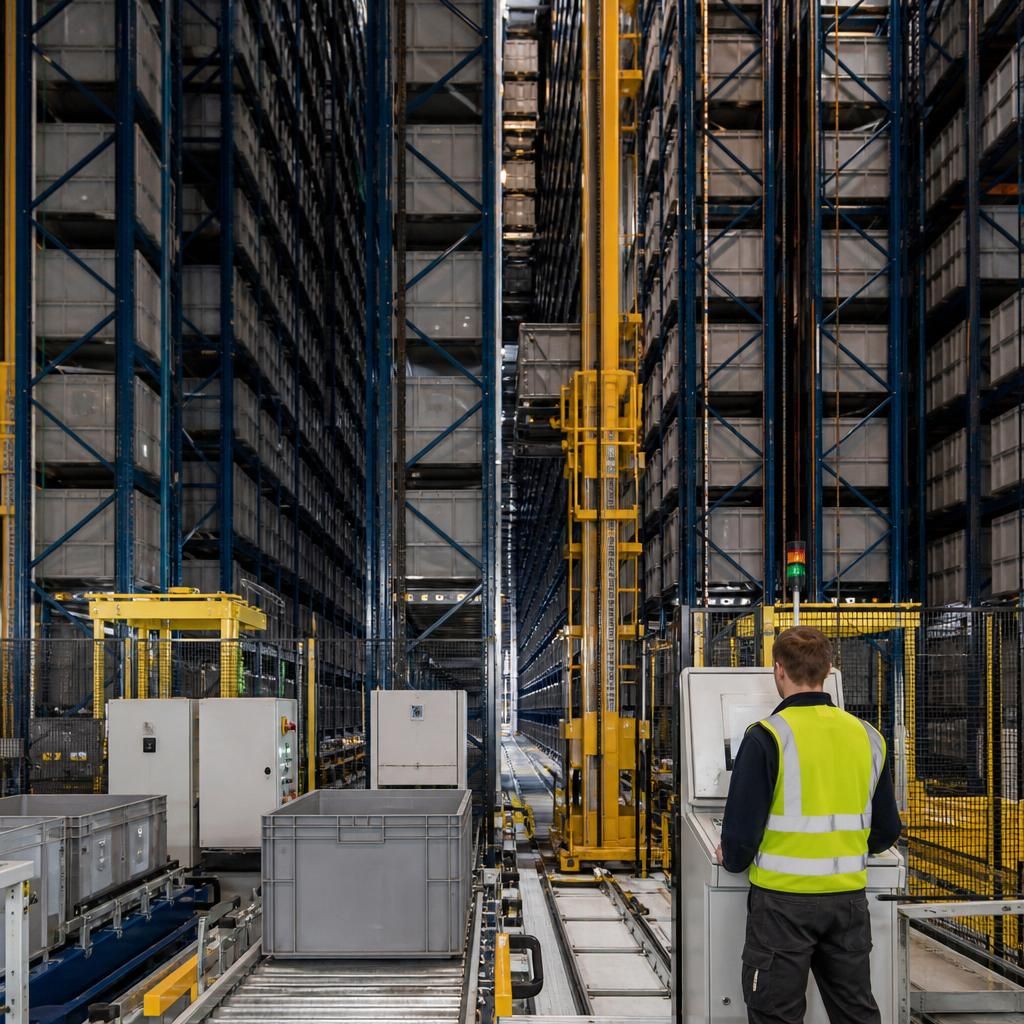
Integrating an ASRS into an existing warehouse operation means connecting automated storage and retrieval equipment with the warehouse management system, order processes, people and surrounding handling equipment already in use. This allows stock movements, replenishment instructions and order releases to be controlled through a coordinated process rather than separate manual and automated activities.
A phased implementation can reduce disruption by introducing automation to a defined product range or storage area while other operations continue. Before the system goes live, product data, location rules, software interfaces, exception procedures and staff training should be tested. Clear contingency arrangements are also needed so goods can still be located, picked and dispatched if the automated equipment or system connection becomes unavailable.
Discuss your ASRS integration requirements
Discuss your ASRS integration requirements with our experienced team to assess your existing warehouse processes, equipment, software and safety arrangements. We can help identify practical integration priorities and the checks needed before implementation.