
What are the benefits of implementing automated racking and ASRS systems in a warehouse?
Implementing automated racking and ASRS systems can increase storage capacity, improve inventory accuracy and streamline warehouse operations by using automated equipment and software to store, retrieve and control goods. They can also reduce manual handling, support safer workflows and make better use of available warehouse space, provided the system is properly designed, integrated and maintained.
Implementing automated racking and automated storage and retrieval systems (ASRS) can increase storage capacity, improve inventory accuracy, streamline goods movement and support safer warehouse operations. These systems combine storage structures, automated handling equipment and control software to store and retrieve goods according to defined instructions, reducing the amount of routine manual handling required.
The benefits depend on selecting a system that matches the building, inventory profile, throughput requirements and operating processes. Automation is not simply a matter of installing equipment; the storage system, software, access controls, maintenance arrangements and warehouse racking safety procedures must work together.
Better use of available space
Automated systems can make more effective use of the warehouse footprint by storing goods in organised storage locations and, where suitable, operating at greater heights than conventional manually operated arrangements. Software-controlled location management can also reduce empty or poorly used areas caused by inconsistent put-away practices.
High-density storage may allow a business to increase stockholding within its existing building rather than immediately seeking additional premises. The achievable capacity will depend on clear height, floor condition, fire protection, access requirements, load characteristics and the type of automated equipment selected. A competent assessment is essential before any changes are made to the warehouse racking layout or operating method.
Improved inventory accuracy
ASRS software records where goods are stored and coordinates put-away and retrieval instructions. This reduces reliance on handwritten records, memory and manual location checks. When integrated correctly with warehouse management or enterprise resource planning software, the system can provide a more consistent record of stock movements.
Improved location control can help reduce misplaced goods, unnecessary searching and discrepancies between physical stock and system records. It can also support traceability by recording relevant information such as product identity, batch details, expiry dates and movement history, where the system and software have been configured to capture it.
Accuracy still depends on disciplined processes. Product identification, barcode or other tracking technology, software configuration, stock checks and exception handling must all be managed properly. Automation can reduce avoidable errors, but it does not remove the need for accurate data and effective supervision.
More efficient warehouse operations
Automated storage and retrieval can shorten the time needed to locate and move goods, particularly where staff would otherwise travel repeatedly between receiving, storage and despatch areas. The system can prioritise tasks, sequence movements and direct goods to defined workstations, creating a more consistent flow of materials.
This may help warehouses manage repetitive processes with fewer delays and make labour available for activities that require judgement, customer service or specialist knowledge. Work can also be planned around agreed operating rules rather than relying solely on individual experience.
Efficiency improvements should be assessed across the complete process. A faster storage machine will not resolve bottlenecks caused by slow goods-in checks, unsuitable packaging, inadequate despatch capacity or poor software integration. A detailed process review should therefore consider how goods enter the building, are identified, stored, retrieved, checked and despatched.
Reduced manual handling
Automated systems can reduce the need for operatives to enter storage aisles, climb, reach into locations or repeatedly move heavy, awkward or fast-moving goods by hand. Goods can be presented at a controlled access point or workstation, depending on the system design.
Reducing unnecessary handling may help limit exposure to manual-handling risks and interactions between people and powered equipment. It does not eliminate workplace hazards. Operatives may still need to load containers, deal with damaged goods, clear obstructions, perform inspections or respond to faults, so safe systems of work and suitable training remain necessary.
Support for warehouse racking safety
Automation can limit routine access to storage areas and reduce the frequency of vehicle and pedestrian movements around warehouse racking. Fixed operating zones, guarding, interlocked access points and controlled travel paths can help separate people from moving equipment when they are designed and maintained correctly.
Automated warehouse racking remains a safety-critical installation. Loads must be compatible with the system, components must remain in suitable condition and protective measures must not be bypassed. Regular inspections should identify damage, deformation, loose components, failed safeguards, obstructions and changes that could affect stability or operation.
Safety responsibilities should be defined before the system is brought into use. This includes arrangements for daily checks, reporting defects, isolating equipment, recovering loads, managing access and arranging competent maintenance. Any repair or alteration to warehouse racking or associated equipment should follow the manufacturer’s instructions and a suitable technical assessment.
Consistent and controlled processes
Automated equipment performs tasks according to programmed rules. This consistency can help standardise put-away, replenishment and retrieval activities across shifts and reduce variation caused by different working methods.
Standardisation may make it easier to monitor performance, investigate exceptions and identify where a process is failing. It can also support documented operating procedures and clearer training for staff who work with the equipment, software or surrounding warehouse racking.
Control must be maintained when circumstances change. New product dimensions, different load weights, revised software, altered traffic routes or changes to order profiles may affect system performance and safety. Change control should be used to assess these impacts before modifications are introduced.
Potential reduction in operating costs
Automation may reduce costs associated with travel, repetitive handling, inefficient use of space, stock discrepancies and avoidable process delays. It can also help a business manage growth without increasing every resource in direct proportion to order volume.
However, the financial case must include the full lifecycle cost. This may include design, building adaptations, electrical and data services, software integration, training, planned maintenance, safety inspections, spare parts, breakdown response and eventual replacement. An automated system should be selected because it provides a suitable operational return over its working life, not solely because it reduces the number of manual tasks.
Improved working conditions
Where the design is appropriate, automated storage can reduce exposure to cold areas, repetitive travel, elevated storage access and busy vehicle routes. Goods-to-person arrangements may also reduce the amount of walking required for some tasks.
These benefits should be considered alongside workstation design, lighting, noise, access, emergency arrangements and the tasks that remain manual. An automated warehouse still needs workplaces that are suitable for the people who load, supervise, inspect, maintain and manage the system.
Greater operational visibility
System data can help managers understand stock locations, equipment status, task queues, access events and recurring faults. This information can support planned maintenance, capacity reviews and investigation of operational delays.
Useful reporting depends on accurate configuration and clear ownership. Data should be reviewed alongside physical inspections and staff feedback rather than treated as a replacement for competent judgement. A software dashboard may show that equipment is available, but it cannot by itself confirm that warehouse racking components, guarding or load carriers are physically safe.
What must be considered before implementation
- Inventory: Assess product dimensions, weights, packaging, stability, turnover, batch requirements and any environmental or handling restrictions.
- Building: Confirm floor capacity and condition, clear height, structural interfaces, fire arrangements, access, utilities and emergency routes.
- Process design: Map goods-in, storage, replenishment, picking, despatch, returns and exception handling before specifying equipment.
- Integration: Define how the automation will communicate with existing software, identification systems and wider warehouse controls.
- Safety: Plan guarding, access control, emergency stops, isolation, pedestrian segregation, recovery procedures and warehouse racking inspections.
- Maintenance: Establish planned servicing, competent fault response, spare-parts arrangements and inspection records before handover.
- People: Train operatives, supervisors and maintenance personnel for their specific duties, including what to do when the system stops or a defect is found.
In practice, the strongest results come from treating automation as an engineered warehouse process rather than a standalone machine. Design verification, commissioning checks, operator training and ongoing preventative maintenance are all important. Existing warehouse racking should also be assessed before integration, particularly where new equipment, altered traffic routes or changed loading patterns could introduce additional risks.
For an existing operation, a phased review is usually the most practical starting point. Examine current capacity, stock accuracy, handling movements, safety performance and maintenance history, then compare these findings with the proposed automated process. This helps identify whether automation will address the underlying constraint and highlights the warehouse racking, building or software changes that must be completed first.
When properly specified, installed and managed, automated racking and ASRS systems can provide higher-density storage, more reliable stock control, safer movement of goods and a more predictable operating process. Their long-term value depends on continued attention to system condition, warehouse racking safety, software integrity, staff competence and planned maintenance.
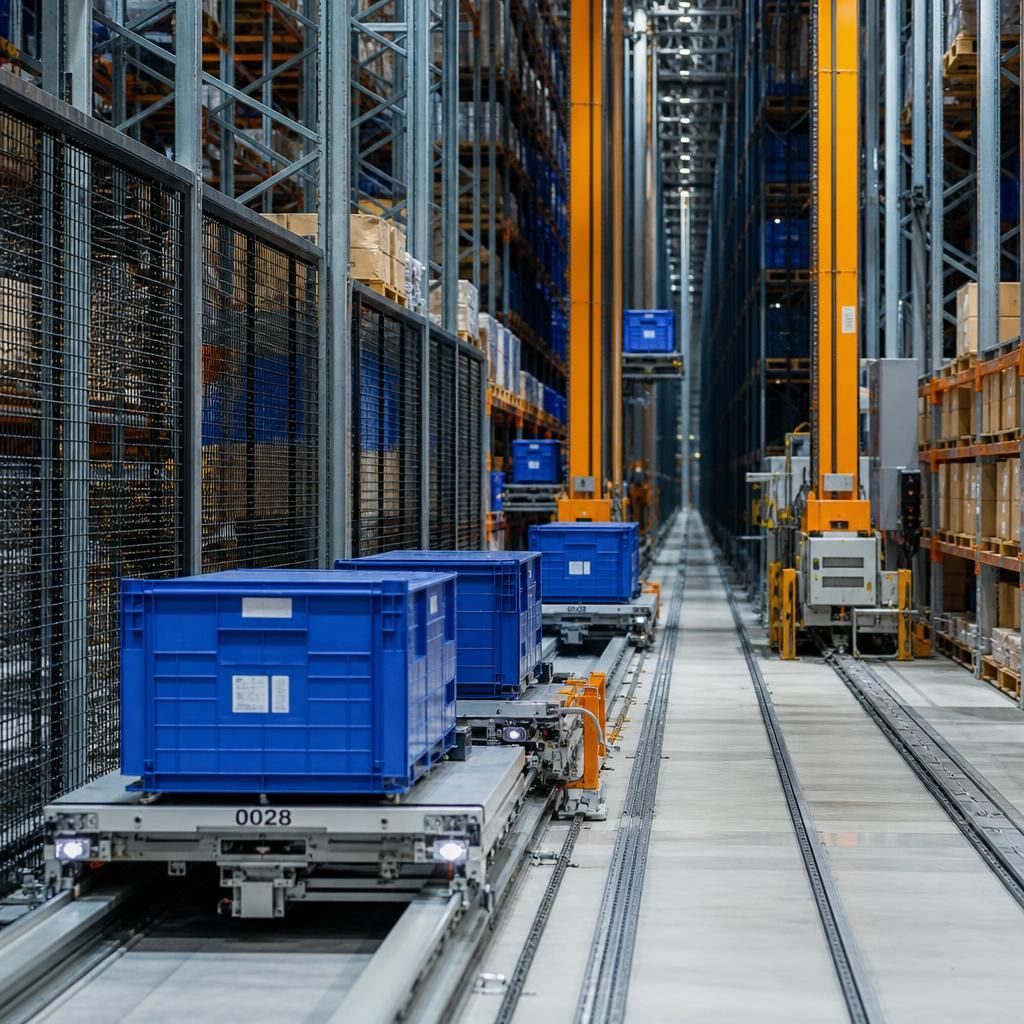
Automated storage and retrieval systems improve space utilisation by placing goods in controlled locations and retrieving them through programmed equipment. This can reduce the amount of aisle space and manual access needed, allowing more stock to be held within the existing warehouse footprint where the building and system design are suitable.
The available capacity depends on factors including clear height, floor condition, load dimensions, fire protection, access requirements and the type of automated equipment selected. A detailed assessment is therefore needed before changes are made to warehouse racking, traffic routes or operating procedures.
Automation also supports more consistent location control. Software records where goods are stored and directs retrievals, reducing misplaced stock and unnecessary searching. These benefits rely on accurate product data, suitable load carriers, reliable system integration and planned inspections and maintenance.
Discuss Your Automated Racking and ASRS Requirements
Speak to Able Racking about your automated racking and ASRS requirements, including storage capacity, system integration, safety inspections and ongoing maintenance. Our experienced team can help assess your warehouse and identify the practical steps needed for a safe, effective installation.