
How do automated racking systems improve warehouse efficiency?
Automated racking systems improve warehouse efficiency by using software-controlled storage and retrieval to optimise available space, reduce manual handling and speed up order fulfilment. They provide accurate inventory control, consistent movement of goods and safer, more streamlined warehouse operations.
Automated racking systems improve warehouse efficiency by combining high-density storage with software-controlled movement of goods. Automated storage and retrieval systems (ASRS) use equipment such as stacker cranes, shuttles, conveyors and lifts to place, store and retrieve loads with consistent accuracy. When properly specified and integrated, they make better use of warehouse space, reduce unnecessary travel, improve stock visibility and support faster, more predictable order fulfilment.
Better use of available warehouse space
Automated racking systems can use the available height and floor area more efficiently than conventional manually operated storage. Storage locations are managed according to the dimensions, weight and handling requirements of each load, rather than relying solely on fixed locations or operator preference. This allows the system to store goods compactly while maintaining defined access routes and required clearances.
High-density storage can be particularly useful where floor space is restricted, land costs are significant or stock volumes fluctuate. The design must still account for building height, floor loading, fire protection, access for maintenance and the operating envelope of the automated equipment. A space-efficient layout is only effective when it remains safe, accessible for servicing and suitable for the goods being stored.
Reduced travel and handling time
In a manually operated warehouse, employees may spend substantial time travelling between storage locations, picking areas and goods-in or despatch points. Automated systems bring the required load to a designated workstation or transfer point. This reduces avoidable movement and allows warehouse operatives to concentrate on picking, checking, packing and other activities that directly support fulfilment.
Automation also provides a consistent sequence for storage and retrieval. The system can coordinate conveyors, lifts, shuttles and warehouse control software so that goods are moved in the required order. This helps reduce waiting time between processes and can make workload planning more predictable during busy operating periods.
More accurate inventory control
Automated racking systems record the storage location and movement of each handled load. Integration with warehouse management or enterprise resource planning software can provide a current record of what is stored, where it is located and whether it is available for picking. Barcode scanners, RFID equipment or other identification methods can be used to confirm movements and reduce the risk of manual data-entry errors.
Improved stock accuracy supports better replenishment, picking and despatch decisions. It can also make stock checks more controlled because the system holds a location history and can identify discrepancies for investigation. Automation does not remove the need for stock verification, but it provides a more reliable information trail than an operation that depends entirely on handwritten records or memory.
Faster and more consistent order fulfilment
Software can prioritise retrievals according to order requirements, stock rotation rules and production or despatch schedules. This is useful for operations handling frequent orders, time-sensitive goods or a large number of stock-keeping units. Automated sequencing can reduce the time between an order being released and the required goods arriving at the workstation.
Systems can also support stock rotation methods such as first-in, first-out, subject to the configuration and the characteristics of the stored products. This is important for goods with shelf-life requirements, batch controls or traceability obligations. Consistent handling reduces reliance on individual operator decisions and helps the warehouse apply its procedures more uniformly.
Lower manual handling requirements
Automated equipment carries out many repetitive lifting, reaching and travelling tasks. This can reduce the amount of manual handling required, particularly where loads are heavy, awkward or stored at height. Operatives still need to load, unload, inspect and manage exceptions safely, but their role can be focused on controlled workstations rather than repeated movement through storage aisles.
Reduced manual handling may help an organisation manage ergonomic risks, although it is not a substitute for a suitable risk assessment. Workstations, transfer points, access arrangements and emergency procedures must all be designed around the tasks people continue to perform. Training remains essential, including instruction on normal operation, isolation procedures and what to do when a load or automated device does not behave as expected.
Improved process control and visibility
Automated systems generate operational information that can help identify bottlenecks, recurring faults, delayed movements and underused storage locations. This information supports planned improvements based on actual workflow rather than assumptions. For example, retrieval priorities, workstation capacity or replenishment rules may be adjusted when data shows that one part of the process is restricting overall throughput.
Clear system controls also make it easier to define who can release orders, alter storage rules, acknowledge faults or restart equipment. Appropriate permissions and audit records help maintain process discipline, particularly in operations handling regulated, high-value or traceable goods.
More reliable use of warehouse labour
Automation changes how labour is used rather than eliminating the need for skilled people. Employees may spend less time on repetitive travel and more time on quality checks, exception handling, equipment oversight, replenishment and customer-specific requirements. This can make staffing requirements more predictable and help the operation maintain service levels when recruitment or retention is difficult.
The benefits depend on suitable workflow design. If automated equipment is poorly matched to demand, operatives may be left waiting for loads, workstations may become congested or manual intervention may increase. The proposed system should therefore be assessed against real order profiles, peak periods, product characteristics and future operational requirements.
Improved safety through controlled movement
Automated racking systems can separate people from moving storage equipment and reduce the need for routine access into operating aisles. Guarding, interlocked gates, presence detection, emergency stops and controlled access zones can help prevent exposure to moving machinery. The exact safeguards depend on the equipment, layout and risk assessment.
Automation does not remove warehouse racking risks. Loads must remain stable, beams and frames must be suitable for the intended loads, and impact damage must be identified and managed. The system should have clear inspection arrangements, documented defect reporting and procedures for taking damaged components or unsafe locations out of service. A competent inspection of the warehouse racking and associated equipment remains important, particularly after changes, impacts, abnormal events or repairs.
Less disruption from avoidable errors and damage
When storage and retrieval are controlled by defined software rules, there is less opportunity for loads to be placed in the wrong location or retrieved from an unsuitable position. Sensors and identification checks can help detect incorrect loads, obstructions or incomplete movements before the process continues. These controls can reduce rework and help protect stock and storage equipment.
However, automated systems must be maintained and correctly set up. Damaged pallets, inconsistent load dimensions, incorrect product data and poor housekeeping can all cause stoppages or unsafe conditions. Clear operating standards for pallet quality, load preparation and housekeeping are therefore part of achieving the expected efficiency.
Conditions required to achieve the benefit
- Carry out a detailed assessment of storage demand, product dimensions, load weights, order patterns and required throughput before selecting equipment.
- Confirm that the warehouse floor, structure, power supply, fire arrangements and environmental conditions are suitable for the proposed installation.
- Define how the automated system will exchange data with existing warehouse management, stock control and despatch processes.
- Plan safe access for inspections, cleaning, fault recovery and maintenance without exposing people to uncontrolled movement.
- Provide operator and maintenance training, including isolation, emergency response and reporting of damage or abnormal operation.
- Set measurable operational checks for availability, retrieval accuracy, stock discrepancies, stoppages and outstanding defects.
Ongoing maintenance protects efficiency
Preventative maintenance is essential because a fault in one conveyor, shuttle, lift, sensor or control system can affect the wider material flow. Maintenance schedules should reflect the manufacturer’s requirements, operating intensity and site conditions. They should cover mechanical components, electrical systems, safety devices, software interfaces and structural elements of the warehouse racking.
Regular inspections help identify damage, wear, loose components, misalignment and recurring operating problems before they lead to a longer stoppage. Defects should be recorded, assessed by a competent person and repaired using appropriate parts and methods. Staff should also know how to report unusual noise, failed sensors, damaged loads, collisions and repeated system alarms.
In practice, automated racking systems deliver the greatest efficiency when technology, storage design, software, people and maintenance arrangements are considered as one operation. A suitable system can increase storage density, improve stock accuracy, reduce unnecessary handling and make order flow more consistent. Expert planning, competent installation and continuing safety inspections are needed to ensure those gains are maintained throughout the working life of the warehouse.
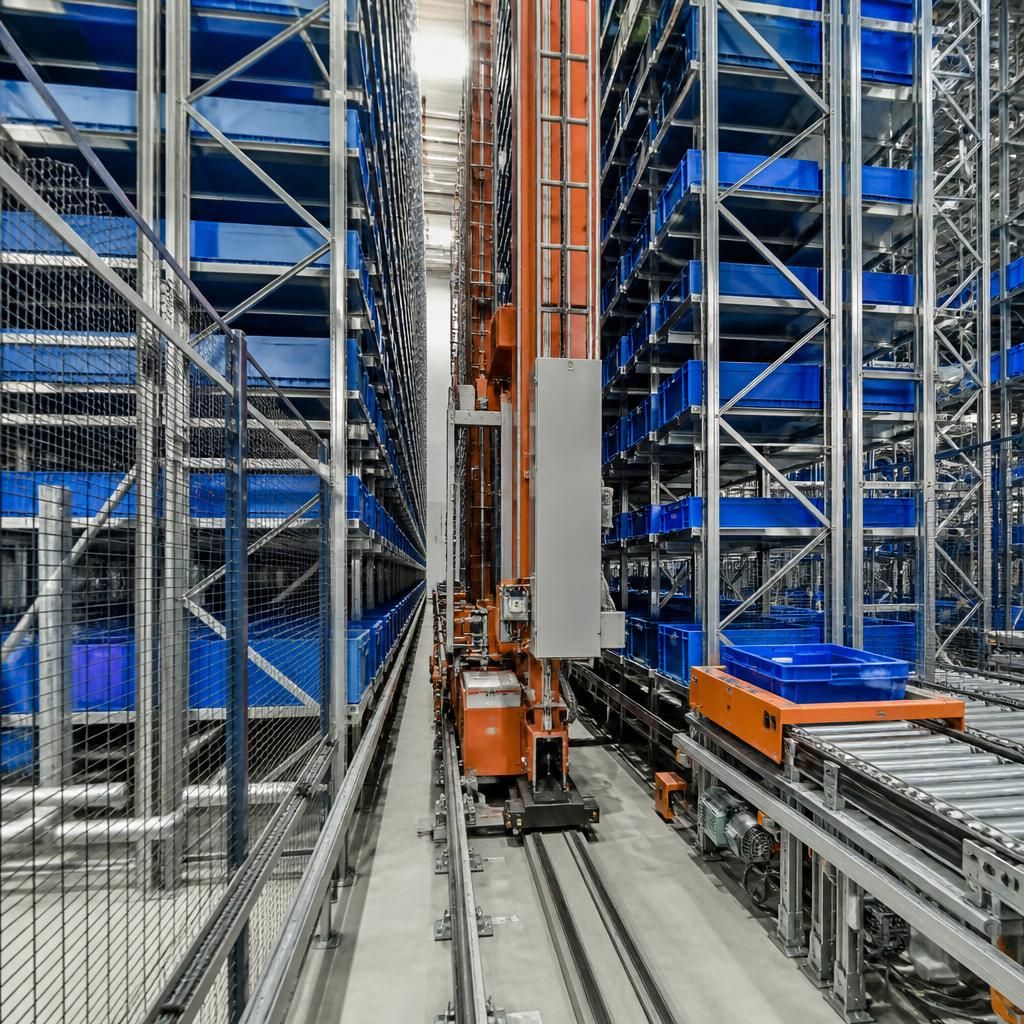
Automated racking systems improve warehouse efficiency by coordinating storage, retrieval and stock information through warehouse control software. The system directs equipment such as stacker cranes, shuttles, conveyors and lifts, while recording where each load is stored and when it is moved.
This reduces unnecessary travel and helps deliver goods to a designated workstation in a controlled sequence. Integration with stock management software can also support accurate replenishment, order prioritisation and stock rotation, reducing delays caused by misplaced or unavailable items.
Efficiency depends on more than the automated equipment itself. Load dimensions, pallet condition, product data, workstation capacity and maintenance arrangements must all be managed consistently. Regular inspections of the warehouse racking, prompt fault reporting and competent servicing help prevent damage or equipment failure from interrupting the material flow.
Discuss Automated Racking Efficiency With Our Experts
Speak to Able Racking’s experts to assess whether an automated racking system is suitable for your warehouse, including storage demand, workflow, safety and maintenance requirements. Contact us to discuss your operation and plan the next steps.