
How do Automated Racking and ASRS Systems enhance warehouse operations?
Automated racking and ASRS (Automated Storage and Retrieval Systems) enhance warehouse operations by storing and retrieving goods under software control, improving inventory accuracy, space utilisation and order throughput. By reducing manual travel and integrating with warehouse management systems, they support more consistent workflows, better traceability and safer material handling.
Automated racking and ASRS (Automated Storage and Retrieval Systems) enhance warehouse operations by controlling the storage and movement of goods through software, automated equipment and defined storage locations. They reduce unnecessary manual travel, make better use of available space, improve inventory visibility and support more consistent picking, replenishment and dispatch processes.
Unlike a conventional warehouse process, where operatives may locate stock manually and move it using separate handling equipment, an ASRS links the storage structure, machinery and inventory software into one controlled workflow. A warehouse management system sends a storage or retrieval instruction, the system identifies the correct location, and automated equipment moves the load to or from the required position. This creates a more predictable operation with fewer avoidable handling steps.
Improving space utilisation
Automated racking systems can use warehouse height and depth more effectively than many manually operated layouts. Storage locations are planned according to load dimensions, weight, product demand and handling requirements, rather than relying solely on fixed locations or wide access aisles. This can increase storage density within the existing building envelope and help businesses defer the need for additional premises, where the building structure, fire strategy and system design are suitable.
Software also helps maintain an accurate map of available locations. Empty spaces can be assigned promptly, while stock can be positioned according to factors such as turnover, compatibility, batch control or dispatch priority. This reduces the unused capacity and inconsistent location practices that can develop in manually managed storage areas.
Increasing throughput and reducing travel
Automated storage and retrieval equipment carries out repetitive horizontal and vertical movements without requiring an operative to travel to every storage position. Goods can be presented at a controlled workstation or transfer point, allowing staff to concentrate on identification, checking, packing and other value-adding activities.
Throughput depends on the equipment type, load profile, storage arrangement, software, workstation design and order pattern. A well-designed system can sequence tasks, combine compatible movements and prioritise urgent or time-sensitive orders. It can also support continuous replenishment by making stock available for picking while reserve inventory is managed separately.
Automation does not remove the need for planning. If workstations, conveyors, access points or dispatch areas cannot handle the expected flow, a highly capable storage system may simply move the constraint elsewhere. Capacity should therefore be assessed across the complete process, from goods-in through storage, picking, checking and despatch.
Improving inventory accuracy and traceability
Each movement is normally recorded by the control software, creating a digital record of where a load should be located and when it was stored or retrieved. Scanning, barcode verification, weighing and other identification controls can be incorporated to confirm that the correct product and quantity are being handled.
This improves stock visibility and supports more reliable stock counts, batch management, expiry control and audit trails. It can also help identify discrepancies earlier. However, software accuracy still depends on accurate master data, functioning identification equipment and disciplined procedures for handling damaged, rejected or manually moved goods.
Supporting safer material handling
Automated systems can reduce the routine requirement for people to enter storage aisles or manually handle loads at height. Goods are presented at defined locations, and access can be controlled through guarding, interlocks, sensors, exclusion zones and safe operating procedures. This can reduce exposure to vehicle movements, falling-load risks and repetitive manual handling, provided the system is correctly designed and maintained.
Automation does not make a warehouse automatically safe. Operators, engineers and visitors still require appropriate training, and emergency access, isolation procedures and inspection arrangements must be clearly defined. Protective measures must remain in place, and damaged structural components, barriers, conveyors or control devices must be reported and dealt with promptly. A suitable inspection and maintenance regime is essential for the storage structure and all associated mechanical and electrical equipment.
Creating more consistent workflows
Automated racking and ASRS systems carry out programmed movements in a repeatable sequence. This helps standardise put-away, retrieval, replenishment and order presentation, reducing reliance on individual knowledge of storage locations. Consistent processes are particularly useful where shifts change frequently, product ranges are complex or demand varies throughout the day.
Defined workflows can also make performance easier to monitor. Useful measures may include retrieval response times, equipment availability, order accuracy, replenishment delays and stock discrepancies. These indicators help identify whether a problem relates to software settings, equipment capacity, data quality, maintenance or the wider warehouse process.
Integrating with warehouse systems
The greatest operational improvement is usually achieved when the ASRS communicates effectively with the warehouse management system, enterprise resource planning software, order management tools and other handling equipment. Integration allows orders, stock records and movement instructions to be exchanged without unnecessary re-keying.
Before implementation, the data exchange should be tested for normal operations and exceptions. Examples include short picks, damaged loads, unavailable locations, cancelled orders, communication failures and emergency stops. Clear ownership is needed for resolving alarms, correcting stock records and authorising manual intervention.
Reducing avoidable operating costs
Automation can reduce costs associated with unnecessary travel, duplicated handling, stock discrepancies, inefficient use of floor space and some forms of manual movement. It may also help warehouses operate with a more controlled labour requirement during periods of predictable demand.
These benefits should be assessed against the full lifecycle cost. The business case needs to include design, installation, software integration, training, energy use, planned maintenance, spare parts, inspections, downtime planning and future changes to product dimensions or order volumes. A system that is efficient for one load type or demand profile may be unsuitable if the operation changes significantly.
Maintaining performance over time
Reliable performance depends on preventative maintenance rather than responding only after a breakdown. Maintenance schedules should cover mechanical components, drives, sensors, controls, safety devices, conveyors, interfaces and the storage structure. Inspections should identify impact damage, misalignment, unusual wear, loose components and changes to the operating environment.
Staff should know how to report faults and what to do when the automated process is unavailable. Documented recovery procedures, suitable isolation arrangements and access to competent engineers help limit disruption while protecting people and equipment. Any alteration to the layout, load characteristics, software or operating method should be reviewed before it is introduced.
In practice, automated racking and ASRS systems enhance warehouse operations when the technology is matched to the goods, building, workflow and future requirements. The strongest results come from accurate stock data, suitable system integration, competent installation, trained operators and ongoing inspection and maintenance. Automation is therefore not just a storage purchase; it is an operational system that must be managed throughout its working life.
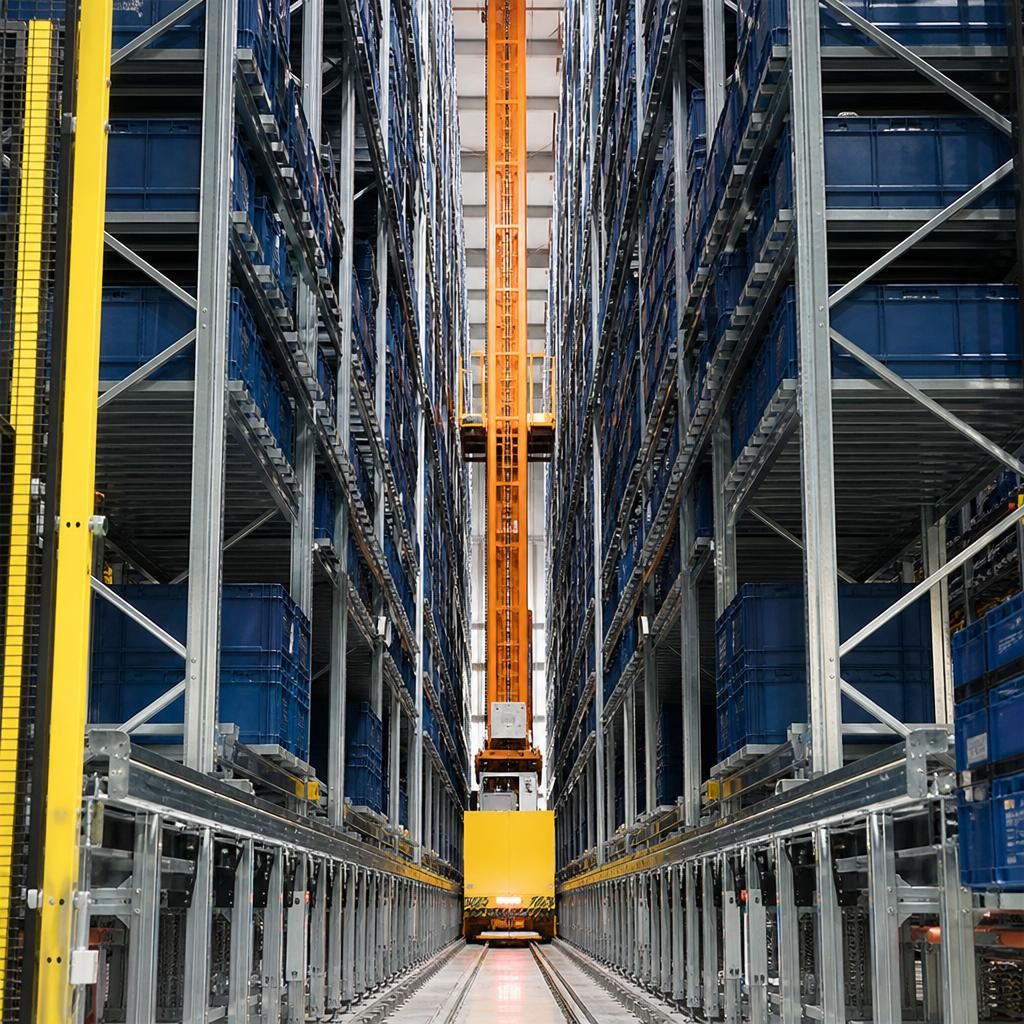
Integration between automated racking, ASRS equipment and warehouse management software creates a controlled flow of stock from goods-in to storage, picking and despatch. The software records each movement, assigns suitable locations and sends instructions to the relevant handling equipment, reducing manual searching and unnecessary data entry.
This improves operational visibility because staff can identify the expected location, status and movement history of each load. To maintain that benefit, product data, barcode records and exception procedures must be kept accurate. Faults, damaged loads, unavailable locations and manual interventions should be recorded and resolved promptly so that the digital stock record continues to reflect the physical warehouse.
Discuss Your Automated Racking and ASRS Requirements
Discuss your automated racking and ASRS requirements with Able Racking to assess system suitability, integration, safety and ongoing maintenance needs. Our experienced team can help you plan a reliable solution for your warehouse operation.