
What are the longevity and durability features of longspan and upright warehouse racking systems?
Longspan and upright warehouse racking systems are built for long service life through robust steel construction, protective finishes, modular components and correctly specified load capacity. Their durability is maintained by suitable installation, protection from impact and regular inspections that identify damage, corrosion, loose fixings or overloading before performance is affected.
Longspan and upright warehouse racking systems achieve a long service life through robust steel construction, protective finishes, modular components and correctly specified load capacities. Their durability depends not only on the original materials, but also on accurate installation, suitable operating conditions, protection from impact and regular inspections. A well-maintained system can continue to provide reliable storage for many years, provided damaged components are assessed and replaced rather than left in service.
Robust steel construction
Both longspan and upright warehouse racking systems are manufactured from formed or rolled steel sections designed to support stored goods and withstand the demands of routine warehouse use. Upright frames transfer vertical loads to the floor, while beams, shelves, bracing and connectors keep the structure stable and distribute loads correctly.
Longspan systems are generally suited to hand-loaded goods, cartons, containers and other medium-duty storage requirements. Their components are designed for repeated loading and unloading, making them suitable for warehouses where stock is accessed regularly. Upright systems use heavier structural components and are commonly configured for palletised goods, higher storage levels or greater load requirements. In both cases, the system must be designed around the actual goods, loading method and operating environment.
Steel provides useful strength, rigidity and dimensional stability. It does not rot or warp like some organic materials, and correctly protected steel can remain serviceable in demanding warehouse conditions. However, steel is not immune to impact, corrosion or overloading, so its performance still depends on how the system is used and maintained.
Protective finishes and corrosion resistance
Painted or powder-coated finishes help protect steel components from moisture, dirt and general warehouse wear. The finish also makes damage easier to identify during inspections because scratches, exposed steel, flaking or corrosion can be seen more readily.
Dry internal warehouses normally provide favourable conditions for long-term durability. Areas exposed to damp, condensation, cleaning chemicals, salt, outdoor air or significant temperature changes require more careful specification and monitoring. Where corrosion is present, the cause should be addressed rather than simply covering the affected area. Severely corroded components may need to be removed from service and replaced.
Protective finishes can be damaged by forklifts, handling equipment, pallets and stored materials. Small areas of superficial damage should be recorded and assessed. Any repair coating must be suitable for the component and applied in accordance with the relevant manufacturer’s or supplier’s guidance.
Load capacity and structural stability
Correct load specification is one of the most important factors in extending the service life of warehouse racking. Beam levels, upright frames, shelves, bracing and floor fixings must be selected for the loads they will carry, including the size, weight and distribution of the goods.
Loads should be placed evenly and within the stated capacity of each component and storage level. Concentrated loads, poorly distributed pallets or goods projecting beyond the intended storage area can create stresses that the system was not designed to accommodate. Capacity notices should remain visible and match the current configuration.
Changing beam levels, adding components, removing bracing or altering the layout can affect the original design assumptions. Any modification should therefore be reviewed by a competent person before it is put into use. The fact that a component fits physically does not mean that it is suitable for the required load or configuration.
Modular components support long-term use
A key durability feature of both systems is their modular construction. Individual beams, shelves, uprights, braces, connectors and protection accessories can often be inspected, adjusted, repaired or replaced without removing the entire installation.
This makes it possible to adapt storage as stock profiles or operational requirements change. It also means that isolated damage can be dealt with promptly, reducing the likelihood of an otherwise serviceable system being taken out of use unnecessarily. Replacement components must be compatible with the existing design and installed correctly. Mixing components without confirming their suitability can compromise structural performance.
Adjustability is particularly useful where storage levels need to change. Nevertheless, every adjustment should preserve required clearances, maintain safe access and keep loads within the revised capacity. Changes should be recorded so that inspection and maintenance information remains accurate.
Installation quality affects durability
Even well-made components can perform poorly if they are installed incorrectly. A durable installation requires level floors, correctly assembled frames, secure connections, suitable anchors and properly installed bracing. The completed system should be checked against the design, including dimensions, clearances, load notices and the condition of each connection.
Upright warehouse racking usually relies on floor anchoring and structural bracing to resist movement and maintain alignment. The floor must be suitable for the imposed loads and the specified fixing method. Longspan systems also require stable assembly, correctly seated beams or shelves and appropriate support arrangements for the intended goods.
Installation should be carried out by experienced operatives who understand the system and its load requirements. Poor alignment, missing locking devices, loose fixings or incomplete bracing can reduce both safety and service life from the outset.
Protection from impact and operational damage
In busy warehouses, impact from handling equipment is one of the most common threats to the durability of warehouse racking. Upright guards, end-of-aisle protection, barrier systems and suitable traffic management can reduce the likelihood and severity of collisions. These protective measures should be appropriate to the vehicles, speeds, aisle arrangement and level of warehouse activity.
Protection does not remove the need for inspection. A guard may absorb an impact while the upright, anchor or floor beneath it is still affected. Any collision should be reported, and the affected area should be checked by a competent person before normal use continues.
Good housekeeping also supports longevity. Keeping aisles clear, removing damaged pallets, controlling pedestrian and vehicle movements and preventing goods from being dragged against components all reduce avoidable wear.
Inspection and preventative maintenance
Regular inspections identify problems before they become more serious. Checks should look for bent or twisted uprights, damaged beams, displaced connectors, missing locking devices, loose anchors, distorted bracing, corrosion, damaged shelves and changes to the floor or surrounding structure. The inspection should also confirm that loads are being stored as intended and that capacity information remains accurate.
Users should report visible damage immediately rather than waiting for a scheduled inspection. A competent person can then determine whether the component is safe to continue using, requires unloading and repair, or must be replaced. Temporary straightening, welding or unauthorised alterations should not be used as a substitute for a proper assessment.
Inspection findings should be documented, with actions assigned and followed through to completion. This creates a useful maintenance history and helps identify recurring causes, such as repeated vehicle impacts, unsuitable pallets or incorrect loading practices.
How longspan and upright systems compare
Longspan systems are often exposed to frequent manual handling, shelf adjustment and contact with cartons or containers. Their durability is supported by accessible components and straightforward replacement of damaged shelves or beams. Upright warehouse racking is more likely to experience contact from mechanical handling equipment and higher structural loads, so frame protection, anchoring, load control and impact inspections are particularly important.
Neither system has a fixed useful life that applies to every warehouse. Serviceability depends on design, loading, environment, installation quality, impact history and maintenance. Age alone does not confirm that a system is unsafe, while a relatively new system can be unsuitable if it has been overloaded, modified or damaged.
Practical measures to maximise service life
- Use the system only within its stated configuration and load capacity.
- Keep capacity notices visible and update them after approved changes.
- Protect exposed uprights and traffic-facing areas from vehicle impact.
- Report collisions, corrosion and visible deformation without delay.
- Do not use damaged components or attempt unauthorised repairs.
- Keep aisles, access routes and storage levels clear of obstructions.
- Arrange regular inspections by a competent person and retain the records.
- Ensure installers, warehouse staff and vehicle operators understand the correct loading and reporting procedures.
The most durable warehouse racking installation is therefore the one that combines suitable components with disciplined day-to-day use. Professional inspections, prompt repairs and sensible preventative measures help preserve structural performance, reduce avoidable disruption and keep longspan and upright warehouse racking reliable throughout its working life.
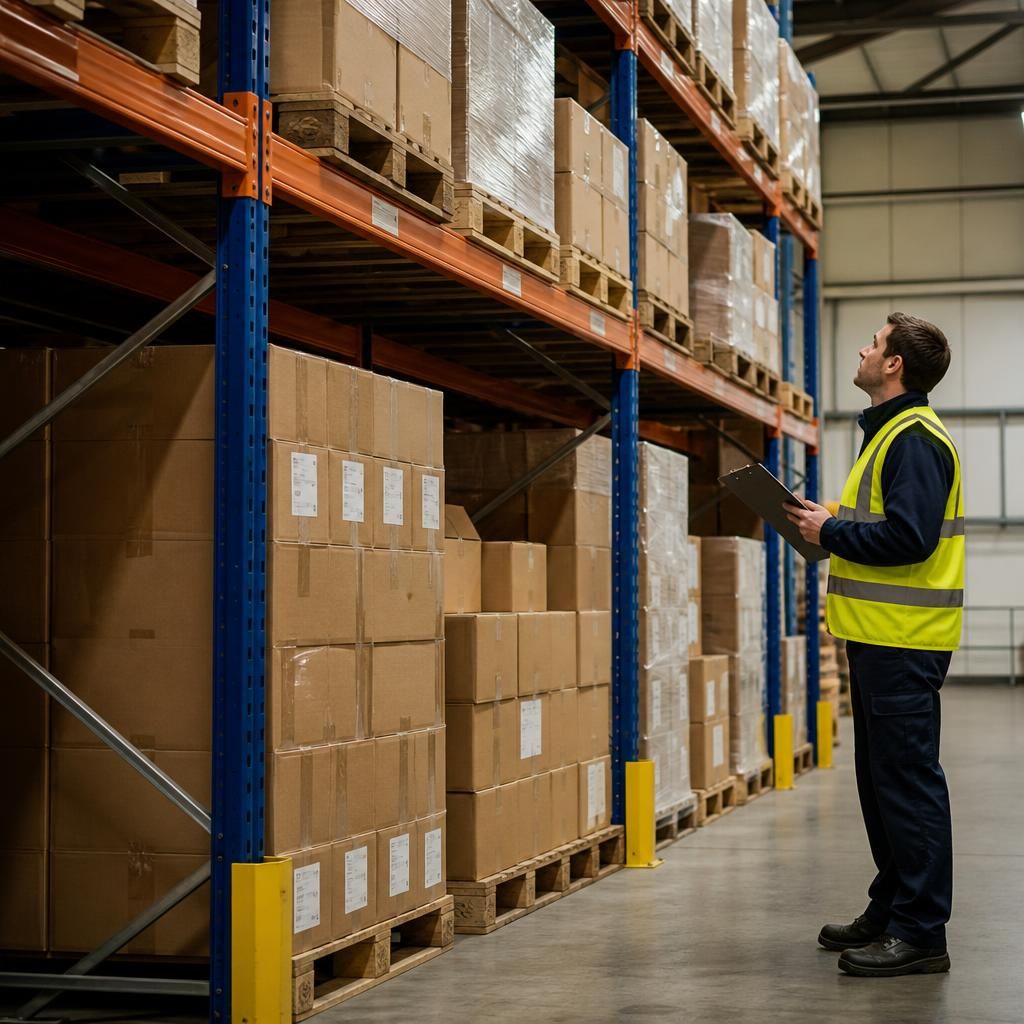
The durability of longspan and upright warehouse racking depends on more than strong steel components. Modular construction allows damaged beams, shelves, uprights, braces and connectors to be assessed and replaced individually, helping preserve the wider installation without unnecessary disruption.
Regular inspections are essential because impact, overloading, corrosion and loose connections can reduce structural performance. Any damage should be reported promptly and reviewed by a competent person. Compatible replacement components must be installed correctly, with the system’s load capacity, configuration and inspection records updated where necessary.
Arrange a Warehouse Racking Durability Inspection
Arrange a professional warehouse racking durability inspection to identify impact damage, corrosion, overloading and connection issues before they affect safe operation.
Contact Able Racking to review your system and plan any necessary repairs or preventative maintenance.