
What are the maintenance requirements for warehouse longspan uprights to ensure longevity and safety?
Warehouse longspan uprights require routine visual inspections, prompt repair or replacement of damaged components, secure connections, clean surroundings and loading within the system’s rated capacity. Planned maintenance, supported by competent warehouse racking inspections, helps identify corrosion, impact damage, distortion and loose fixings before they affect stability, extending service life and maintaining safe operation.
Warehouse longspan uprights require planned inspections, careful loading, clean working conditions and prompt action when damage is identified. Maintenance should check the upright frames, bracing, feet, connections and surrounding floor for signs of impact, distortion, corrosion or movement. Keeping the system within its rated capacity and repairing defects through a competent person are essential for preserving stability, extending service life and protecting warehouse personnel.
Carry out regular visual checks
Operators should visually check the longspan uprights and associated components as part of normal warehouse routines. The inspection should look for:
- dents, bends, kinks or twists in upright columns;
- damaged or missing bracing members;
- loose, displaced or incomplete bolts, clips, pins and other connections;
- cracked, distorted or displaced baseplates and floor fixings;
- corrosion, particularly near the floor or in areas exposed to moisture and chemicals;
- damage caused by forklifts, pallet trucks or other handling equipment;
- uneven floors, settlement or gaps beneath the upright feet; and
- signs that beams, shelves or stored loads are no longer sitting correctly.
Any concern should be reported immediately rather than left until a scheduled review. A damaged upright can affect the alignment and load-bearing performance of the complete bay, even when the defect appears minor.
Arrange competent warehouse racking inspections
Routine operator checks do not replace a formal inspection by a suitably experienced person. A competent inspector should assess the condition of the whole installation, including the uprights, bracing, beams, connectors, protection, floor fixings, load notices and the surrounding operating area. The inspection should also consider how the system is being used, whether current loads match the design and whether changes to the warehouse have introduced new risks.
Inspection intervals should reflect the intensity of use, traffic levels, environmental conditions, previous damage and the manufacturer’s guidance. Under the recognised European guidance for steel storage systems, an expert inspection is generally arranged at least annually, with more frequent checks where the risk assessment requires them. Inspection findings should be recorded, communicated to responsible staff and followed through until corrective work is complete.
Control impact damage
Forklift impact is one of the most common causes of damage to warehouse longspan uprights. Physical protection at exposed corners and aisle ends can reduce the likelihood of contact, but protection does not make a damaged upright safe. Guards should themselves be checked for displacement or damage and should not obstruct access to fixings or conceal defects.
Warehouse traffic routes should be kept clear, with suitable separation between handling equipment and storage frames wherever practicable. Operators should be reminded to report contact immediately, even if there is no obvious deformation. The affected area may need to be isolated until it has been assessed.
Maintain connections and floor fixings
Connections must remain correctly engaged and secure. During maintenance, check that bolts, locking devices, beam connectors and bracing attachments are present, correctly positioned and free from damage. Do not substitute components, drill new holes or alter the frame without approval from the system designer or a suitably qualified specialist, as changes can affect the original structural calculations.
Baseplates and anchors should be checked for movement, cracking, loosening and deterioration. The floor must be capable of supporting the imposed loads and should remain sufficiently level for the uprights to stand plumb. If settlement or floor damage is suspected, the storage system should be assessed before it is returned to normal use.
Prevent corrosion and contamination
Dust, water, chemicals and other contaminants can accelerate deterioration, particularly where moisture collects around the base of an upright. Keep the area clean and dry, remove spills promptly and investigate any recurring leaks or condensation. Cleaning methods should not damage protective coatings or force water into connections.
Surface corrosion should not simply be covered with paint. Its extent and effect on the steel should be assessed first. Where corrosion has reduced the section, affected the connection or continued despite cleaning, repair or replacement may be necessary. Any replacement finish should be compatible with the original protection and applied in accordance with the relevant product guidance.
Keep loads within the designed capacity
Correct loading is a central part of maintenance. Loads should be stable, evenly distributed and placed in the positions intended by the system design. Do not exceed the stated beam, bay or shelf capacities, concentrate loads in unsupported areas or store items in a way that creates an impact risk.
Load notices should remain visible and legible. They should be updated if the layout, beam levels, components or intended loads change. Never assume that an upright can support a greater load because it appears undamaged; capacity depends on the complete frame configuration, connections, bracing, height, spacing, floor and loading arrangement.
Repair or replace damaged components correctly
Damaged longspan uprights should be identified, recorded and assessed by a competent person. Depending on the severity and location of the damage, the appropriate action may be unloading and monitoring, restricting use, straightening under an approved repair procedure or replacing the affected component. On-site welding, heating, drilling or improvised bracing should not be used unless it forms part of an engineered repair method.
Replacement parts should match the original system in type, dimensions, strength and connection detail. Combining components from different systems can create compatibility and capacity problems. After repair, the frame should be checked for plumb, secure connections, correct bracing and safe reloading before the bay is placed back into service.
Keep maintenance records
Maintain an inspection and repair record for each installation. Useful information includes the inspection date, areas examined, defects found, photographs where appropriate, temporary controls, person responsible, repair details and close-out date. Records help identify recurring impact points, support risk assessments and demonstrate that reported defects have been managed.
Maintenance should also be reviewed after a layout change, alteration in loading, significant impact, building movement, flooding, fire or any other event that could affect the structure. A preventative programme combining operator checks, formal warehouse racking inspections and competent repairs is the most reliable way to keep warehouse longspan uprights safe and serviceable.
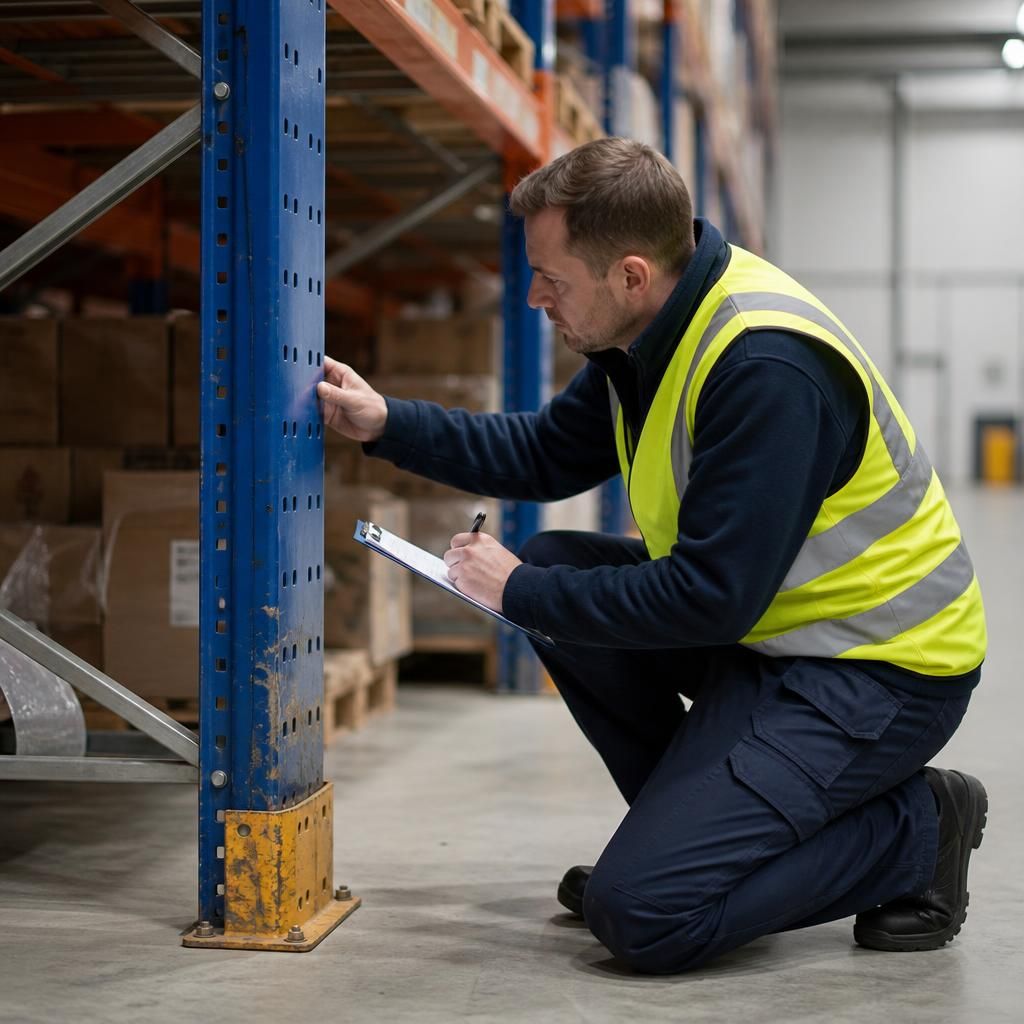
Preventative inspection is the most important maintenance requirement for warehouse longspan uprights because small defects can affect the stability and load capacity of the complete storage frame. Check upright columns, bracing, baseplates, floor fixings and connections for impact damage, distortion, corrosion, looseness or movement.
Any defect should be reported promptly and assessed by a competent person. Do not straighten, weld, drill or reinforce a damaged upright without an approved repair method. The affected bay may need to be unloaded or isolated until the correct repair or replacement is completed and the frame has been confirmed as safe to use.
Book a Longspan Upright Safety Inspection
Book a professional inspection of your warehouse longspan uprights to identify damage, movement or deterioration before it affects safety. Contact Able Racking to arrange a practical assessment and receive clear guidance on any required maintenance or repairs.