
What are the key considerations for maintaining longspan racking systems in a warehouse environment?
Maintaining longspan racking systems requires planned inspections, prompt repairs, correct load control and protection from damage, corrosion and overloading. Regular checks by competent personnel help keep the system safe, compliant and efficient throughout its service life.
Maintaining longspan racking systems depends on planned inspections, accurate load control, prompt repairs and effective protection against impact, corrosion and overloading. Every component, including frames, beams, connectors, decking, anchors, guards and load notices, should be kept in a safe and serviceable condition throughout the system’s working life.
Establish a documented inspection routine. Longspan racking should be checked regularly by warehouse staff who understand the system and know how to identify damage. These checks should look for bent or twisted uprights, damaged beams, displaced decking, missing locking pins, loose fixings, impact damage, corrosion and signs that loads have been stored incorrectly. Findings should be recorded, including the location, nature and seriousness of any defect.
Routine visual checks do not replace a formal inspection by a technically competent person. The frequency of formal inspections should reflect the warehouse environment, traffic levels, equipment used and previous damage history. In line with established UK warehouse safety practice, a suitably competent person should carry out a detailed inspection at regular intervals, with a thorough expert examination arranged at least annually or more often where the risk assessment requires it.
Control loads and loading practices. Longspan systems must only be used within their designed load capacity. Load notices should remain visible and must state the relevant limits for each beam level or bay arrangement. Staff should not assume that evenly distributed loads, concentrated loads and point loads have the same effect. Heavy or dense items can impose significant local forces on beams and decking even when the total load appears to be within the stated limit.
Loads should be positioned carefully and distributed in accordance with the manufacturer’s design information. Items should not project into aisles, rest against uprights or be placed where they can fall during handling. Changes to beam levels, shelf spacing, decking, bay configuration or the type of goods stored should be reviewed before implementation, as alterations can affect the system’s capacity and stability.
Deal with damage immediately. A damaged component should be assessed rather than straightened, welded or improvised on site. Where damage affects an upright, beam, connector, baseplate or other structural part, the affected bay should be unloaded or isolated in accordance with the inspection procedure until a competent person has confirmed that it is safe. Repairs should use approved replacement components and follow the original design or the supplier’s written repair method.
Temporary measures, such as warning tape or a handwritten note, do not make structurally damaged warehouse racking safe. Repair records should identify what was found, what action was taken and whether a follow-up inspection is required. Repeated impact in the same area may indicate that the aisle layout, vehicle routes, operator training or protective equipment needs to be reviewed.
Protect the structure from handling equipment. Forklift trucks, pallet trucks and other handling equipment are common sources of damage. Suitable end-of-aisle protection, upright guards and barrier systems can reduce the consequences of contact, but they do not remove the need for careful vehicle operation. Protection should be compatible with the system and checked for damage, secure fixing and adequate clearance.
Vehicle routes should provide enough space for safe manoeuvring, and visibility should be maintained at intersections and loading points. Operators should be trained to place loads without striking beams or frames. Poorly maintained floors, uneven surfaces and obstructions can also increase the likelihood of impact, so these conditions should be addressed as part of the wider warehouse safety review.
Keep components secure and correctly positioned. Beam connectors should be fully engaged, with locking devices fitted and visible where the design requires them. Uprights should remain plumb, baseplates should be properly supported and anchors should be secure. Shelves, decking panels and support members should be seated correctly and should not be altered without approval.
Do not remove bracing, protective components or locking pins to make room for stock. If a component repeatedly becomes displaced, investigate the cause rather than simply putting it back. The problem may result from incorrect installation, unsuitable loads, impact or movement within the structure.
Manage corrosion, cleanliness and the warehouse environment. Longspan systems in damp, cold, dusty or chemically demanding environments require particular attention. Corrosion can reduce the section thickness and strength of steel components, while accumulated dirt or product residue can conceal damage. Spills should be cleaned promptly using methods that do not damage protective coatings, and areas exposed to moisture should be kept as dry as practical.
Any change in the operating environment, such as increased humidity, cleaning chemicals, temperature variation or external water ingress, should be considered in the maintenance plan. Corroded components should be assessed by a competent person; surface treatment alone is not an adequate solution where the underlying steel has been weakened.
Maintain clear safety information. Load notices, bay identification and warning signs should be legible, accurate and positioned where operatives can see them before loading. They should be updated when the layout or design changes. Staff should also understand the site procedure for reporting damage, isolating unsafe bays and escalating defects.
Maintenance is most effective when it forms part of a documented management system. Keep inspection reports, repair records, layout drawings, load calculations, installation information and training records together. These documents help demonstrate that the system is being managed properly and allow recurring problems to be identified.
Use competent installation and repair support. Installation, alterations and structural repairs should be carried out or supervised by people with the necessary knowledge and experience. A professional assessment is particularly important where damage is extensive, the original design information is unavailable, the system has been modified or the proposed loads differ from those originally intended.
In practice, the key maintenance priorities are simple: inspect routinely, keep loads within approved limits, prevent vehicle impact, isolate damage, use suitable replacement parts and review every alteration before it is made. This approach helps preserve the capacity and stability of longspan racking while supporting a safer, more efficient and compliant warehouse operation.
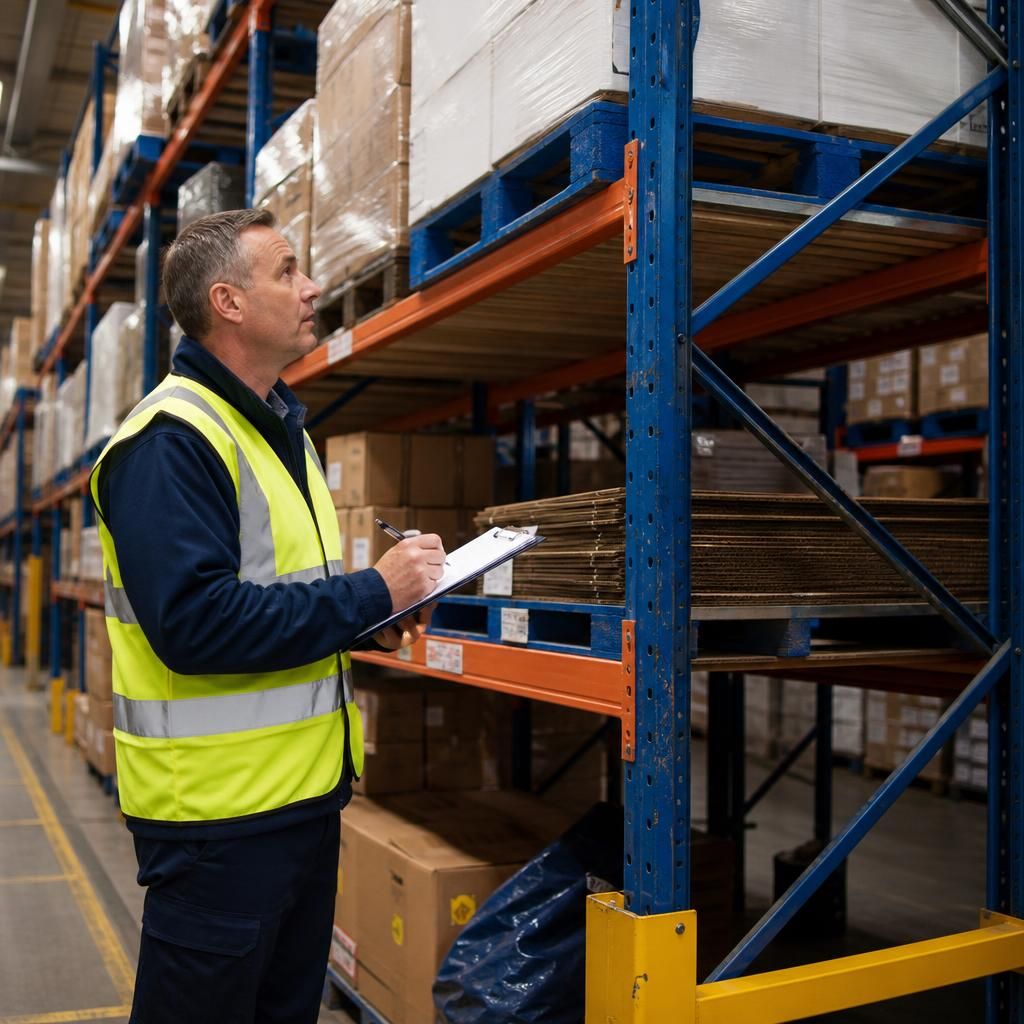
Regular inspections are the foundation of maintaining longspan racking systems safely. Warehouse staff should check for bent uprights, damaged beams, displaced decking, missing locking pins, loose fixings, corrosion and impact damage, recording each defect by location and severity.
These routine checks should be supported by formal inspections from a technically competent person. Any damage affecting a structural component should be assessed promptly, with the affected bay unloaded or isolated where necessary until its safety has been confirmed. Components should not be straightened, welded or altered on site without an approved repair method.
- Keep inspection and repair records up to date.
- Use approved replacement components that match the original design.
- Review repeated impact for evidence of poor vehicle routes, inadequate protection or operator training needs.
Book Your Longspan Racking Maintenance Inspection
Book your longspan racking maintenance inspection with Able Racking to identify damage, load risks and repair requirements before they affect warehouse safety. Contact our experienced team to arrange a professional assessment.