
What are the advantages of using longspan racking systems in cold storage facilities?
Longspan racking systems provide flexible, accessible storage for boxed, packaged and irregularly shaped goods in cold storage facilities. Their adjustable levels make it easier to optimise available space, organise stock and carry out inspections or stock rotation efficiently, while suitable finishes and protection help the system withstand demanding low-temperature conditions.
Longspan racking systems are adjustable warehouse storage systems that use broad shelves to support boxed, packaged and irregularly shaped goods. In cold storage facilities, their principal advantages are flexible space utilisation, straightforward access to stock and efficient organisation, provided the system is specified for the temperature, loading conditions and hygiene requirements of the site.
Flexible storage for varied products
Cold stores often hold products in different carton sizes, packaging formats and quantities. Longspan racking can be configured with adjustable shelf levels, allowing the available vertical space to be used more effectively than fixed shelving. Levels can be repositioned as stock profiles change, helping the facility accommodate seasonal products, different case dimensions or changes in packaging without replacing the complete system.
This flexibility is particularly useful where goods cannot be stored efficiently on standard pallets. Shelved longspan bays can provide suitable locations for smaller cartons, ingredients, maintenance items, packaged goods and other products that require individual access rather than full-pallet storage.
Improved stock visibility and access
Open shelves make stored goods easier to identify and reach. Clear visibility can reduce the time spent searching for products and helps operatives check product condition, packaging and location labels during routine work. Direct access to individual items also supports stock rotation methods such as first-in, first-out, where these are appropriate for the goods being stored.
In a cold environment, efficient access has an additional operational benefit. Well-organised locations can reduce unnecessary time spent inside temperature-controlled areas, while consistent labelling and logical bay layouts help operatives retrieve stock accurately.
Better use of cold storage space
Adjustable levels allow the storage layout to be planned around the dimensions of the products rather than relying on uniform shelf spacing. Reducing unused space between levels can increase the productive use of the facility’s footprint and may help avoid premature expansion when additional capacity is required.
Space planning must still account for safe access, clearances, doors, refrigeration equipment, lighting, ventilation and any required handling equipment. The system should never be arranged solely to maximise storage density if doing so restricts inspections, obstructs escape routes or creates unsafe handling conditions.
Suitable for manual picking operations
Longspan shelving is well suited to facilities where goods are picked by hand. Products can be placed at practical working heights, with heavier items positioned where they can be handled safely and less frequently accessed stock located on higher levels where suitable. This can support more consistent picking processes and reduce avoidable reaching, bending or stretching.
Where access equipment is needed, the shelf arrangement should be designed around its safe use. Operatives must be able to approach each location without contacting the structure or adjacent goods, and load limits must remain visible and understood.
Adaptable construction and finish options
Cold storage exposes storage equipment to low temperatures, moisture and, in some facilities, repeated changes between chilled areas and warmer loading or preparation zones. Longspan systems can be specified with finishes and components appropriate to the environment, helping protect the structure from corrosion and maintaining its serviceability.
The correct specification depends on the actual conditions. Important considerations include the operating temperature, humidity, cleaning regime, exposure to condensation, the presence of salts or chemicals, and whether the system moves between temperature-controlled and ambient areas. A finish that is suitable for a dry warehouse may not provide the same durability in a damp cold store.
Supports organised stock control
A defined bay and shelf layout gives each product a consistent location. This can make replenishment, picking, stock checks and periodic audits easier to manage. Location labels can be positioned so they remain visible in the available lighting and can be read without requiring operatives to move stored goods unnecessarily.
Organised storage also makes discrepancies, damaged packaging and empty locations easier to identify. These checks should form part of the facility’s normal stock and housekeeping procedures rather than being treated as a substitute for formal safety inspections.
Practical maintenance in demanding conditions
Open longspan systems are generally accessible for visual checks and cleaning. Dust, packaging fragments, ice deposits and other contamination can be identified more readily than in enclosed storage arrangements. Keeping shelves and floor areas clear supports good housekeeping and helps reveal impact damage, corrosion, missing components or changes to the system.
Cold storage conditions can make damage more difficult to spot, particularly where condensation freezes or protective coatings are obscured. Regular checks should consider:
- uprights, beams, shelves and connections for distortion, impact damage or corrosion;
- loose, missing or incorrectly fitted components;
- deformed shelves or signs that loads exceed the intended capacity;
- water, ice or condensation around the structure and floor;
- damage caused by handling equipment, doors or nearby equipment; and
- legibility of load notices, location labels and safety information.
Any suspected structural damage should be reported promptly, with the affected location unloaded or isolated where necessary until it has been assessed and made safe. Repairs and alterations should be completed by suitably competent personnel using compatible components. Improvised repairs can affect the system’s load-bearing performance.
Important design and safety considerations
The advantages of longspan racking depend on correct design, installation and use. Before installation, the planned loads should be confirmed, including the weight and dimensions of individual items, how loads are distributed and whether products may shift during handling. The floor must also be suitable for the imposed loads, and the layout must allow safe movement around the storage system.
Load notices should state the relevant limits clearly, and operatives should be trained not to exceed them or make unauthorised changes to shelf positions. Loads should be placed evenly and securely, with heavier goods kept on lower levels where this supports safe handling and system stability.
Cold stores may also require specialist hygiene controls. Materials, coatings and shelf details should be compatible with the cleaning products and wash-down procedures used on site. Areas where water can collect should be considered during the design, as persistent moisture can accelerate corrosion and affect the floor or fixings.
Why professional inspection remains necessary
Longspan systems should be visually monitored by trained employees and examined through a structured inspection process appropriate to the workplace. A competent inspection can identify damage, overloading, unsuitable modifications and environmental deterioration that may not be obvious during routine picking.
Inspection findings should be recorded, prioritised and followed through to completion. Where the cold store layout, product loads, handling equipment or operating conditions change, the storage system should be reviewed to confirm that it remains suitable. This preventative approach helps preserve performance, supports compliance with workplace safety duties and reduces the likelihood that minor defects will develop into more serious problems.
Overall, longspan racking provides cold storage facilities with adaptable shelf levels, direct product access, clearer stock organisation and efficient use of available space. Its performance depends on choosing suitable materials and finishes, designing the layout around the real operating conditions, controlling loads and maintaining a consistent programme of housekeeping, staff checks, competent inspections and prompt repair.
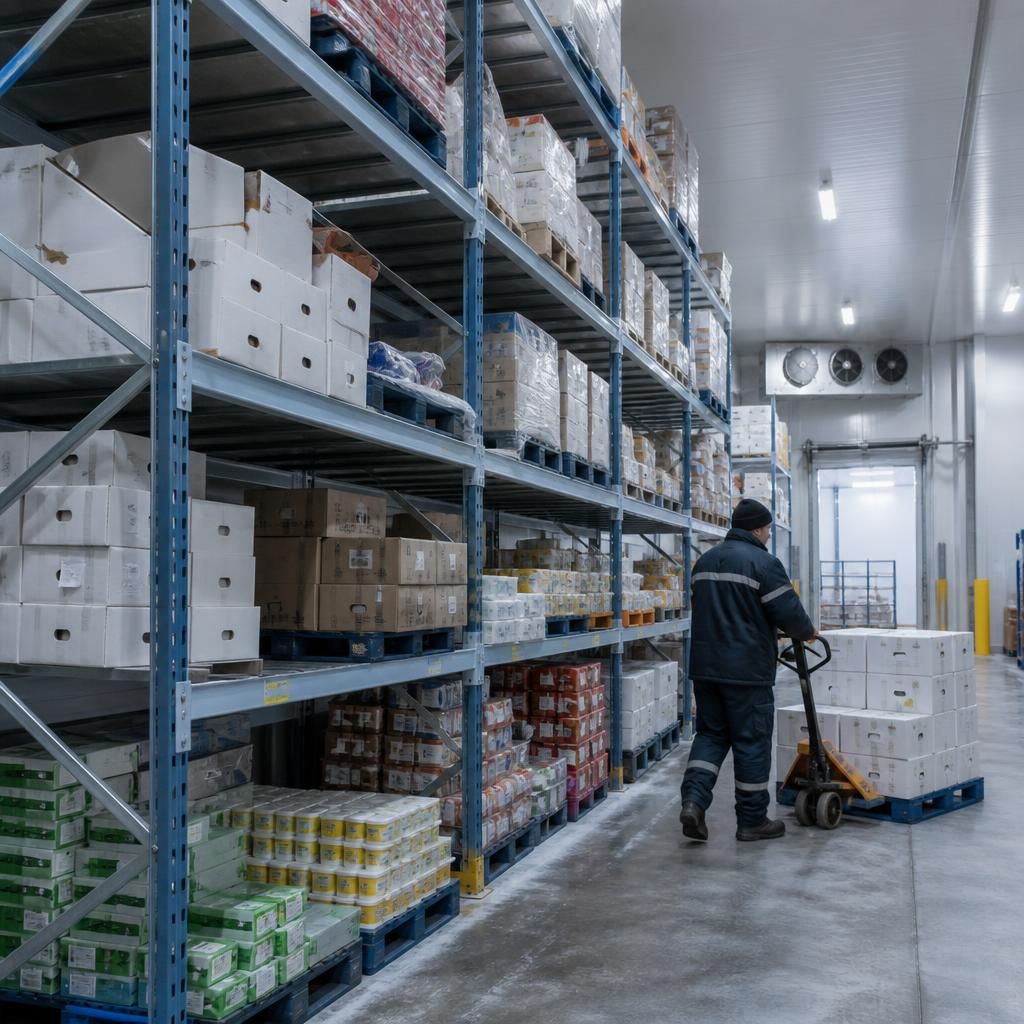
Longspan racking systems are useful in cold storage facilities because adjustable shelf levels can accommodate different carton sizes, packaged goods and stock quantities without requiring a completely new storage layout. This allows the available vertical space to be used more efficiently while keeping individual products accessible for manual picking and stock rotation.
Open shelves also improve visibility of labels, packaging and stock locations, helping operatives identify items quickly and reduce unnecessary time spent in temperature-controlled areas. The system must still be designed for the facility’s loads, temperature, humidity, cleaning regime and safe access requirements.
Discuss your cold storage racking requirements
Discuss your cold storage racking requirements with Able Racking to confirm the most suitable system, materials, layout and inspection arrangements for your facility.