
How does longspan racking differ from traditional racking systems?
Longspan racking is a versatile, hand-loaded warehouse racking system with wider shelves for storing cartons, parts and other varied items, whereas traditional pallet racking is generally designed for palletised goods handled by forklifts. The main differences are loading method, shelf and bay configuration, capacity, access requirements and the type of stock each system is intended to hold.
Longspan racking is a hand-loaded warehouse storage system designed for varied, bulky or irregularly sized items, while traditional pallet racking is primarily configured for standardised pallets handled by mechanical equipment. The main differences are the loading method, shelf and beam arrangement, storage capacity, access requirements and the types of stock each system is designed to accommodate.
Both systems use a structured framework of upright frames and horizontal components, but they serve different operational requirements. Choosing between them depends on the dimensions and weight of the goods, how frequently items are accessed, the available handling equipment and the level of selectivity required.
Loading method and stock type
Longspan racking is normally loaded and unloaded by hand. It is suitable for cartons, containers, components, tools, archive materials and individual products that may not be stored on pallets. Its open shelves provide a practical surface for picking stock directly from the bay.
Traditional pallet racking is intended for palletised goods. Forklift trucks or other mechanical handling equipment place and retrieve pallets from beams positioned at different levels. This makes it more suitable for bulk storage, distribution operations and stock that remains on pallets throughout the handling process.
Bay and shelf configuration
Longspan systems generally have continuous shelves or shelf levels spanning between the uprights. The levels can often be adjusted to suit the height of the stored goods, helping operators make effective use of the available vertical and horizontal space. Shelves may be formed from materials such as chipboard, steel panels or other specified decking, depending on the application and load requirements.
Traditional pallet racking uses horizontal beams to support pallets. Beam height and length are selected according to pallet dimensions, load weights and the required handling clearances. Additional components, including pallet supports or decking, may be needed where the pallet type or operating conditions require extra support.
Capacity and load distribution
Longspan racking can support substantial loads, but its capacity is determined by the upright frames, shelf construction, bay dimensions, shelf span and the way goods are distributed. It is generally selected for hand-loaded stock rather than the concentrated loads associated with pallet storage.
Traditional pallet racking is engineered for higher palletised loads, with each beam level and complete bay having a defined safe working load. The load must be positioned correctly, evenly distributed where required and kept within the stated limits. Capacity should never be assumed from the appearance of the structure; it must be confirmed from the system specification and its load notices.
Access and picking efficiency
Longspan racking provides direct access to individual items at shelf level. This can simplify piece picking and stock checking, particularly where products vary in size or are frequently selected in small quantities. Operators can usually work from the floor or from approved access equipment, subject to the system design and risk assessment.
Traditional pallet racking provides direct access to stored pallets, but elevated levels normally require suitable industrial trucks and trained operators. Where individual products are picked from pallets, the process may involve additional handling, decanting or dedicated picking areas.
Flexibility and adjustment
Longspan racking is often more adaptable for changing product ranges because shelf levels can be repositioned and the system can accommodate different item dimensions. This is useful for businesses holding mixed stock or goods that are not supplied in consistent pallet quantities.
Traditional pallet racking can also be reconfigured, but changes must account for pallet dimensions, handling equipment, beam loading and required clearances. Altering beam positions or adding components can affect the system’s design assumptions, so modifications should be assessed and authorised by a competent person.
Space utilisation
The best use of space depends on the stock profile and the building layout. Longspan racking can make efficient use of floor and vertical space for hand-picked goods, particularly where a large number of product lines need individual access. Its relatively open shelf arrangement can also make stock visible and accessible.
Traditional pallet racking can provide high-density vertical storage for palletised products. However, it requires aisle space for the relevant handling equipment, along with safe operating clearances at each level. Narrower aisles may improve storage density but can require specialist trucks, revised traffic controls and a suitable risk assessment.
Safety considerations
The safety requirements for both systems depend on their design, location, loading method and working environment. Longspan racking should be checked for damaged uprights, shelves, connections, bracing and signs of overloading. Goods should be placed securely and should not project into access routes or create an unstable load.
Traditional pallet racking requires particular attention to forklift impact, damaged frames, beam connections, pallet condition, load placement and falling-object risks. Impact protection, appropriate operating procedures and clear load information are important controls where mechanical handling equipment is used.
For either system, inspections should be carried out at suitable intervals by a competent person, with visible defects reported promptly and unsafe areas taken out of use where necessary. Repairs and alterations should follow the manufacturer’s requirements or be designed and approved by a suitably qualified specialist. A safety inspection is not a substitute for good housekeeping, operator training and routine visual checks.
Which system is more suitable?
- Choose longspan racking where goods are hand-loaded, product dimensions vary, individual items need direct access or stock is stored in cartons, bins and loose units.
- Choose traditional pallet racking where goods are stored on pallets, mechanical handling equipment is available and the operation requires vertically arranged pallet locations.
- Consider a combined solution where a warehouse holds both palletised reserves and smaller items for piece picking. The systems should be planned as separate storage applications, with suitable access routes, loading information and protection measures.
Longspan racking is therefore not simply a lighter version of traditional pallet racking. It is designed around hand-loaded, flexible storage, whereas traditional pallet racking is engineered around pallet dimensions, mechanical handling and defined load levels. A proper assessment of stock, handling methods, building constraints and future requirements will identify the most suitable system and help ensure that it remains safe and efficient in use.
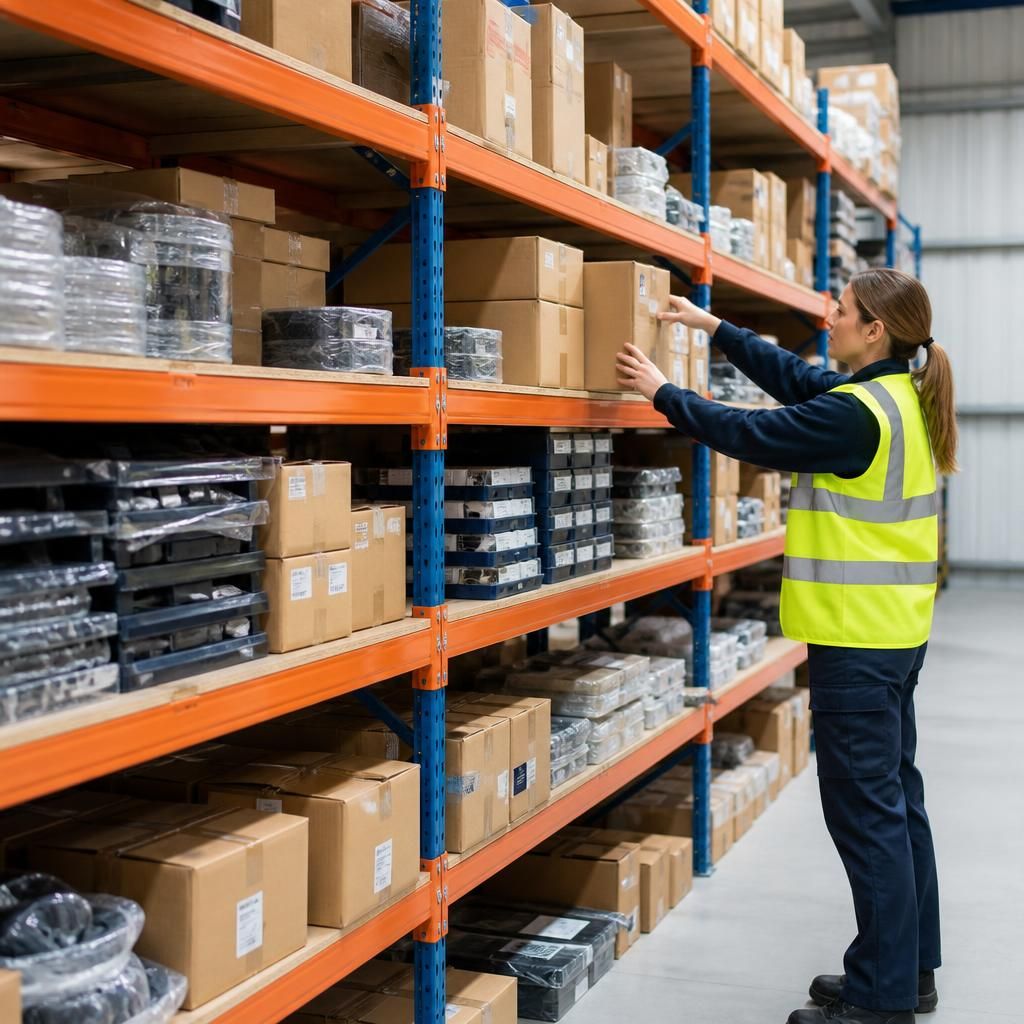
Longspan warehouse racking differs from traditional pallet racking mainly in how stock is loaded and accessed. Longspan systems are designed for hand-loaded cartons, components, containers and individual items, with adjustable shelf levels that support direct picking from each bay.
Traditional pallet racking is configured for palletised goods and normally requires a forklift or other mechanical handling equipment to place and retrieve loads. This makes it better suited to bulk pallet storage, while longspan racking is generally more practical for varied stock, frequent piece picking and products that are not stored on pallets. The correct choice depends on load dimensions, item weight, access frequency and the handling equipment used in the warehouse.
Get expert advice on your warehouse racking requirements
Speak to Able Racking for expert advice on selecting, configuring or maintaining a warehouse racking system suited to your stock, handling methods and available space.