
How do longspan racking systems compare to other warehouse racking solutions in terms of flexibility and cost-effectiveness?
Longspan racking systems are typically more flexible and cost-effective for hand-loaded, mixed-size or bulky stock because their adjustable levels and open design support varied storage needs without complex equipment. Compared with pallet racking, they may offer less density and load capacity, so pallet systems can be more economical where high-volume, uniform pallet storage and forklift access are priorities.
Longspan racking systems are generally more flexible and cost-effective than many warehouse racking alternatives for hand-loaded, mixed-size, awkward or moderately heavy stock. Their adjustable beams, open construction and accessible storage levels allow a warehouse to accommodate changing inventory without extensive alterations. However, pallet racking can provide better cost efficiency where the operation stores large quantities of uniform palletised goods and uses mechanical handling equipment.
The most suitable solution depends on the stock profile, available space, handling method, access requirements and expected changes in demand. A system that has the lowest initial purchase price may not deliver the lowest overall cost if it restricts access, wastes available height or requires frequent reconfiguration.
How longspan compares with pallet racking
Longspan racking is intended primarily for goods that are loaded and retrieved by hand. It is well suited to cartons, components, archive materials, packaged products and other items that vary in size or are not stored on pallets. Storage levels can normally be repositioned to match the dimensions of the goods, reducing unused vertical space and allowing the layout to evolve as stock changes.
Pallet racking is designed around palletised loads and is usually the more space-efficient choice for high-volume storage of consistent products. It can support greater loads and provide direct access for forklift operations, but the layout is more dependent on pallet dimensions, aisle requirements and the capabilities of the handling equipment. Where stock is frequently changed or stored in different formats, pallet racking may provide less practical flexibility unless it is combined with suitable accessories and a carefully planned layout.
Longspan also provides straightforward access to individual items. Operatives can usually select products from the relevant level without moving other goods, which can be valuable for order picking and stock control. Pallet racking may be preferable when full pallets are moved in and out rather than individual units.
How longspan compares with shelving
Light-duty shelving is often economical for small, lightweight items and low-volume storage. It can be appropriate for offices, parts stores and areas where goods are handled frequently but do not impose substantial loads. Longspan racking normally offers a stronger and more adaptable structure for larger cartons, heavier components and wider bays.
The cost difference should be assessed against the usable capacity required. Choosing light-duty shelving for stock that is heavy, bulky or regularly replenished can lead to overloading, damage or an early need to replace the system. Longspan may have a higher initial cost than basic shelving, but it can offer better value when the storage area needs stronger levels, wider spans or greater capacity.
How longspan compares with other storage solutions
Modular cabinets and bins provide good protection and organisation for small parts, tools and sensitive items, but they can be less suitable for bulky stock or products that need rapid visual identification. Cantilever systems are more appropriate for long, unwieldy materials such as timber, tubes and sections. These solutions should not be judged against longspan solely on purchase price because they address different storage requirements.
Longspan is often a practical middle ground where goods are too large for conventional shelving but do not require pallet positions. Its open levels make stock visible and accessible, while its modular construction allows bays, levels and accessories to be planned around the products being stored.
Flexibility factors to consider
- Adjustable storage levels: Beam positions can be changed to suit different carton heights and product dimensions, provided the configuration remains within the manufacturer’s stated limits.
- Mixed stock: Different products can be stored within the same run without requiring every item to conform to a standard pallet footprint.
- Layout changes: Bays can often be extended, rearranged or supplemented with accessories as operational requirements develop.
- Manual access: Individual items can be picked from the front of the bay, supporting stock rotation and piece-picking activities.
- Space planning: The system can make effective use of available wall height and floor area, subject to safe access, building constraints and required working clearances.
Flexibility does not mean that components can be moved without control. Changes to beam positions, loading arrangements or bay layouts can affect capacity and stability. Any alteration should be checked against the manufacturer’s guidance and the system’s load notices. Where a change is substantial, a competent inspection or design review may be appropriate.
Cost-effectiveness in practice
The financial comparison should include more than the initial supply and installation cost. Consider the following throughout the system’s expected service life:
- purchase, delivery and installation;
- floor space occupied and storage capacity achieved;
- access equipment and labour needed to retrieve goods;
- future adjustment, extension or reconfiguration;
- inspection, maintenance and repair requirements;
- potential disruption caused by damaged or unsuitable equipment;
- stock accessibility, replenishment time and picking efficiency; and
- the cost of replacing a system that cannot adapt to changing requirements.
Longspan is often cost-effective when a business needs adaptable storage without investing in extensive mechanical handling infrastructure. It can reduce the need to replace the whole installation when product dimensions change, because levels can be adjusted and the layout can be modified within the system’s design limitations.
By contrast, pallet racking may offer a lower cost per stored pallet where the warehouse operates at high volume, uses standard pallets and has a consistent flow of goods. Its greater height and load capacity can improve storage density, although aisle space, forklift access, operator training and ongoing safety controls must be included in the assessment.
Safety and compliance considerations
Cost savings should never be achieved by reducing the specification, omitting essential components or exceeding safe working loads. Longspan racking must be selected, installed and used according to the supplier’s instructions, with load information clearly displayed. The floor, frames, beams, bracing, clips and any accessories must be suitable for the intended loads and operating conditions.
Regular user checks and planned inspections help identify impact damage, displaced components, overloading and changes in condition before they become more serious. Damaged sections should be unloaded and controlled promptly, with repairs or replacement carried out by a suitably competent provider. Similar principles apply to pallet racking, shelving and other warehouse storage equipment.
Which option is most suitable?
Longspan racking is usually the stronger choice when the warehouse stores mixed or bulky items, relies on manual picking, expects stock profiles to change or needs adjustable storage without complex handling equipment. Pallet racking is generally more appropriate for uniform palletised goods, high-throughput operations and situations where maximum pallet density is the main objective. Shelving may be sufficient for lighter loads, while cabinets, bins or cantilever storage may be better for specialised products.
A practical selection process should begin with an inventory of product dimensions, weights, handling methods, turnover rates and access requirements. The proposed layout should then be checked for capacity, aisle clearances, floor loading, fire and emergency access, lighting and safe working practices. Reviewing these factors before purchase provides a more reliable cost comparison and helps prevent an installation that becomes unsuitable as the operation develops.
For an existing installation, our inspection and advisory team can assess condition, loading arrangements and operational use, then identify whether adjustment, repair, extension or a different warehouse racking configuration would provide the most appropriate long-term result. This supports safe decisions based on the actual storage environment rather than initial price alone.
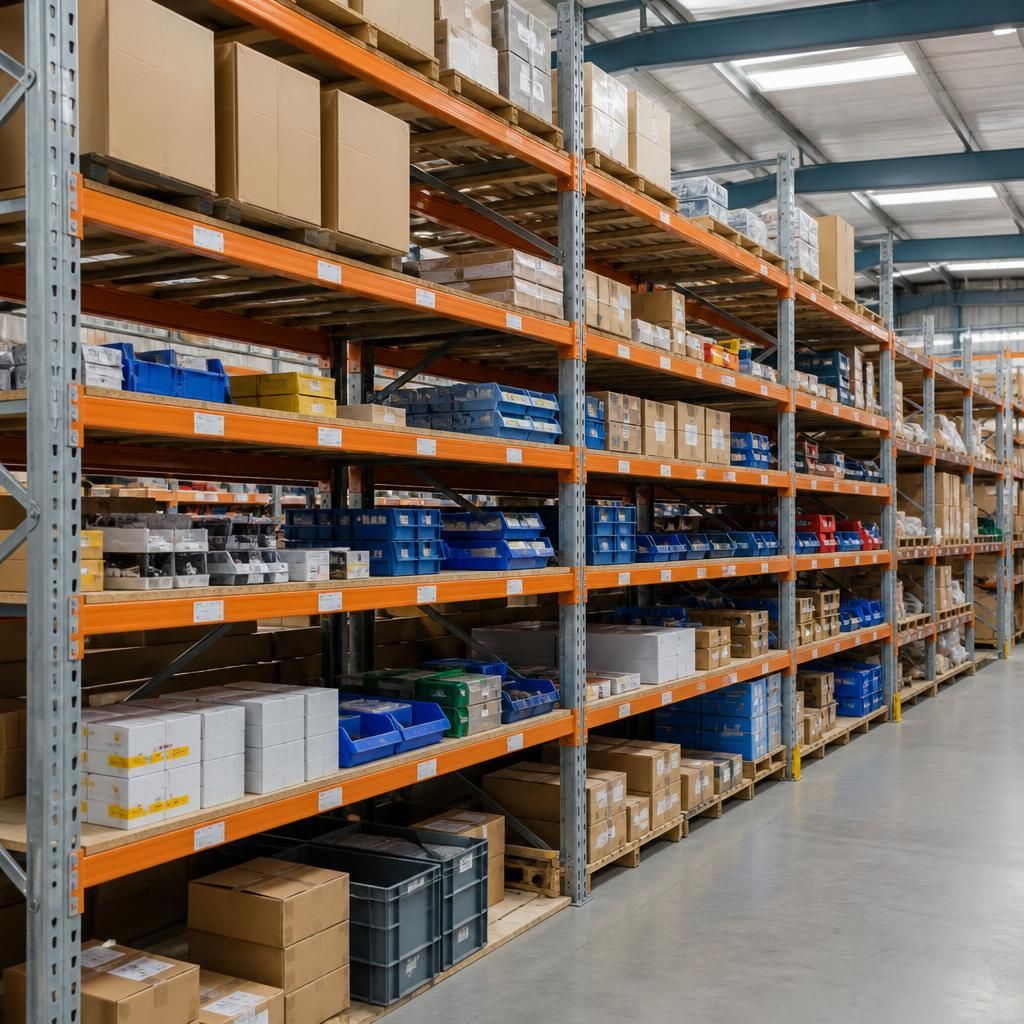
Longspan racking systems are often a cost-effective choice for warehouses handling mixed, bulky or hand-picked stock because their adjustable levels accommodate changing product dimensions without replacing the complete installation. This flexibility can reduce future alteration costs and improve the use of available space.
Compared with pallet racking, longspan racking may provide better value where goods are not palletised or need individual access. Pallet racking can be more economical for high-volume, uniform pallet storage, particularly where forklift handling and storage density are priorities. The comparison should include installation, access equipment, floor space, future reconfiguration, inspections, repairs and picking efficiency—not just the initial purchase price.
Review Your Longspan Storage Requirements
Ask Able Racking to review your longspan storage requirements, including load demands, access methods and future layout changes, so you can confirm whether the current system remains safe, suitable and cost-effective.