
What role does staff training play in enhancing warehouse racking safety?
Staff training strengthens warehouse racking safety by teaching employees to use storage systems correctly, recognise damage and report hazards before incidents occur. It also supports compliance by ensuring operators, supervisors and other relevant staff understand load limits, traffic controls, inspection procedures and their responsibilities.
Staff training enhances warehouse racking safety by ensuring that employees understand how to use storage systems correctly, recognise damage and unsafe conditions, follow site controls, and report concerns before they lead to an incident. Well-trained operators and supervisors support compliance, protect people and stock, and help prevent avoidable damage to warehouse racking.
Training is most effective when it reflects the actual warehouse environment. A generic course may explain common hazards, but employees also need instruction on the specific warehouse racking layouts, vehicles, loads, traffic routes and working procedures used at their site. This practical knowledge helps turn safety requirements into consistent everyday behaviour.
What should warehouse racking safety training cover?
- Correct use of storage systems: Employees should understand how goods are placed into and removed from warehouse racking, including the need to position loads securely, avoid overhanging items and keep access routes clear.
- Load limits and configuration: Operators must know where to find load notices and why maximum capacities must not be exceeded. Training should explain that load limits can depend on factors such as beam arrangement, bay configuration, load distribution and the condition of the installation.
- Safe forklift and equipment operation: Vehicle operators should be trained and authorised for the equipment they use. This includes maintaining suitable clearances, approaching storage positions carefully, controlling speed and avoiding contact with upright frames, beams and protective components.
- Damage recognition: Staff should be able to identify bent or distorted components, impact damage, missing fixings, displaced beams, damaged guards, unstable loads, corrosion and other signs that warehouse racking may no longer be safe to use.
- Reporting procedures: Training must make clear who should be informed, how damage is recorded and what action is required while the issue is assessed. Employees should never be expected to straighten, modify or repair warehouse racking themselves.
- Housekeeping and access: Good housekeeping reduces collision risks and helps maintain clear inspection points, emergency routes and working areas around warehouse racking.
- Emergency arrangements: Staff need to understand the response to a collapse, impact, unstable load or other immediate hazard, including how to isolate an affected area and raise the alarm.
Training helps employees identify problems early
Many warehouse racking incidents begin with a small defect or unsafe practice that remains unreported. An operator who knows what to look for is more likely to notice a damaged upright, a dislodged beam, a missing safety pin or a load that is leaning into an access route. Early reporting allows the responsible person to restrict access, arrange an assessment and organise suitable remedial work before the condition worsens.
Training should also explain the difference between an observation and an authorised repair. Staff can report damage and take immediate precautions, but warehouse racking should only be repaired, altered or reconfigured by competent persons using appropriate methods. Unauthorised changes can affect the original design assumptions and may create further risks.
Supervisors have an important role
Supervisors and warehouse managers need training that goes beyond basic operator awareness. They should understand how to monitor working practices, check that load information remains visible, manage reported damage and ensure unsafe areas are controlled. They also need to know when an issue requires an inspection by a suitably competent warehouse racking specialist rather than an informal visual check.
A nominated person can help coordinate reporting, records and follow-up actions. However, assigning responsibility does not remove the need for wider staff awareness. Everyone who works near or interacts with warehouse racking should understand the hazards relevant to their role, including agency workers, contractors, delivery personnel and maintenance staff where applicable.
Refresher training reinforces safe behaviour
Training should be refreshed when working methods, equipment, warehouse layouts or warehouse racking configurations change. It should also be revisited after an incident, repeated damage, a change in responsibilities or evidence that procedures are not being followed. Refresher instruction is particularly useful for reinforcing reporting arrangements and correcting unsafe habits that may develop over time.
Short toolbox talks, supervised demonstrations and brief checks of understanding can support formal training. These should complement, not replace, suitable instruction for the role. Training records should identify the subject covered, the people who attended and any further action required. Keeping these records helps demonstrate that safety responsibilities have been communicated and supports a structured approach to compliance.
Training does not replace inspections or maintenance
Competent staff can identify visible concerns, but training is not a substitute for planned inspections, expert assessments or maintenance. Warehouse racking may have damage that is difficult to judge without specialist knowledge, and some defects may not be obvious during routine work. Regular inspections should therefore continue in line with the site’s risk assessment and relevant workplace guidance.
Findings from inspections can also improve future training. If recurring impact damage, poor load placement or blocked access routes are identified, the training programme should address the underlying behaviour as well as the immediate defect. This links staff competence with preventative maintenance and helps reduce repeat problems.
How to make training effective
- Base the content on a current risk assessment and the warehouse’s actual working practices.
- Use photographs, site examples and practical demonstrations to show acceptable and unsafe conditions.
- Explain reporting routes in simple terms and make them accessible during every shift.
- Check understanding rather than relying solely on attendance.
- Provide suitable induction training before new or transferred staff begin relevant work.
- Coordinate warehouse racking safety training with vehicle, manual handling, traffic management and emergency procedures.
- Review training records and incident reports to identify gaps or recurring issues.
Effective staff training creates a shared responsibility for warehouse racking safety. It gives operators the knowledge to work within load and access controls, gives supervisors the information needed to manage hazards, and supports prompt action when damage is found. Combined with competent inspections, suitable repairs, clear procedures and ongoing monitoring, training is a practical part of keeping warehouse racking safe, compliant and serviceable.
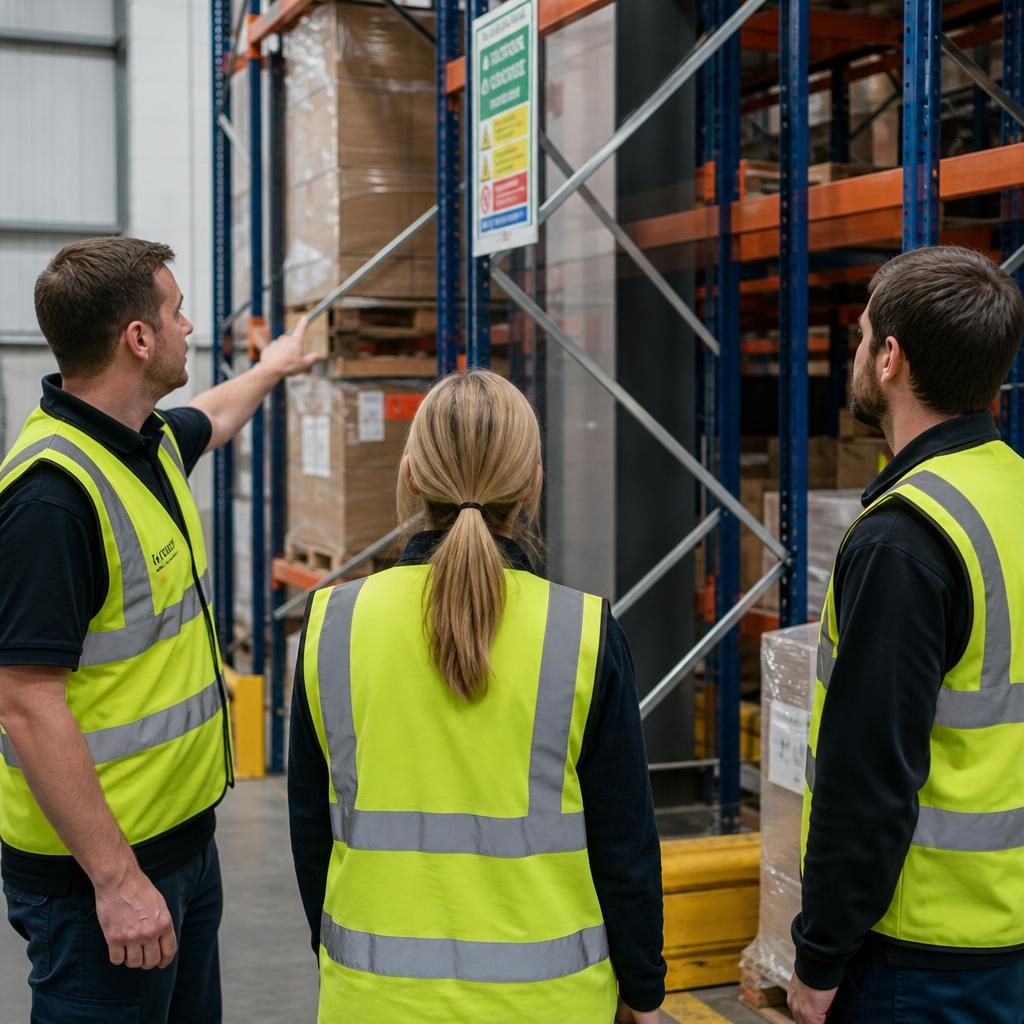
Staff training improves warehouse racking safety by teaching employees how to recognise damage, control immediate hazards and report concerns through the correct procedure. This helps prevent minor defects or unsafe practices from developing into incidents.
Training should use examples from the actual site, including damaged uprights, displaced beams, missing safety pins, unstable loads and blocked access routes. Employees need clear instructions on when to stop work, isolate an affected area and notify the responsible person. They must also understand that warehouse racking should never be straightened, modified or repaired without authorisation from a suitably competent person.
Regular briefings and refresher training help maintain these behaviours when layouts, vehicles, loads or working methods change. Training records should confirm who attended, what was covered and whether further action is needed. Staff awareness supports, but does not replace, scheduled inspections and specialist assessments.
Arrange a warehouse racking safety inspection
Arrange a warehouse racking safety inspection with Able Racking to identify damage, unsafe conditions and compliance concerns that staff training alone cannot assess. Our experienced team can provide clear findings and recommend appropriate next steps.