
What are the consequences of neglecting industrial warehouse racking safety measures? Neglecting industrial warehouse racking safety measures can lead to structural damage, falling loads, equipment collisions, disrupted operations, enforcement action and serious injuries. Regular inspections, prompt repairs, controlled loading practices and trained staff help identify hazards before they cause harm or costly failure.
Neglecting industrial warehouse racking safety measures can cause structural damage, falling loads, equipment collisions, operational disruption, enforcement action and serious injuries. Regular inspections, prompt repairs, controlled loading and properly trained staff help identify hazards before they result in harm or costly failure.
Neglecting industrial warehouse racking safety measures can result in damaged storage systems, falling goods, vehicle collisions, operational disruption, enforcement action and serious injury. The risks usually develop when inspections are missed, damage is not reported or repaired, loads exceed the system’s design limits, or employees are not adequately trained to use the installation safely.
Structural damage can worsen over time
Warehouse racking can be damaged by forklift trucks, pallet handling equipment, poorly positioned loads and unauthorised alterations. A bent upright, distorted beam, missing safety component or loose connection may initially appear minor, but it can reduce the system’s load-bearing capacity. Continued use can cause progressive deformation and, in severe cases, partial or complete collapse.
Damage is not always obvious from a distance. Protective coatings may hide distortion, fixings can loosen and components may become unsafe without an immediate visible failure. Regular inspections by a competent person help identify defects before they affect the stability of the wider installation.
Falling loads create immediate hazards
Incorrectly positioned, unstable or overloaded pallets can fall into aisles, work areas or adjacent storage bays. Falling goods may strike employees, visitors, vehicles or other stored products. Even relatively light items can cause injury if they fall from height, while dense or heavy loads can cause severe harm and significant damage to stock and equipment.
Load notices must reflect the actual configuration and capacity of the warehouse racking. Beams, frames, decks and other components should not be rearranged without confirming that the amended layout remains suitable. Pallets should be in sound condition, evenly supported and placed correctly within each bay.
Vehicle collisions can increase the risk of collapse
Forklift trucks and other handling equipment are a common source of warehouse racking damage. Repeated low-level impacts can weaken uprights, frames and protective components, even when the installation remains in use without an immediate incident. Poor traffic routes, restricted visibility, inadequate separation and rushed handling increase the likelihood of collision.
Where damage occurs, the affected area should be assessed promptly. Depending on the severity, it may need to be unloaded, isolated and repaired or replaced before normal use resumes. Straightening damaged components or carrying out an improvised repair can leave the system unsafe and may invalidate the manufacturer’s design assumptions.
Operational disruption and financial loss can follow
A failure or serious impact can make storage bays unavailable while goods are removed, the area is made safe and remedial work is arranged. This can delay picking, replenishment, despatch and production. Businesses may also face damaged stock, equipment repairs, emergency labour, temporary storage costs and lost working time.
Preventative maintenance is generally less disruptive than responding to a collapse or significant collision. Keeping inspection records, reporting damage immediately and maintaining access to suitable replacement components supports a faster and more controlled response.
Legal and insurance consequences may arise
Employers have duties to provide and maintain a safe workplace, suitable work equipment and safe systems of work. Warehouse racking should be managed as part of the wider workplace risk assessment, with appropriate inspection, maintenance, training and supervision. If safety measures are neglected, an incident may lead to investigation by the relevant authorities, improvement or prohibition action, prosecution and fines.
Following an incident, insurers may request evidence that inspections, repairs, training and risk controls were completed properly. Incomplete records, overdue actions or unauthorised changes can make it more difficult to demonstrate that risks were being managed responsibly. Records should be clear, current and traceable to the relevant location or component.
Employees may be exposed to preventable injury
Unsafe warehouse racking can expose employees to falling materials, collapsing components, vehicle movements, blocked escape routes and unstable loads. The risk extends beyond warehouse operatives to contractors, delivery drivers, maintenance staff and visitors who may not recognise the warning signs of damage.
Training should explain safe loading and unloading, load limits, pedestrian and vehicle controls, defect reporting and the action to take when damage is found. Staff should know that damaged warehouse racking must not be used or moved back into service without an appropriate assessment.
Neglect can allow small defects to become system-wide problems
One unresolved defect can encourage further unsafe practices. For example, a damaged bay may be used for unsuitable stock, a missing component may be removed from another bay, or an overloaded location may become a repeated storage point. Uncontrolled alterations can then affect the original design and make inspection findings harder to interpret.
A managed safety process should include a clearly understood reporting route, visible damage identification, prompt risk assessment, controlled unloading where necessary and documented close-out of repairs. Any change to the layout, loading arrangement or components should be reviewed by a suitably competent person.
How to reduce the consequences of neglect
- Arrange regular warehouse racking inspections at an appropriate frequency, with additional checks after impacts, alterations or unusual events.
- Carry out routine visual checks so damage, displacement, missing parts and unsafe loading are identified early.
- Display accurate load information and ensure the installation is used within its intended design limits.
- Use suitable frame and upright protection where the risk assessment identifies exposure to vehicle impact.
- Keep aisles, escape routes and access points clear, and maintain effective separation between pedestrians and handling equipment.
- Report, record and assess damage immediately rather than waiting for the next planned inspection.
- Use competent installers and repair specialists, and do not modify components or configurations without technical approval.
- Provide role-specific training and refresh it when procedures, equipment or storage arrangements change.
- Retain inspection reports, repair records, training evidence, layout information and load documentation.
The consequences of neglect are not limited to the point of failure. Damaged warehouse racking can gradually reduce capacity, create unsafe working conditions and undermine compliance long before a collapse occurs. A combination of competent inspections, disciplined loading, effective protection, trained staff and prompt corrective action provides the most reliable way to prevent minor defects becoming serious incidents.
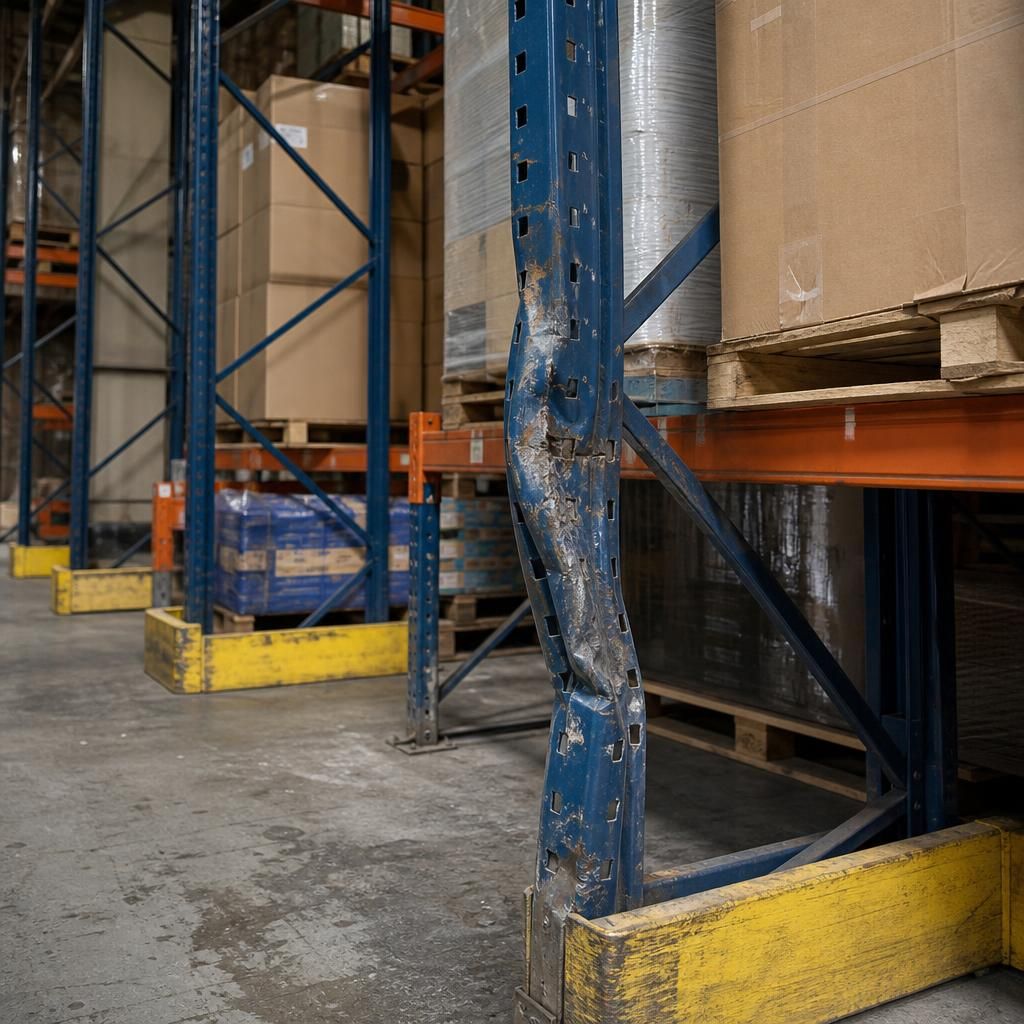
Neglecting industrial warehouse racking safety measures allows minor damage, incorrect loading and missing components to develop into instability, falling loads or a partial collapse. A bent upright or displaced beam may reduce the system’s capacity even when the damage is not immediately obvious.
Prompt reporting, competent inspections and controlled repairs prevent defects from becoming more serious. If damage is found, the affected area should be assessed without delay and isolated or unloaded where necessary until it has been made safe.
Book your warehouse racking safety inspection
Arrange your warehouse racking safety inspection with Able Racking to identify damage, loading issues and other defects before they lead to disruption or injury.