
What are the best practices for ensuring effective repair and maintenance of warehouse racking systems?
Effective warehouse racking repair and maintenance requires scheduled inspections, prompt isolation of damaged components, and repairs carried out by competent, trained operatives using manufacturer-approved parts and methods. Keep accurate inspection and repair records, investigate the cause of damage, and verify the system is safe before returning it to service.
Effective warehouse racking repair and maintenance depends on planned inspections, prompt action when damage is found, competent repairs, and accurate records. Damaged components should be isolated from use until assessed, repaired or replaced using an approved method, and formally checked before the warehouse racking system is returned to service.
Start with a documented inspection and maintenance plan
Maintenance should be based on the design, loading, operating environment and level of use of each warehouse racking system. A documented plan should set out:
- Who is responsible for reporting, assessing and authorising repairs.
- How warehouse racking is checked during routine workplace activities.
- When formal inspections are completed by a competent person.
- How damage is classified and how affected areas are isolated.
- Which repair methods, replacement components and contractors are approved.
- How inspections, repairs, alterations and follow-up checks are recorded.
The plan should reflect the manufacturer’s instructions, the original design specification and recognised guidance, including HSE guidance and BS EN 15635 where applicable. A risk-based approach is important because busy loading areas, narrow aisles, frequent forklift movements, corrosive conditions and changing storage requirements can all increase the need for closer monitoring.
Use routine checks to identify problems early
Warehouse operatives should report visible damage as soon as it is noticed rather than waiting for a scheduled inspection. Routine checks should look for bent or twisted uprights, damaged beams, displaced components, missing locking devices, impact damage to protection, loose fixings, leaning frames and signs that loads are not being stored as intended.
Checks should also consider the surrounding conditions. Obstructed aisles, poor visibility, damaged floors, inadequate lighting and inconsistent load placement can increase the likelihood of further impact. Any concern should be reported through a clear process that does not rely on informal verbal communication alone.
Routine checks do not replace a formal inspection by a competent person. Their purpose is to identify emerging issues quickly and prevent a minor defect from becoming a structural or operational risk.
Isolate damaged warehouse racking immediately
When damage is found, the affected location should be clearly identified and prevented from further use. Depending on the severity and location of the damage, this may require removing stored goods, restricting access to a bay, unloading an entire section or temporarily isolating adjacent areas.
Loads should not be moved or adjusted unnecessarily if doing so could make the condition less stable. Where there is a risk of collapse, access should be controlled and the issue escalated without delay. A damaged component should never be straightened, welded, drilled or otherwise altered on site as a temporary solution unless the repair method has been specifically assessed and approved by a suitably competent specialist.
Ensure repairs are carried out by competent operatives
Repairs should be designed, supervised and completed by people with suitable knowledge of warehouse racking systems, structural behaviour and the relevant manufacturer’s requirements. Competence includes understanding load capacities, frame geometry, beam connections, bracing, floor fixings and the effect of impact damage on the complete structure.
Where the original manufacturer’s repair procedure is available, it should be followed. Replacement components should be compatible with the installed system and appropriate for the required load capacity. Mixing components from different systems, using improvised fixings or fitting visually similar parts can alter the performance of the structure and should be avoided.
Some damage can be dealt with by replacing a component, while other conditions may require a more detailed structural assessment. Repairs should not be selected solely on the basis of cost or speed. The proposed solution must restore the required performance and maintain the design assumptions for the complete warehouse racking system.
Distinguish between repair, replacement and redesign
A competent assessment should determine whether a component can be repaired, must be replaced or indicates a wider problem. Uprights, beams, bracing and connections that have lost their original shape or capacity may not be suitable for simple repair. Repeated impact in the same area may also indicate that the layout, protection or working practices need to change.
Changes to beam levels, load types, pallet dimensions or operating equipment can affect the original design. These changes should be reviewed before implementation, with updated load notices and design information provided where required. A warehouse racking system should not be treated as adaptable without checking that the proposed arrangement remains structurally suitable.
Check protection and the causes of damage
Protection devices can reduce the consequences of vehicle impact, but they do not make damaged warehouse racking safe. Protectors, end barriers and guides should be inspected for displacement, looseness and damage, and replaced when they no longer provide the intended protection.
Every significant repair should include a basic investigation into why the damage occurred. Useful questions include:
- Was the impact caused by restricted manoeuvring space or poor visibility?
- Was the load correctly positioned and within the stated capacity?
- Was the aisle, floor or protection in suitable condition?
- Had the warehouse racking layout or operating equipment recently changed?
- Did the operator have appropriate instruction for the task?
Corrective action might include improving protection, changing traffic routes, repairing flooring, updating signage, revising storage arrangements or providing targeted operator training. Addressing the cause helps prevent repeated damage after the repair has been completed.
Maintain correct loading and housekeeping
Warehouse racking should be kept within its specified load capacity, with loads distributed and positioned as intended. Load notices must remain visible and reflect the current configuration. Damaged pallets, unstable goods and loads that overhang into access routes should be removed or managed safely.
Good housekeeping supports maintenance by keeping aisles clear, making damage easier to see and reducing avoidable contact with the structure. Spills, debris and uneven surfaces should be dealt with promptly, particularly where they could affect vehicle stability or pedestrian movement.
Verify the repair before returning the area to service
Completion of physical work is not, by itself, confirmation that the warehouse racking is safe to use. The repaired area should be checked against the approved repair method and, where necessary, reviewed by a competent inspector or structural specialist. The check should confirm that components are correctly fitted, fixings and locking devices are secure, protection is in place and the final arrangement matches the approved design.
Any restrictions on loading or use should remain in place until they have been formally removed. If the repair involved a change to configuration or capacity, the relevant documentation and load information should be updated before normal operations resume.
Keep complete and traceable records
Inspection and repair records should identify the location, type and severity of damage, the immediate controls applied, the assessment carried out, the repair or replacement completed, and the person who authorised the return to service. Photographs can provide useful evidence of the original condition and completed work.
Records should be retained in a form that allows recurring problems to be identified. Reviewing them can reveal frequent impact points, repeated component failures or areas where additional protection and training are needed. This turns maintenance from a reactive activity into a preventative programme.
Review the programme regularly
Repair and maintenance arrangements should be reviewed after significant damage, changes to the warehouse layout, changes in handling equipment, alterations to stored loads or any incident affecting structural stability. They should also be reviewed when inspection findings show that existing controls are not preventing repeat problems.
For businesses managing warehouse racking across several sites, consistent procedures, competent inspection support and centralised records can help maintain the same standard of control nationwide. A planned combination of daily awareness, formal inspection, prompt isolation, approved repair and post-repair verification provides the most reliable way to keep warehouse racking safe, compliant and operational.
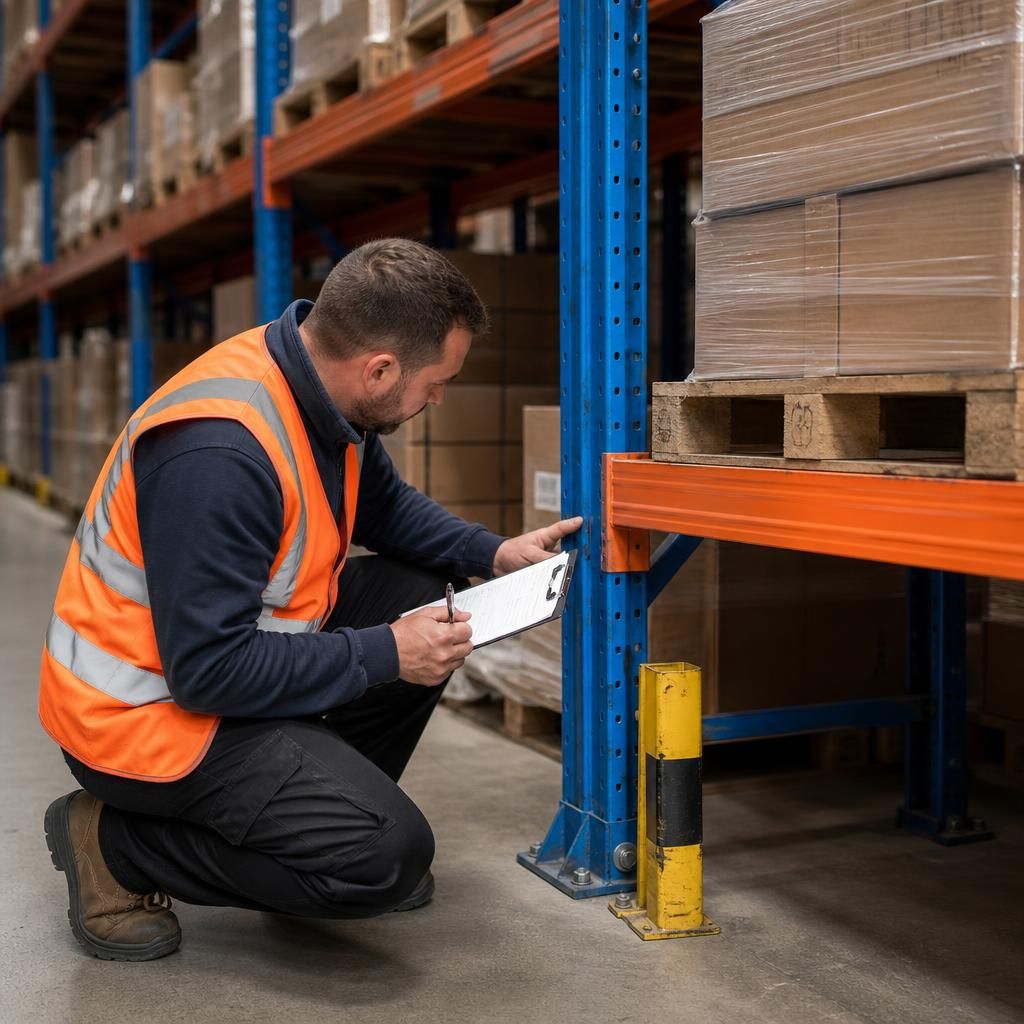
Effective warehouse racking maintenance starts with isolating damage immediately and confirming that approved repairs have been completed before the affected area is used again. A damaged upright, beam, connection or protection device can reduce the performance of the complete warehouse racking system, even when the defect appears minor.
Clearly identify the affected location, prevent further loading and arrange assessment by a competent person. Do not straighten, weld or modify damaged components as an improvised repair. Once the approved repair or replacement is complete, check that components, fixings, locking devices and load information match the agreed design. Record the damage, corrective work and authorisation to return the area to service so recurring problems can be identified and addressed.
Arrange a Warehouse Racking Repair Assessment
If damage has been identified, arrange a warehouse racking repair assessment with Able Racking to establish the correct repair or replacement requirements. We can help confirm whether the affected area is safe to return to service and advise on measures to prevent repeat damage.